What does Jeremiah 22:10 mean?
“Weep ye not for the dead, neither bemoan him: but weep sore for him that goeth away: for he shall return no more, nor see his native country.” — Jeremiah 22:10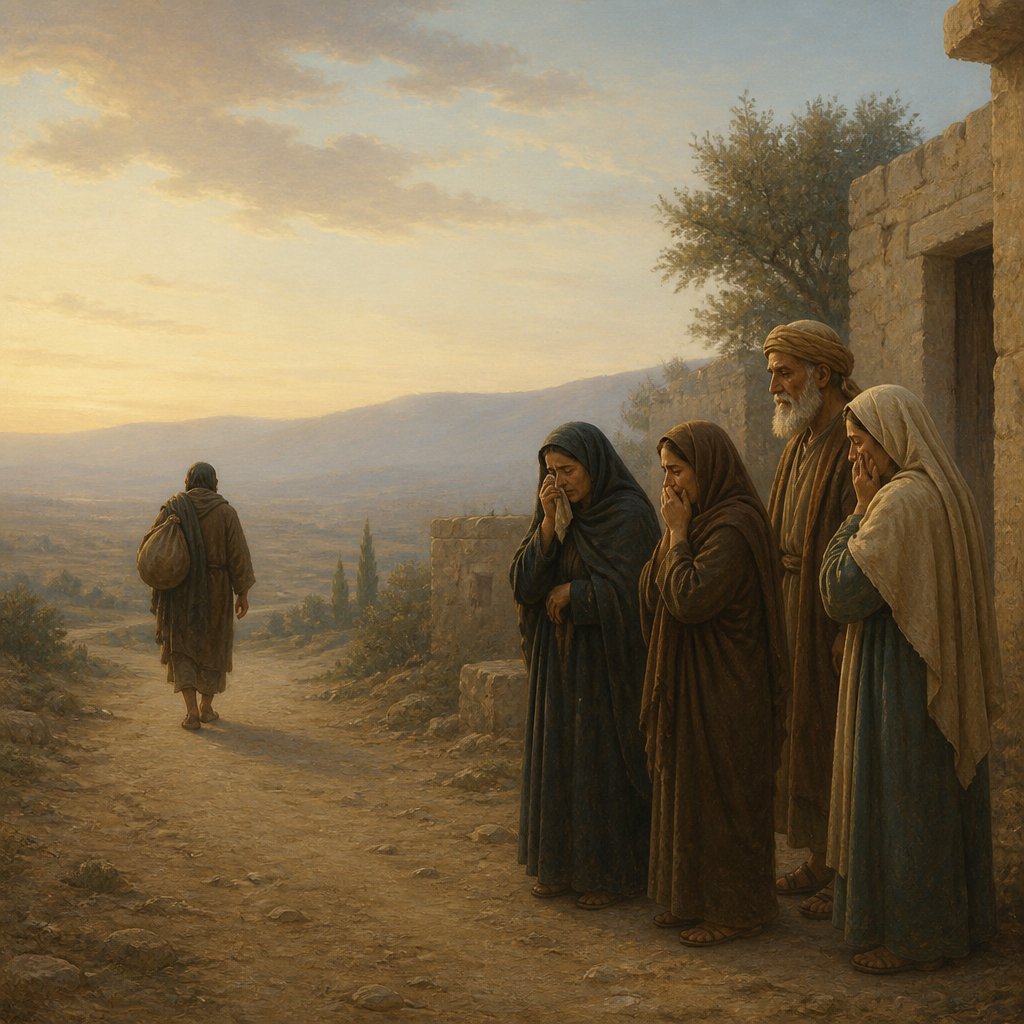
The Bible verse Jeremiah 22:10 from the King James Version (KJV) states, "Weep ye not for the dead, neither bemoan him: but weep sore for him that goeth away: for he shall return no more, nor see his native country."
This verse is part of a passage in the Book of Jeremiah, which is attributed to the prophet Jeremiah, who lived during a tumultuous time in Israel's history. He ministered during the final days of the kingdom of Judah, before it was conquered and its people were exiled to Babylon. The prophet Jeremiah was tasked with delivering messages of warning and judgment to the people of Judah, calling for them to repent and turn back to God, but they largely ignored his words.
In this particular verse, Jeremiah is speaking to the people about mourning and lamenting for their situation. He is instructing them not to mourn for the dead, as they are at peace and no longer experiencing the suffering and trials of life. Instead, he urges them to weep for those who are leaving, as they will not return and will never see their homeland again.
The verse speaks to the concept of lamenting for the loss of opportunity and the pain of separation. It highlights the importance of recognizing the gravity of a situation, especially when it comes to the loss of freedom and the devastation of exile. The verse is a reflection of the difficult circumstances faced by the people of Judah, and the need to mourn and reflect on the implications of their actions.
This passage carries several important themes, including the idea of repentance, judgment, and the consequences of sin. Jeremiah's message to the people was one of warning and admonition, as he sought to call them back to God and encourage them to make changes in their lives. The verse also emphasizes the fragility of life and the inevitability of death, reminding the people that their time on earth is limited and should be used wisely.
Additionally, the verse underscores the significance of homeland and the pain of exile. It speaks to the longing for one's native country, the sense of displacement and loss that comes with being separated from one's roots. This theme of exile and yearning for home is a recurring motif throughout the Bible, as it reflects the spiritual and emotional journey of God's people.
Symbolically, the verse can be interpreted as a call to lament for spiritual exile and separation from God, as well as a reminder of the consequences of turning away from Him. It serves as a cautionary tale, urging the people to recognize the severity of their situation and to seek reconciliation with God.
Overall, Jeremiah 22:10 is a powerful and poignant verse that speaks to the human experience of loss, the longing for home, and the urgency of spiritual renewal. It invites readers to reflect on their own lives and consider the implications of their actions, ultimately pointing towards the hope and redemption found in God's grace.
Get our apps


Artwork for Jeremiah 22:10
"¶ Weep ye not for the dead, neither bemoan him: but weep sore for him that goeth away: for he shall return no more, nor see his native country." - Jeremiah 22:10

Jeremiah 10:22 - "Behold, the noise of the bruit is come, and a great commotion out of the north country, to make the cities of Judah desolate, and a den of dragons."

Jehoiachin in Jeremiah 22:22-30
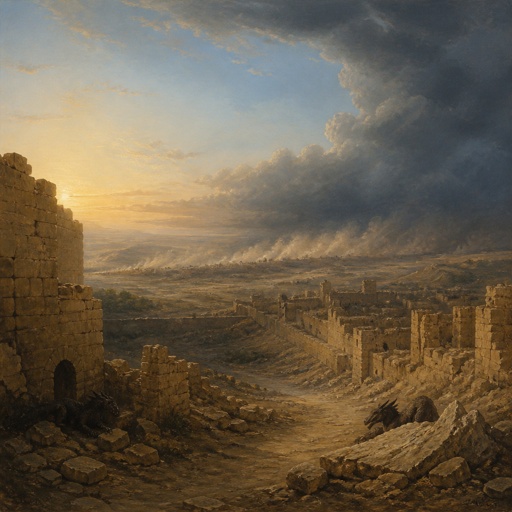
"Behold, the noise of the bruit is come, and a great commotion out of the north country, to make the cities of Judah desolate, and a den of dragons." - Jeremiah 10:22

Jeremiah 50:22 - "A sound of battle is in the land, and of great destruction."

Jeremiah 10:5

Jeremiah 48:22 - "And upon Dibon, and upon Nebo, and upon Beth-diblathaim,"

Jeremiah 22:27 - "But to the land whereunto they desire to return, thither shall they not return."

Jeremiah 30:22 - "And ye shall be my people, and I will be your God."

Jeremiah 22:29 - "O earth, earth, earth, hear the word of the LORD."

Genesis 22:10

Hebrews 10:22

Genesis 22-10

Jeremiah 1: 1-10

Nehemiah 10:2 - "Seraiah, Azariah, Jeremiah,"

Jeremiah 22:22 - "The wind shall eat up all thy pastors, and thy lovers shall go into captivity: surely then shalt thou be ashamed and confounded for all thy wickedness."

Jeremiah 8:22 - "Is there no balm in Gilead; is there no physician there? why then is not the health of the daughter of my people recovered?"

Nehemiah 10:22 - "Pelatiah, Hanan, Anaiah,"

Jeremiah 22:1 - "Thus saith the LORD; Go down to the house of the king of Judah, and speak there this word,"

Exodus 25:10-22

1 Chronicles 12:10 - "Mishmannah the fourth, Jeremiah the fifth,"

Jeremiah 22:19 - "He shall be buried with the burial of an ass, drawn and cast forth beyond the gates of Jerusalem."

Jeremiah 25:22 - "And all the kings of Tyrus, and all the kings of Zidon, and the kings of the isles which are beyond the sea,"

Jeremiah 22:16 - "He judged the cause of the poor and needy; then it was well with him: was not this to know me? saith the LORD."

Jeremiah 36:22 - "Now the king sat in the winterhouse in the ninth month: and there was a fire on the hearth burning before him."

John 10:22 - "¶ And it was at Jerusalem the feast of the dedication, and it was winter."

Jeremiah 10:8 - "But they are altogether brutish and foolish: the stock is a doctrine of vanities."

Jeremiah 22:5 - "But if ye will not hear these words, I swear by myself, saith the LORD, that this house shall become a desolation."

Jeremiah 22:17 - "But thine eyes and thine heart are not but for thy covetousness, and for to shed innocent blood, and for oppression, and for violence, to do it."

"A sound of battle is in the land, and of great destruction." - Jeremiah 50:22