What does Jeremiah 28:11 mean?
“And Hananiah spake in the presence of all the people, saying, Thus saith the LORD; Even so will I break the yoke of Nebuchadnezzar king of Babylon from the neck of all nations within the space of two full years. And the prophet Jeremiah went his way.” — Jeremiah 28:11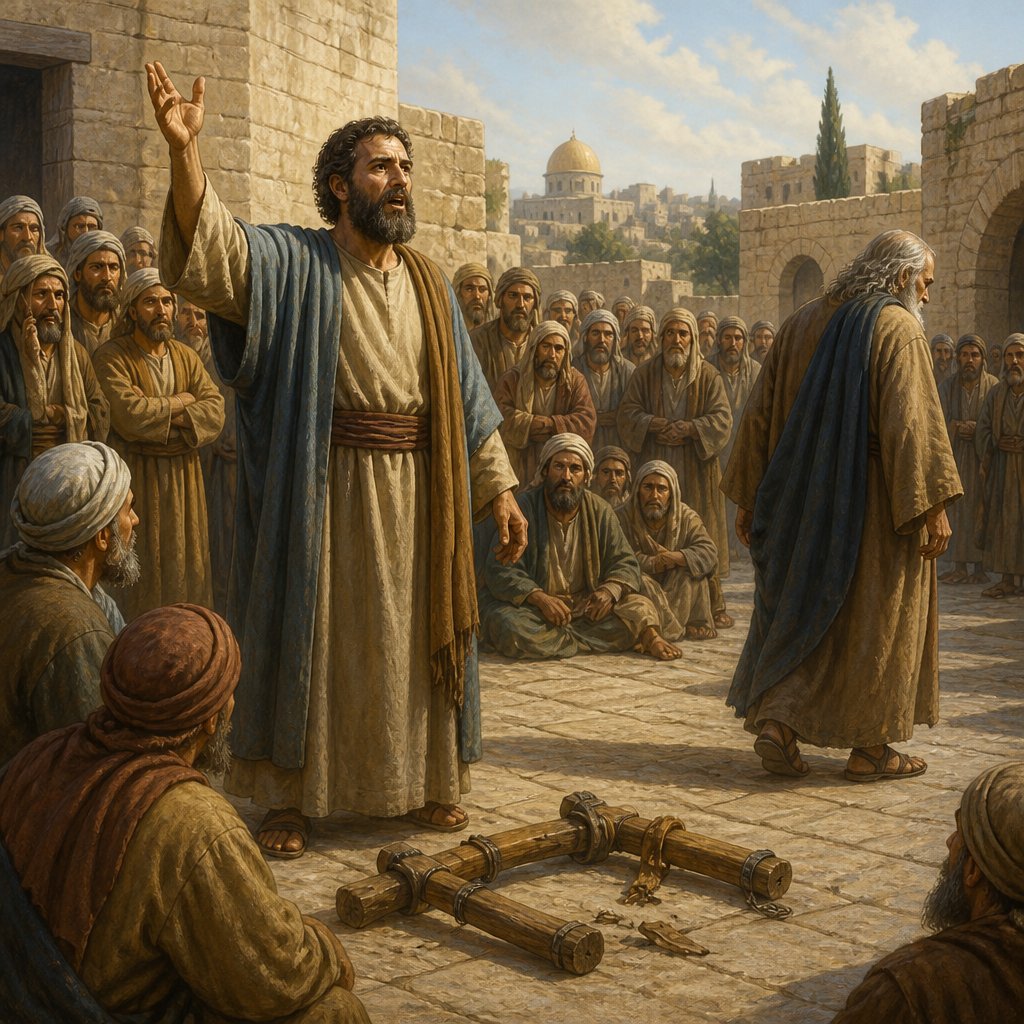
Jeremiah 28:11 from the King James Version (KJV) of the Bible states, "For I know the thoughts that I think toward you, saith the Lord, thoughts of peace, and not of evil, to give you an expected end." This verse comes from a conversation between the prophet Jeremiah and the false prophet Hananiah. Hananiah had been misleading the people by prophesying peace and prosperity, contradicting Jeremiah's warnings of impending judgment and exile for the Israelites.
In this verse, God is speaking through Jeremiah to reassure His people. The verse begins with the phrase, "For I know the thoughts that I think toward you." This shows God's omniscience and His intimate knowledge of His people. It emphasizes that His thoughts and plans for His people are intentional and purposeful. This reassures the Israelites that God's intentions towards them are good, and that He has a specific plan for their future.
The verse continues with the declaration, "saith the Lord, thoughts of peace, and not of evil." Here, God explicitly states His intentions for His people. His thoughts are thoughts of peace, emphasizing His desire for their well-being and prosperity. This is a powerful message of hope, especially considering the current context in which the Israelites were facing the repercussions of their disobedience and sin. Despite their current circumstances, God's ultimate desire for them is peace and not evil. This reflects God's character as a loving and compassionate God who desires the best for His people.
The verse concludes with the affirmation, "to give you an expected end." This phrase speaks to God's promise of a hopeful future for His people. The term "expected end" can also be translated as a "hope and a future" in other versions of the Bible. This implies that God has a specific and positive outcome in mind for His people. This shows that God's plans for His people are not based on mere chance or randomness, but that He has a definite and favorable conclusion in store for them.
As we consider the broader themes and context of this verse, it's important to recognize the historical and theological significance of Jeremiah's message. The book of Jeremiah was written during a tumultuous period in Israel's history. The nation had turned away from God and was facing the imminent threat of invasion and exile. Jeremiah's prophecies were a stern warning to the people to repent and turn back to God, or face the consequences of their actions.
In the midst of this dire situation, Jeremiah 28:11 serves as a beacon of hope and assurance to the Israelites. It reminds them that despite their current circumstances, God has not forsaken them. His thoughts towards them are thoughts of peace, and He has a positive and hopeful future planned for them. This message would have been a source of comfort and encouragement to the Israelites, reminding them of God's unchanging love and faithfulness towards His people.
The symbolism in this verse lies in the contrast between God's thoughts of peace and the impending judgment that the Israelites faced. It reflects the tension between God's desire for His people's well-being and the consequences of their disobedience. It also highlights God's sovereignty and His ability to bring about a positive outcome, even in the midst of difficult circumstances.
In conclusion, Jeremiah 28:11 from the King James Version of the Bible is a powerful reminder of God's unwavering love and faithfulness towards His people. It reassures the Israelites that despite their current struggles, God's intentions towards them are good, and that He has a hopeful and prosperous future planned for them. This verse encourages us to trust in God's plans for our lives, even when we are faced with challenges and uncertainties. It reminds us that God's thoughts are thoughts of peace, and that He is ultimately in control of our destinies.
Get our apps


Artwork for Jeremiah 28:11

Jeremiah 28:11 - "And Hananiah spake in the presence of all the people, saying, Thus saith the LORD; Even so will I break the yoke of Nebuchadnezzar king of Babylon from the neck of all nations within the space of two full years. And the prophet Jeremiah went his way."
"And Hananiah spake in the presence of all the people, saying, Thus saith the LORD; Even so will I break the yoke of Nebuchadnezzar king of Babylon from the neck of all nations within the space of two full years. And the prophet Jeremiah went his way." - Jeremiah 28:11

Jeremiah 28:12 - "Then the word of the LORD came unto Jeremiah the prophet, after that Hananiah the prophet had broken the yoke from off the neck of the prophet Jeremiah, saying,"

Jeremiah 38:28 - "So Jeremiah abode in the court of the prison until the day that Jerusalem was taken: and he was there when Jerusalem was taken."

Jeremiah 28:5 - "Then the prophet Jeremiah said unto the prophet Hananiah in the presence of the priests, and in the presence of all the people that stood in the house of the LORD,"

Ezekiel 28:11-19

Ezekiel 28:11-19

Ezekiel 28:11-19

Ezekiel 28:11-19

Ezekiel 28:11-19

Ezekiel 28:11-19

Genesis 28-11

Matthew 28:11

Jeremiah 11:1 - "The word that came to Jeremiah from the LORD, saying,"

Jeremiah 28:10 - "Then Hananiah the prophet took the yoke from off the prophet Jeremiah's neck, and brake it."

Ephesians 2:8-9

Jeremiah 28:15 - "Then said the prophet Jeremiah unto Hananiah the prophet, Hear now, Hananiah; The LORD hath not sent thee; but thou makest this people to trust in a lie."

ephesians 2 8-9

Jeremiah 28:17 - "So Hananiah the prophet died the same year in the seventh month."

Jeremiah 29:11-13

Jeremiah 29:11-13

Jeremiah 6:28 - "They are all grievous revolters, walking with slanders: they are brass and iron; they are all corrupters."

Jeremiah 29:11-13

Jeremiah 29:11-13

Jeremiah 29:11

Nehemiah 11:28 - "And at Ziklag, and at Mekonah, and in the villages thereof,"

Jeremiah 29:11

Jeremiah 29:11

Jeremiah 29:11

Jeremiah 52:28-30 - "Jeremiah 52:28-30: 28 This is the people whom Nebuchadrezzar carried away captive: in the seventh year three thousand Jews and three and twenty: 29 In the eighteenth year of Nebuchadrezzar he carried away captive from Jerusalem eight hundred thirty and two persons: 30 In the three and twentieth year of Nebuchadrezzar Nebuzaradan the captain of the guard carried away captive of the Jews seven hundred forty and five persons: all the persons were four thousand and six hundred."