What does Jeremiah 37:11 mean?
“And it came to pass, that when the army of the Chaldeans was broken up from Jerusalem for fear of Pharaoh’s army,” — Jeremiah 37:11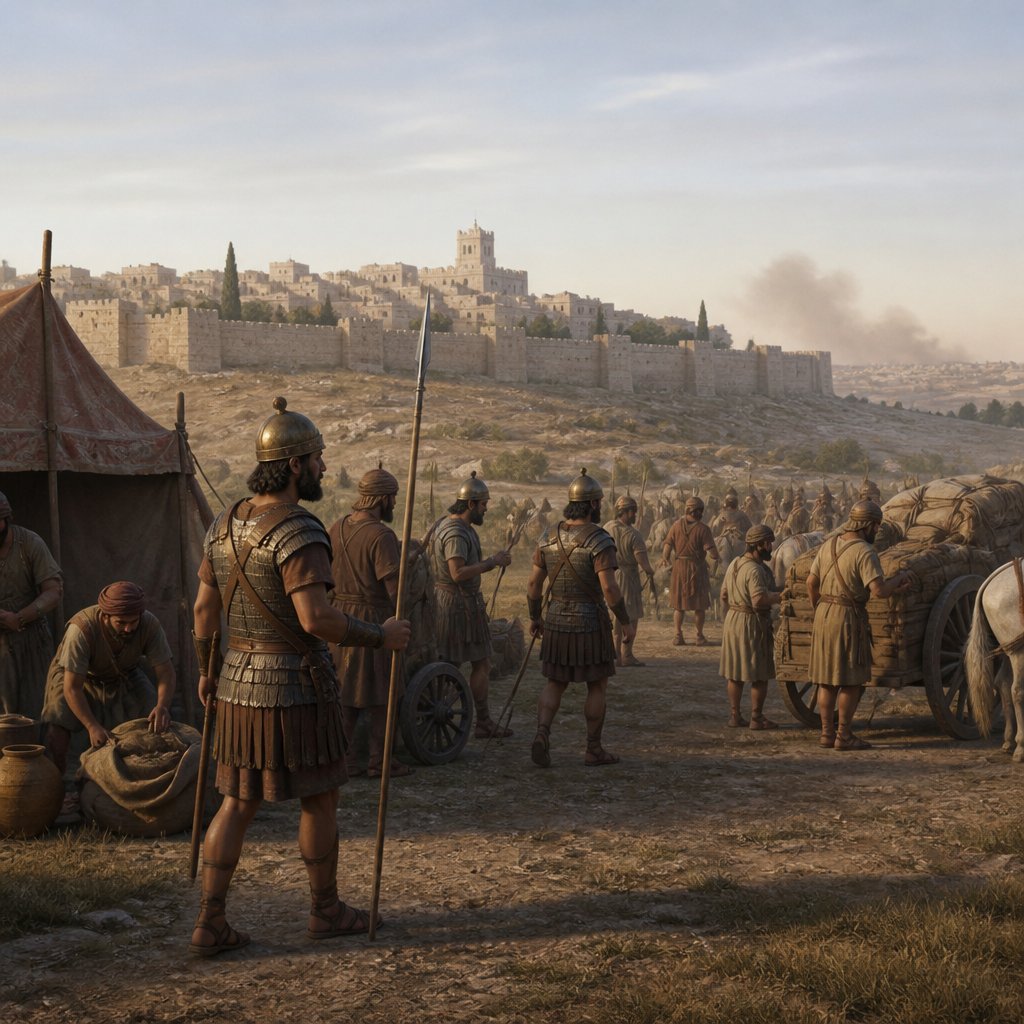
Jeremiah 37:11 in the King James Version of the Bible reads: "And it came to pass, that when the army of the Chaldeans was broken up from Jerusalem for fear of Pharaoh's army." This verse is part of the narrative of the Babylonian siege of Jerusalem and the subsequent fall of the city.
To understand the significance of this verse, it is important to consider the context in which it is placed. Jeremiah was a prophet who lived during the final years of the kingdom of Judah. The people of Judah had turned away from God, worshiping idols and engaging in various forms of injustice. As a result, God pronounced judgment on the nation, and Jeremiah was called to deliver this message to the people.
The Babylonians, led by King Nebuchadnezzar, had besieged Jerusalem in 597 BC in an effort to bring Judah under their control. The siege resulted in a famine and great suffering for the people of Jerusalem. In the midst of this difficult situation, King Zedekiah, the ruler of Judah, sought Jeremiah's counsel. Despite Jeremiah's warnings, the king and his officials refused to heed God's message and sought help from the Egyptians to break free from the Babylonian yoke. This decision ultimately proved to be futile, as the verse indicates that the Babylonian army withdrew from Jerusalem because of the threat of the advancing Egyptian army. However, this temporary relief did not last long, as the Babylonians soon returned and ultimately destroyed the city, leading to the exile of the people of Judah to Babylon.
The verse underscores the theme of the consequences of disobedience and the futility of human efforts to thwart the plans of God. Despite the temporary reprieve from the Babylonian siege, the impending judgment on Judah could not be averted. The people's reliance on the Egyptians and their own military strength proved to be in vain, as they were unable to escape the judgment of God. This serves as a reminder of the importance of trusting in God and obeying His commands, rather than seeking solutions through human means.
The verse also highlights the sovereignty of God in the affairs of nations. The Babylonian siege and the subsequent fall of Jerusalem were not merely the result of geopolitical events, but rather they were part of God's larger plan for the redemption and restoration of His people. The Babylonians were being used as agents of God's judgment on Judah for their rebellion and unfaithfulness. Despite the efforts of the Egyptians and the people of Judah to resist the Babylonians, they could not ultimately thwart God's purposes.
In addition to its historical significance, the verse also holds symbolic value. It serves as a warning to all those who would seek to defy God's will and pursue their own agenda. It reminds believers that disobedience and reliance on human strength will ultimately lead to destruction. The verse also points to the need for humility and repentance, as well as the importance of trusting in God's sovereignty and providence.
In conclusion, Jeremiah 37:11 in the King James Version of the Bible holds both historical and spiritual significance. It serves as a sobering reminder of the consequences of disobedience and the futility of human efforts to resist God's will. It also underscores the sovereignty of God in the affairs of nations and the need for faithfulness and trust in His plans. As believers, we are called to heed the warnings of Scripture and to live in obedience to God's commands, knowing that He alone is in control of the course of human history.
Get our apps


Artwork for Jeremiah 37:11

Jeremiah 37:11 - "¶ And it came to pass, that when the army of the Chaldeans was broken up from Jerusalem for fear of Pharaoh's army,"
"¶ And it came to pass, that when the army of the Chaldeans was broken up from Jerusalem for fear of Pharaoh's army," - Jeremiah 37:11

Jeremiah 37:16 - "¶ When Jeremiah was entered into the dungeon, and into the cabins, and Jeremiah had remained there many days;"

Jeremiah 37:6 - "¶ Then came the word of the LORD unto the prophet Jeremiah, saying,"

Jeremiah 37:4 - "Now Jeremiah came in and went out among the people: for they had not put him into prison."

Jeremiah 37:14 - "Then said Jeremiah, It is false; I fall not away to the Chaldeans. But he hearkened not to him: so Irijah took Jeremiah, and brought him to the princes."

Jeremiah 37:12 - "Then Jeremiah went forth out of Jerusalem to go into the land of Benjamin, to separate himself thence in the midst of the people."

Jeremiah 37:15 - "Wherefore the princes were wroth with Jeremiah, and smote him, and put him in prison in the house of Jonathan the scribe: for they had made that the prison."

"¶ Then came the word of the LORD unto the prophet Jeremiah, saying," - Jeremiah 37:6

"¶ When Jeremiah was entered into the dungeon, and into the cabins, and Jeremiah had remained there many days;" - Jeremiah 37:16

Jeremiah 25:37 - "And the peaceable habitations are cut down because of the fierce anger of the LORD."

Jeremiah 37:2 - "But neither he, nor his servants, nor the people of the land, did hearken unto the words of the LORD, which he spake by the prophet Jeremiah."

Jeremiah 37:8 - "And the Chaldeans shall come again, and fight against this city, and take it, and burn it with fire."
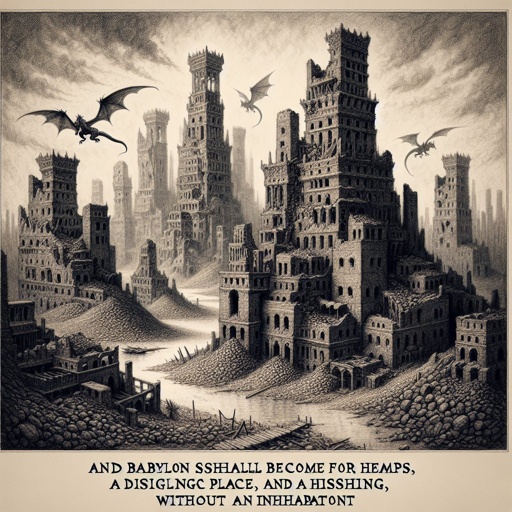
Jeremiah 51:37 - "And Babylon shall become heaps, a dwellingplace for dragons, an astonishment, and an hissing, without an inhabitant."

Jeremiah 37:3 - "And Zedekiah the king sent Jehucal the son of Shelemiah and Zephaniah the son of Maaseiah the priest to the prophet Jeremiah, saying, Pray now unto the LORD our God for us."

Jeremiah 37:21 - "Then Zedekiah the king commanded that they should commit Jeremiah into the court of the prison, and that they should give him daily a piece of bread out of the bakers' street, until all the bread in the city were spent. Thus Jeremiah remained in the court of the prison."

1 Chronicles 11:37 - "Hezro the Carmelite, Naarai the son of Ezbai,"

Jeremiah 37:18 - "Moreover Jeremiah said unto king Zedekiah, What have I offended against thee, or against thy servants, or against this people, that ye have put me in prison?"

Jeremiah 37:13 - "And when he was in the gate of Benjamin, a captain of the ward was there, whose name was Irijah, the son of Shelemiah, the son of Hananiah; and he took Jeremiah the prophet, saying, Thou fallest away to the Chaldeans."

Genesis 37:11 - "And his brethren envied him; but his father observed the saying."

"Now Jeremiah came in and went out among the people: for they had not put him into prison." - Jeremiah 37:4

Jeremiah 23:37 - "Thus shalt thou say to the prophet, What hath the LORD answered thee? and, What hath the LORD spoken?"

Jeremiah 37:9 - "Thus saith the LORD; Deceive not yourselves, saying, The Chaldeans shall surely depart from us: for they shall not depart."

Psalms 37:11 - "But the meek shall inherit the earth; and shall delight themselves in the abundance of peace."

Jeremiah 11:1 - "The word that came to Jeremiah from the LORD, saying,"

Jeremiah 48:37 - "For every head shall be bald, and every beard clipped: upon all the hands shall be cuttings, and upon the loins sackcloth."

Jeremiah 37:17 - "Then Zedekiah the king sent, and took him out: and the king asked him secretly in his house, and said, Is there any word from the LORD? And Jeremiah said, There is: for, said he, thou shalt be delivered into the hand of the king of Babylon."

Exodus 37:11 - "And he overlaid it with pure gold, and made thereunto a crown of gold round about."

Jeremiah 37:5 - "Then Pharaoh's army was come forth out of Egypt: and when the Chaldeans that besieged Jerusalem heard tidings of them, they departed from Jerusalem."

Jeremiah 29:11-13