What does Jeremiah 39:10 mean?
“But Nebuzar-adan the captain of the guard left of the poor of the people, which had nothing, in the land of Judah, and gave them vineyards and fields at the same time.” — Jeremiah 39:10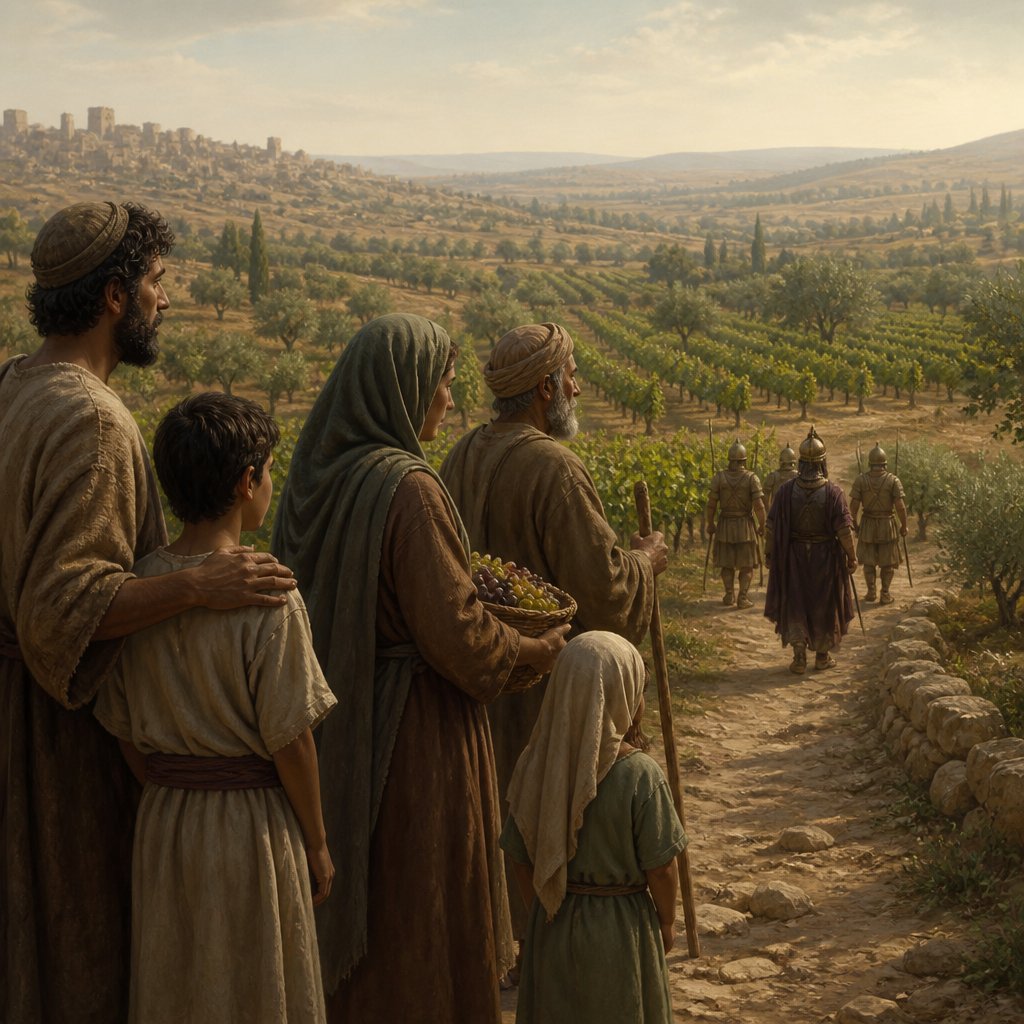
The Bible verse Jeremiah 39:10 in the King James Version (KJV) states, "But Nebuzaradan the captain of the guard left of the poor of the people, which had nothing, in the land of Judah, and gave them vineyards and fields at the same time." This verse comes from the book of Jeremiah, which is a prophetic book in the Old Testament. The book of Jeremiah contains the teachings and prophecies of the prophet Jeremiah, who was active in the kingdom of Judah during a time of great turmoil and impending destruction.
In order to understand the full meaning and significance of this verse, it is essential to place it within its broader context. The book of Jeremiah is set during the years leading up to the Babylonian conquest and destruction of Jerusalem. The people of Judah had repeatedly turned away from God, engaging in idolatry, corruption, and injustice. Despite the warnings and pleas of the prophets, the people continued in their rebellious ways, and as a result, God's judgment was about to be fulfilled through the invasion of the Babylonian empire.
In the preceding chapters of Jeremiah, the prophet had been warning of the impending destruction and calling on the people to repent and return to God. However, his calls for repentance had largely fallen on deaf ears, and the Babylonian army, under the leadership of Nebuchadnezzar, had laid siege to Jerusalem. The city was soon overcome, and the people of Judah faced the devastating consequences of their disobedience.
In this particular verse, we see the aftermath of the Babylonian conquest. Nebuzaradan, the captain of Nebuchadnezzar's guard, is tasked with overseeing the destruction and deportation of the people of Judah. Despite the widespread devastation, Nebuzaradan chooses to leave behind a remnant of the poorest of the people, those who had nothing, to tend to the vineyards and fields of the land of Judah. This act of clemency stands in stark contrast to the overall destruction and serves as a glimmer of hope amidst the overwhelming despair.
The themes present in this verse are both profound and multi-layered. One prominent theme is that of God's faithfulness and mercy, even in the midst of judgment and destruction. Despite the transgressions of the people, God's compassion is evident in the fact that a remnant is preserved. This reflects the unchanging nature of God's character, as well as His ongoing commitment to His covenant people.
Another significant theme is that of restoration and hope. In leaving the poor of the people in the land of Judah and providing them with vineyards and fields, there is a sense of sustaining the hope for a future return to the land. Even in the midst of desolation, there is the promise of new beginnings and the possibility of restoration. This theme of restoration and hope is a central motif throughout the Bible, underscoring the redemptive nature of God's plan for His people.
Furthermore, this verse serves as a powerful reminder of the importance of caring for the marginalized and downtrodden. Despite the widespread devastation and upheaval, Nebuzaradan's decision to leave a remnant of the poorest of the people reflects a concern for their well-being and their ability to sustain themselves. This resonates with the broader biblical emphasis on justice, compassion, and care for the vulnerable members of society.
Symbolically, the vineyards and fields left to the poor of the people can be seen as a representation of God's provision and sustenance. The image of vineyards and fields evokes the idea of fruitful labor and abundant provision, pointing to the fact that even in the aftermath of immense hardship, there is the potential for growth, productivity, and sustenance. This symbolism aligns with the broader biblical imagery of God as the ultimate provider and sustainer of His people.
In conclusion, Jeremiah 39:10 captures a pivotal moment in the biblical narrative, reflecting themes of God's faithfulness, restoration, and compassion. The verse serves as a poignant reminder of God's enduring mercy and care for His people, even in the midst of judgment and upheaval. It also underscores the importance of caring for the marginalized and vulnerable members of society, as well as the hope for renewal and new beginnings. As such, this verse continues to resonate with profound relevance and significance for believers today, offering a timeless message of hope, restoration, and divine provision.
Get our apps


Artwork for Jeremiah 39:10

Jeremiah 39:10 - "But Nebuzar-adan the captain of the guard left of the poor of the people, which had nothing, in the land of Judah, and gave them vineyards and fields at the same time."
"But Nebuzar-adan the captain of the guard left of the poor of the people, which had nothing, in the land of Judah, and gave them vineyards and fields at the same time." - Jeremiah 39:10

Jeremiah 39:15 - "¶ Now the word of the LORD came unto Jeremiah, while he was shut up in the court of the prison, saying,"

Jeremiah 39:11 - "¶ Now Nebuchadrezzar king of Babylon gave charge concerning Jeremiah to Nebuzar-adan the captain of the guard, saying,"

Ezra 10:39 - "And Shelemiah, and Nathan, and Adaiah,"

Jeremiah 39:8 - "¶ And the Chaldeans burned the king's house, and the houses of the people, with fire, and brake down the walls of Jerusalem."

Jeremiah 39:2 - "And in the eleventh year of Zedekiah, in the fourth month, the ninth day of the month, the city was broken up."

Jeremiah 39:7 - "Moreover he put out Zedekiah's eyes, and bound him with chains, to carry him to Babylon."

Jeremiah 49:39 - "¶ But it shall come to pass in the latter days, that I will bring again the captivity of Elam, saith the LORD."

"And Shelemiah, and Nathan, and Adaiah," - Ezra 10:39

Jeremiah 39:14 - "Even they sent, and took Jeremiah out of the court of the prison, and committed him unto Gedaliah the son of Ahikam the son of Shaphan, that he should carry him home: so he dwelt among the people."

John 10:39 - "Therefore they sought again to take him: but he escaped out of their hand,"

Jeremiah 31:39 - "And the measuring line shall yet go forth over against it upon the hill Gareb, and shall compass about to Goath."

Jeremiah 39:17 - "But I will deliver thee in that day, saith the LORD: and thou shalt not be given into the hand of the men of whom thou art afraid."

Jeremiah 51:39 - "In their heat I will make their feasts, and I will make them drunken, that they may rejoice, and sleep a perpetual sleep, and not wake, saith the LORD."

Jeremiah 32:39 - "And I will give them one heart, and one way, that they may fear me for ever, for the good of them, and of their children after them:"

Jeremiah 39:6 - "Then the king of Babylon slew the sons of Zedekiah in Riblah before his eyes: also the king of Babylon slew all the nobles of Judah."

Jeremiah 39:1 - "In the ninth year of Zedekiah king of Judah, in the tenth month, came Nebuchadrezzar king of Babylon and all his army against Jerusalem, and they besieged it."

Jeremiah 39:13 - "So Nebuzar-adan the captain of the guard sent, and Nebushasban, Rab-saris, and Nergal-sharezer, Rab-mag, and all the king of Babylon's princes;"

Hebrews 10:39 - "But we are not of them who draw back unto perdition; but of them that believe to the saving of the soul."

Jeremiah 39:12 - "Take him, and look well to him, and do him no harm; but do unto him even as he shall say unto thee."

Exodus 39:10 - "And they set in it four rows of stones: the first row was a sardius, a topaz, and a carbuncle: this was the first row."

"¶ Now Nebuchadrezzar king of Babylon gave charge concerning Jeremiah to Nebuzar-adan the captain of the guard, saying," - Jeremiah 39:11

"¶ Now the word of the LORD came unto Jeremiah, while he was shut up in the court of the prison, saying," - Jeremiah 39:15

Job 39:10 - "Canst thou bind the unicorn with his band in the furrow? or will he harrow the valleys after thee?"

Psalms 39:10 - "Remove thy stroke away from me: I am consumed by the blow of thine hand."

Luke 10:39 - "And she had a sister called Mary, which also sat at Jesus' feet, and heard his word."

Jeremiah 39:9 - "Then Nebuzar-adan the captain of the guard carried away captive into Babylon the remnant of the people that remained in the city, and those that fell away, that fell to him, with the rest of the people that remained."

Genesis 39:10 - "And it came to pass, as she spake to Joseph day by day, that he hearkened not unto her, to lie by her, or to be with her."

Matthew 10:39 - "He that findeth his life shall lose it: and he that loseth his life for my sake shall find it."