What does Jeremiah 40:14 mean?
“And said unto him, Dost thou certainly know that Baalis the king of the Ammonites hath sent Ishmael the son of Nethaniah to slay thee? But Gedaliah the son of Ahikam believed them not.” — Jeremiah 40:14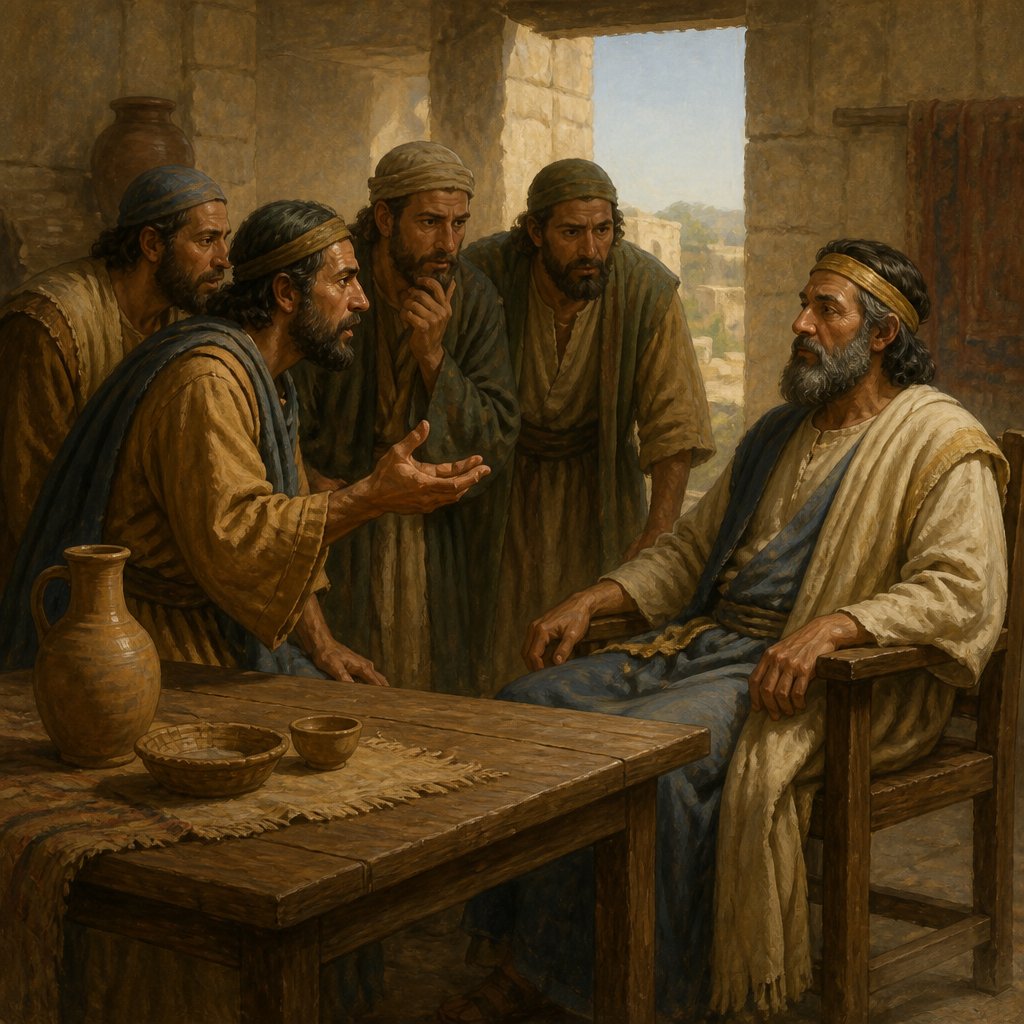
Jeremiah 40:14 in the King James Version of the Bible reads, "And said unto him, Dost thou certainly know that Baalis the king of the Ammonites hath sent Ishmael the son of Nethaniah to slay thee? But Gedaliah the son of Ahikam believed them not."
This verse is a part of the historical account of the prophet Jeremiah's experiences during the Babylonian exile of Judah. It provides insight into the political intrigue and unrest that characterized this tumultuous period in Israel's history. To fully understand the significance of this verse, it is necessary to examine its context within the larger narrative of Jeremiah's life and the broader themes of the book of Jeremiah.
The book of Jeremiah is primarily concerned with the moral and spiritual decline of the nation of Judah and the judgment that is to come as a result. The prophet Jeremiah is called to warn the people of Judah about the impending destruction and exile that they will face if they do not repent and turn back to God. Despite facing persecution and rejection, Jeremiah faithfully proclaims God's message of judgment and hope to the people.
In Jeremiah 40, the city of Jerusalem has been conquered by the Babylonians, and many of the inhabitants, including Jeremiah, have been taken into exile. Gedaliah, the son of Ahikam, is appointed as governor over the remnant of Judah that is left in the land. However, his rule is tenuous, as there is still significant unrest and opposition from those who are loyal to the former king of Judah. Ishmael, a member of the royal family, is particularly discontented with Gedaliah's appointment and seeks to undermine his authority.
The verse in question relates a warning that Gedaliah receives from Johanan, the son of Kareah, regarding a plot against his life. Johanan informs Gedaliah that Baalis, the king of the Ammonites, has sent Ishmael to assassinate him. Despite this grave warning, Gedaliah chooses to trust Ishmael and does not take heed of the threat against his life. This decision ultimately leads to his assassination and the destabilization of the remnant of Judah under Babylonian rule.
One of the themes that can be observed in this verse is the theme of trust and discernment. Gedaliah is faced with a difficult decision – whether to heed the warning he has received or to place his trust in Ishmael. Ultimately, Gedaliah's lack of discernment and his misplaced trust lead to disastrous consequences. This serves as a cautionary tale about the importance of making wise and discerning choices, especially in times of political and social upheaval.
Another theme present in this verse is the overarching theme of the sovereignty of God. While the actions of men like Baalis and Ishmael may have consequences in the temporal realm, the ultimate authority and control over the course of history rest in the hands of God. The betrayal and violence that Gedaliah experiences are ultimately part of God's judgment upon Judah for their disobedience and idolatry. This serves as a reminder that even in the midst of political and social turmoil, God's purposes will ultimately prevail.
Symbolism can also be found in this verse, particularly in the characters of Gedaliah and Ishmael. Gedaliah can be seen as a figure representing the fragile and tenuous nature of human leadership and authority. His lack of discernment and his vulnerability to betrayal serve as a reflection of the weakness of human institutions and the need for divine guidance and wisdom. Ishmael, on the other hand, represents the forces of opposition and treachery, seeking to disrupt the fragile peace that has been established in the aftermath of Judah's destruction.
In conclusion, Jeremiah 40:14 is a verse that provides valuable insights into the political intrigue and unrest that characterized the period of the Babylonian exile. It serves as a cautionary tale about the importance of discernment and trust in times of uncertainty. Ultimately, it also serves as a reminder of the sovereignty of God and the need to seek His guidance and wisdom in the midst of political and social upheaval.
Get our apps


Artwork for Jeremiah 40:14

Jeremiah 40:14 - "And said unto him, Dost thou certainly know that Baalis the king of the Ammonites hath sent Ishmael the son of Nethaniah to slay thee? But Gedaliah the son of Ahikam believed them not."
"And said unto him, Dost thou certainly know that Baalis the king of the Ammonites hath sent Ishmael the son of Nethaniah to slay thee? But Gedaliah the son of Ahikam believed them not." - Jeremiah 40:14

Jeremiah 40

Jeremiah 40:6 - "Then went Jeremiah unto Gedaliah the son of Ahikam to Mizpah; and dwelt with him among the people that were left in the land."

Jeremiah 40:2 - "And the captain of the guard took Jeremiah, and said unto him, The LORD thy God hath pronounced this evil upon this place."

1 Corinthians 14:36-40

1 Corinthians 14:39-40

Jeremiah 23:40 - "And I will bring an everlasting reproach upon you, and a perpetual shame, which shall not be forgotten."

Jeremiah 51:40 - "I will bring them down like lambs to the slaughter, like rams with he goats."

1 Corinthians 14:40 - "Let all things be done decently and in order."

Jeremiah 40:13 - "¶ Moreover Johanan the son of Kareah, and all the captains of the forces that were in the fields, came to Gedaliah to Mizpah,"

Exodus 40:14 - "And thou shalt bring his sons, and clothe them with coats:"

Jeremiah 48:40 - "For thus saith the LORD; Behold, he shall fly as an eagle, and shall spread his wings over Moab."

Jeremiah 14:1 - "The word of the LORD that came to Jeremiah concerning the dearth."

Jeremiah 40:16 - "But Gedaliah the son of Ahikam said unto Johanan the son of Kareah, Thou shalt not do this thing: for thou speakest falsely of Ishmael."

Job 40:14 - "Then will I also confess unto thee that thine own right hand can save thee."

Ezekiel 40:14 - "He made also posts of threescore cubits, even unto the post of the court round about the gate."
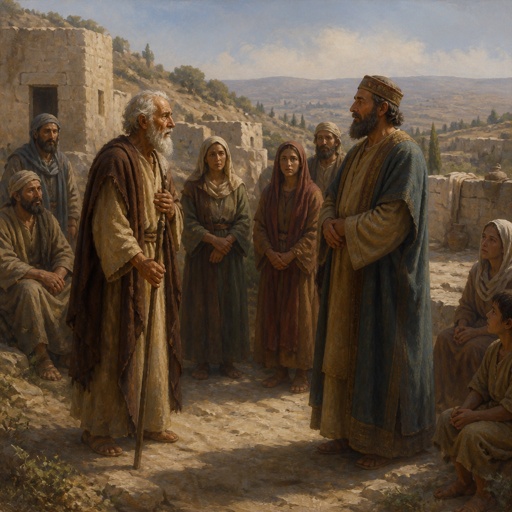
"Then went Jeremiah unto Gedaliah the son of Ahikam to Mizpah; and dwelt with him among the people that were left in the land." - Jeremiah 40:6

Leviticus 14:40 - "Then the priest shall command that they take away the stones in which the plague is, and they shall cast them into an unclean place without the city:"

Jeremiah 37:14 - "Then said Jeremiah, It is false; I fall not away to the Chaldeans. But he hearkened not to him: so Irijah took Jeremiah, and brought him to the princes."

Jeremiah 50:40 - "As God overthrew Sodom and Gomorrah and the neighbour cities thereof, saith the LORD; so shall no man abide there, neither shall any son of man dwell therein."
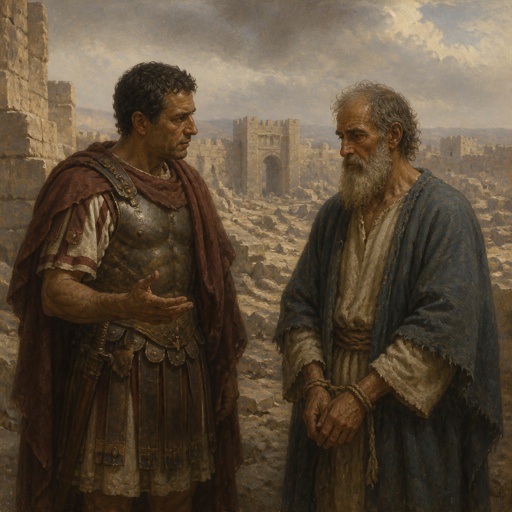
"And the captain of the guard took Jeremiah, and said unto him, The LORD thy God hath pronounced this evil upon this place." - Jeremiah 40:2

Mark 14:40 - "And when he returned, he found them asleep again, (for their eyes were heavy,) neither wist they what to answer him."

Jeremiah 40:8 - "Then they came to Gedaliah to Mizpah, even Ishmael the son of Nethaniah, and Johanan and Jonathan the sons of Kareah, and Seraiah the son of Tanhumeth, and the sons of Ephai the Netophathite, and Jezaniah the son of a Maachathite, they and their men."

Jeremiah 40:9 - "And Gedaliah the son of Ahikam the son of Shaphan sware unto them and to their men, saying, Fear not to serve the Chaldeans: dwell in the land, and serve the king of Babylon, and it shall be well with you."
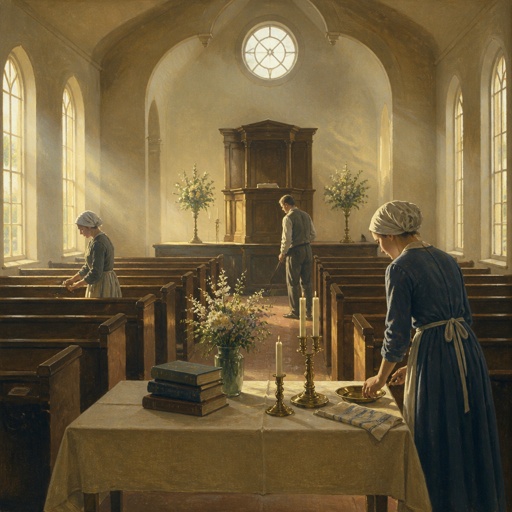
"Let all things be done decently and in order." - 1 Corinthians 14:40

Jeremiah 29: 4-14

Jeremiah 29: 4-14

Jeremiah 32:40 - "And I will make an everlasting covenant with them, that I will not turn away from them, to do them good; but I will put my fear in their hearts, that they shall not depart from me."

Jeremiah 40:12 - "Even all the Jews returned out of all places whither they were driven, and came to the land of Judah, to Gedaliah, unto Mizpah, and gathered wine and summer fruits very much."