What does Jeremiah 41:9 mean?
"Now the pit wherein Ishmael had cast all the dead bodies of the men, whom he had slain because of Gedaliah, was it which Asa the king had made for fear of Baasha king of Israel: and Ishmael the son of Nethaniah filled it with them that were slain." - Jeremiah 41:9
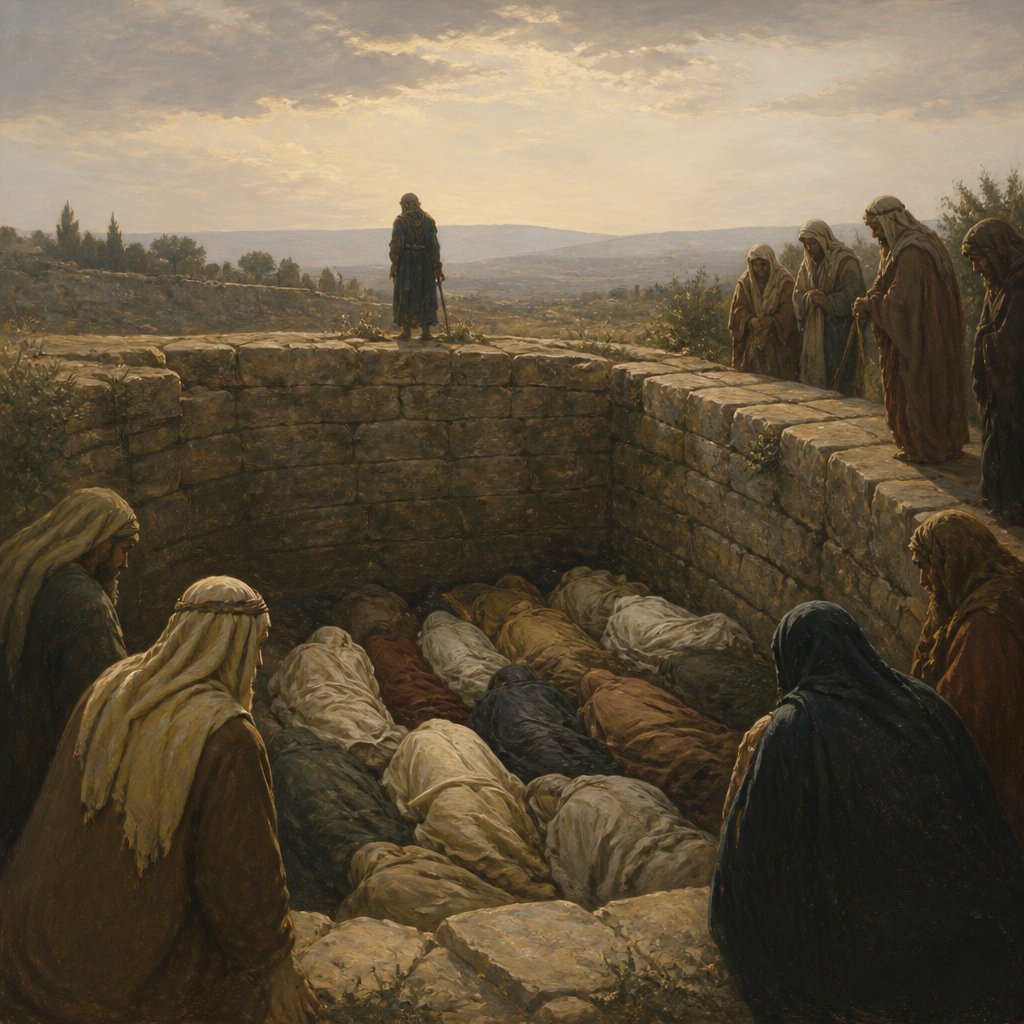
Jeremiah 41:9 in the King James Version of the Bible reads: "Now the pit wherein Ishmael had cast all the dead bodies of the men, whom he had slain because of Gedaliah, was it which Asa the king had made for fear of Baasha king of Israel: and Ishmael the son of Nethaniah filled it with them that were slain."
This verse comes from the book of Jeremiah, which is a prophetic book in the Old Testament. The book is named after the prophet Jeremiah, who lived in the 6th century BCE, during a time of great upheaval and change in the kingdom of Judah. The book of Jeremiah contains a mix of historical narratives, oracles, and poetry, and it is often seen as a reflection of the prophet's struggle to come to terms with the destruction of Jerusalem and the exile of the Israelites.
The passage in question is part of a historical narrative about the aftermath of the assassination of Gedaliah, the governor of Judah appointed by the Babylonians after they had conquered the kingdom. After Gedaliah's death, there was a power struggle among the remaining Judahites, and Ishmael, the son of Nethaniah, emerged as a key figure. He was responsible for the massacre at Mizpah, where he killed Gedaliah and the Babylonian soldiers who were stationed there.
The verse refers to the pit where Ishmael threw the bodies of those he had slain. It mentions that the pit was the same one that King Asa had made out of fear of Baasha, the king of Israel. This reference to a historical event from the time of King Asa serves to connect the present events to the broader history of the Israelites. It suggests that the cycle of violence and destruction in Judah has deep roots and is part of a larger pattern of unfaithfulness and disobedience to God.
The verse also contains a more immediate symbolism. The pit could be seen as a symbol of the consequences of sin and violence. Ishmael's actions were not just a political power play; they were the result of a deep-seated moral corruption that had taken hold of the people of Judah. The filling of the pit with the slain also serves as a stark image of the brutality and inhumanity of Ishmael's actions.
As with many passages in the book of Jeremiah, this verse can be seen as a reflection on the consequences of disobedience and the destructive power of sin. The book as a whole is a call for repentance and a warning of the dangers of turning away from God. The imagery in this verse reinforces the book's central themes of judgment and the need for reconciliation with God.
In a broader context, this verse can also be seen as a commentary on the nature of power and its corrupting influence. Ishmael's ruthless pursuit of power and his willingness to resort to extreme violence to achieve his goals stands as a warning against the dangers of unchecked ambition and the lust for power.
Overall, Jeremiah 41:9 is a powerful and evocative verse that speaks to the larger themes of the book of Jeremiah. It serves as both a historical record of a specific event and a meditation on the broader moral and spiritual implications of that event. It is a reminder of the consequences of sin and a call to turn back to God in repentance and obedience.
Have questions about Jeremiah 41:9?
Dive deeper into this scripture with Bible Chat — an AI-powered tool for exploring God's Word through conversation. Ask questions, get context, and grow in your understanding of the Bible.
Get Our Apps


Jeremiah 41:9 Artwork
Jeremiah 41:9 - "Now the pit wherein Ishmael had cast all the dead bodies of the men, whom he had slain because of Gedaliah, was it which Asa the king had made for fear of Baasha king of Israel: and Ishmael the son of Nethaniah filled it with them that were slain."
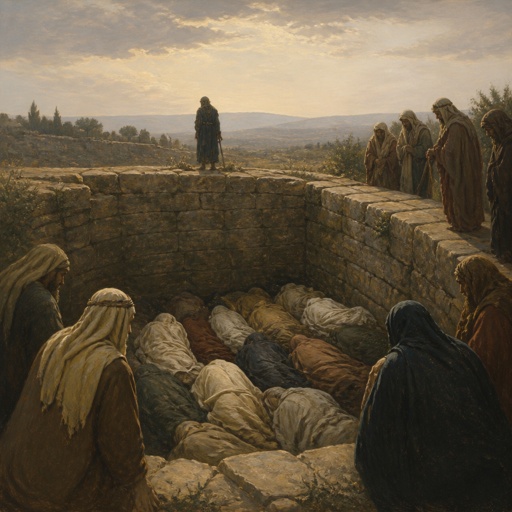
"Now the pit wherein Ishmael had cast all the dead bodies of the men, whom he had slain because of Gedaliah, was it which Asa the king had made for fear of Baasha king of Israel: and Ishmael the son of Nethaniah filled it with them that were slain." - Jeremiah 41:9

John 9:1-41

Jeremiah 41:4 - "And it came to pass the second day after he had slain Gedaliah, and no man knew it,"

Jeremiah 41:17 - "And they departed, and dwelt in the habitation of Chimham, which is by Beth-lehem, to go to enter into Egypt,"

Jeremiah 41:15 - "But Ishmael the son of Nethaniah escaped from Johanan with eight men, and went to the Ammonites."

Jeremiah 41:12 - "Then they took all the men, and went to fight with Ishmael the son of Nethaniah, and found him by the great waters that are in Gibeon."

1 Chronicles 9:41 - "And the sons of Micah were, Pithon, and Melech, and Tahrea, and Ahaz."

Jeremiah 51:41 - "How is Sheshach taken! and how is the praise of the whole earth surprised! how is Babylon become an astonishment among the nations!"

Jeremiah 48:41 - "Kerioth is taken, and the strong holds are surprised, and the mighty men's hearts in Moab at that day shall be as the heart of a woman in her pangs."

Jeremiah 50:41 - "Behold, a people shall come from the north, and a great nation, and many kings shall be raised up from the coasts of the earth."

Jeremiah 41:3 - "Ishmael also slew all the Jews that were with him, even with Gedaliah, at Mizpah, and the Chaldeans that were found there, and the men of war."

Job 41:9 - "Behold, the hope of him is in vain: shall not one be cast down even at the sight of him?"

Jeremiah 41:11 - "¶ But when Johanan the son of Kareah, and all the captains of the forces that were with him, heard of all the evil that Ishmael the son of Nethaniah had done,"

Judges 9:41 - "And Abimelech dwelt at Arumah: and Zebul thrust out Gaal and his brethren, that they should not dwell in Shechem."

Jeremiah 41:14 - "So all the people that Ishmael had carried away captive from Mizpah cast about and returned, and went unto Johanan the son of Kareah."

Jeremiah 41:7 - "And it was so, when they came into the midst of the city, that Ishmael the son of Nethaniah slew them, and cast them into the midst of the pit, he, and the men that were with him."

Jeremiah 32:41 - "Yea, I will rejoice over them to do them good, and I will plant them in this land assuredly with my whole heart and with my whole soul."

Genesis 41:9 - "¶ Then spake the chief butler unto Pharaoh, saying, I do remember my faults this day:"

Jeremiah 41:17 (KJVA) 17 And they departed, and dwelt in the habitation of Chimham, which is by Bethlehem, to go to enter into Egypt,

Jeremiah 41:18 - "Because of the Chaldeans: for they were afraid of them, because Ishmael the son of Nethaniah had slain Gedaliah the son of Ahikam, whom the king of Babylon made governor in the land."

Jeremiah 41:17 (KJVA) 17 And they departed, and dwelt in the habitation of Chimham, which is by Bethlehem, to go to enter into Egypt,

Jeremiah 41:13 - "Now it came to pass, that when all the people which were with Ishmael saw Johanan the son of Kareah, and all the captains of the forces that were with him, then they were glad."
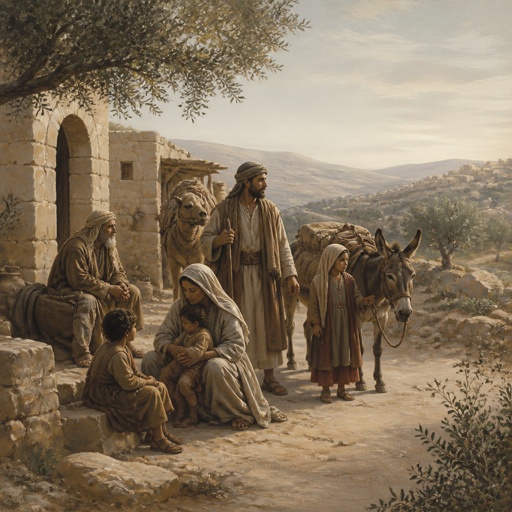
"And they departed, and dwelt in the habitation of Chimham, which is by Beth-lehem, to go to enter into Egypt," - Jeremiah 41:17

Ezekiel 41:9 - "The thickness of the wall, which was for the side chamber without, was five cubits: and that which was left was the place of the side chambers that were within."
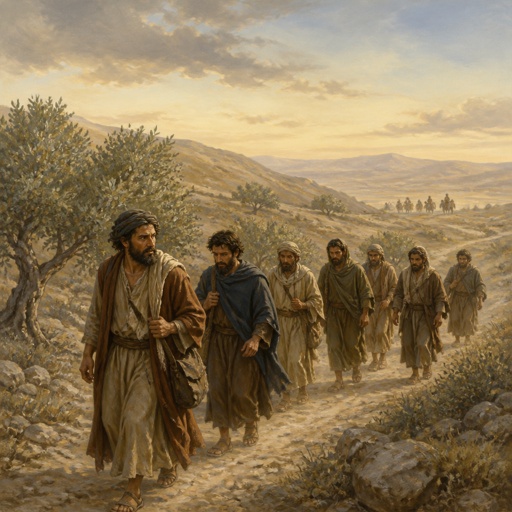
"But Ishmael the son of Nethaniah escaped from Johanan with eight men, and went to the Ammonites." - Jeremiah 41:15

"And the sons of Micah were, Pithon, and Melech, and Tahrea, and Ahaz." - 1 Chronicles 9:41

Acts 9:41 - "And he gave her his hand, and lifted her up, and when he had called the saints and widows, presented her alive."

Luke 9:41 - "And Jesus answering said, O faithless and perverse generation, how long shall I be with you, and suffer you? Bring thy son hither."
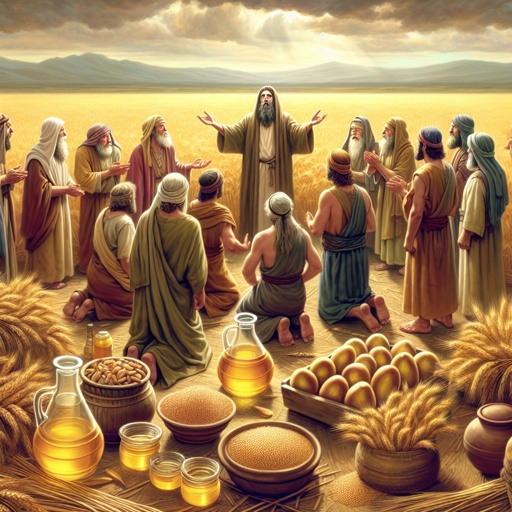
Jeremiah 41:8 - "But ten men were found among them that said unto Ishmael, Slay us not: for we have treasures in the field, of wheat, and of barley, and of oil, and of honey. So he forbare, and slew them not among their brethren."