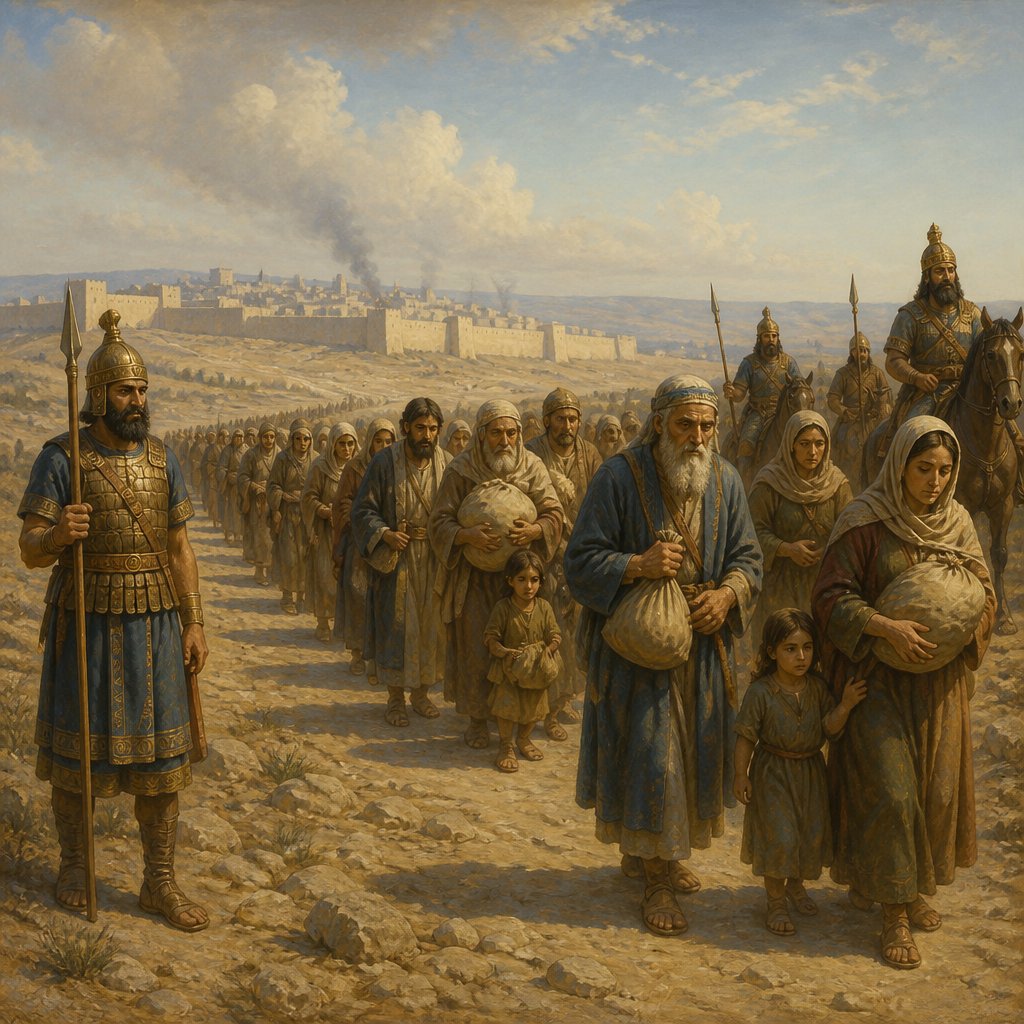
Jeremiah 52:28-30 in the King James Version of the Bible reads:
"28 This is the people whom Nebuchadrezzar carried away captive: in the seventh year three thousand Jews and three and twenty:
29 In the eighteenth year of Nebuchadrezzar he carried away captive from Jerusalem eight hundred thirty and two persons:
30 In the three and twentieth year of Nebuchadrezzar Nebuzaradan the captain of the guard carried away captive of the Jews seven hundred forty and five persons: all the persons were four thousand and six hundred."
These verses come from the book of Jeremiah, which is the second of the major prophets in the Old Testament. The book of Jeremiah contains the prophecies and messages of the prophet Jeremiah, who lived in the southern kingdom of Judah during a time of great upheaval and uncertainty. Jeremiah's messages were primarily a warning to the people of Judah about the impending destruction of Jerusalem and the exile of its inhabitants to Babylon.
The verses in question specifically detail the number of people who were carried away captive by Nebuchadnezzar, the king of Babylon, at different periods of time. The significance of these numbers lies in the fact that they represent the scale of the destruction and displacement that occurred as a result of Nebuchadnezzar's conquest of Judah and Jerusalem.
One of the key themes that emerges from these verses is the concept of divine judgment. Throughout the book of Jeremiah, the prophet repeatedly warns the people of Judah about the consequences of their disobedience and idolatry. The exile to Babylon is presented as a direct result of the people's unfaithfulness to God and their refusal to heed the warnings of the prophets. The large numbers of captives mentioned in these verses serve as a stark reminder of the severity of God's judgment and the devastating impact it had on the people of Judah.
Another important theme that can be gleaned from these verses is the idea of exile and displacement. The forced removal of thousands of people from their homeland to a foreign land would have been a traumatic and disorienting experience. The mention of specific numbers in the verses serves to emphasize the scale of this displacement and the sheer magnitude of the human suffering that resulted from the conquest of Judah.
The historical context in which these verses are situated is also crucial to understanding their significance. The Babylonian conquest of Judah and the exile to Babylon marked a pivotal moment in the history of the Jewish people. The destruction of Jerusalem and the temple, and the subsequent exile, had a profound and long-lasting impact on the religious, cultural, and social identity of the Jewish people. The verses in Jeremiah serve as a reminder of this pivotal moment in Jewish history and the enduring significance of the exile experience.
Symbolism can also be found in these verses, particularly in the numbers themselves. In biblical numerology, certain numbers carry symbolic significance. For example, the number seven often represents completion or perfection, while the number twelve is associated with the people of God. In the verses from Jeremiah, the specific numbers of captives are not arbitrary but are included to convey a deeper symbolic meaning. The large numbers mentioned in these verses serve to underline the extent of the devastation and the enormity of the loss experienced by the people of Judah.
In conclusion, the verses from Jeremiah 52:28-30 serve as a poignant reminder of the devastating impact of divine judgment and the profound suffering experienced by the people of Judah as a result of the Babylonian conquest. They also highlight the themes of exile, displacement, and the enduring significance of this pivotal moment in Jewish history. The specific numbers mentioned in these verses serve to emphasize the scale of this tragedy and convey a deeper symbolic meaning that resonates throughout the biblical narrative.
Get our apps


Artwork for Jeremiah 52:28-30

Jeremiah 52:28-30 - "Jeremiah 52:28-30: 28 This is the people whom Nebuchadrezzar carried away captive: in the seventh year three thousand Jews and three and twenty: 29 In the eighteenth year of Nebuchadrezzar he carried away captive from Jerusalem eight hundred thirty and two persons: 30 In the three and twentieth year of Nebuchadrezzar Nebuzaradan the captain of the guard carried away captive of the Jews seven hundred forty and five persons: all the persons were four thousand and six hundred."
"Jeremiah 52:28-30: 28 This is the people whom Nebuchadrezzar carried away captive: in the seventh year three thousand Jews and three and twenty: 29 In the eighteenth year of Nebuchadrezzar he carried away captive from Jerusalem eight hundred thirty and two persons: 30 In the three and twentieth year of Nebuchadrezzar Nebuzaradan the captain of the guard carried away captive of the Jews seven hundred forty and five persons: all the persons were four thousand and six hundred." - Jeremiah 52:28-30

Jeremiah 52:28 - "This is the people whom Nebuchadrezzar carried away captive: in the seventh year three thousand Jews and three and twenty:"

Jeremiah 52:30 - "In the three and twentieth year of Nebuchadrezzar Nebuzar-adan the captain of the guard carried away captive of the Jews seven hundred forty and five persons: all the persons were four thousand and six hundred."

Jeremiah 52:16
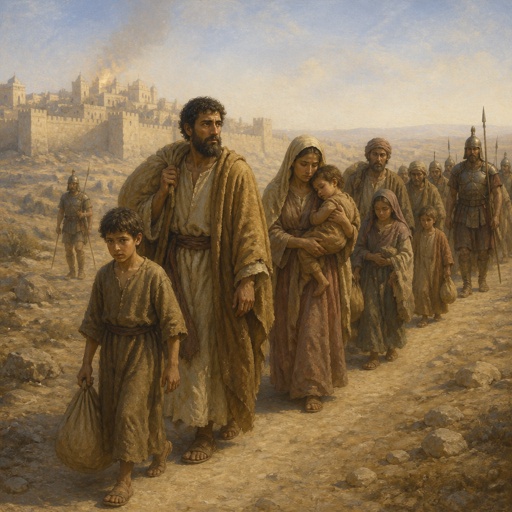
"This is the people whom Nebuchadrezzar carried away captive: in the seventh year three thousand Jews and three and twenty:" - Jeremiah 52:28

Jeremiah 52:5 - "So the city was besieged unto the eleventh year of king Zedekiah."

Jeremiah 52:16 - "But Nebuzar-adan the captain of the guard left certain of the poor of the land for vinedressers and for husbandmen."

Jeremiah 52:2 - "And he did that which was evil in the eyes of the LORD, according to all that Jehoiakim had done."

Jeremiah 52:6 - "And in the fourth month, in the ninth day of the month, the famine was sore in the city, so that there was no bread for the people of the land."

Jeremiah 52:26 - "So Nebuzar-adan the captain of the guard took them, and brought them to the king of Babylon to Riblah."

Jeremiah 52:1 - "Zedekiah was one and twenty years old when he began to reign, and he reigned eleven years in Jerusalem. And his mother's name was Hamutal the daughter of Jeremiah of Libnah."

Jeremiah 52:24 - "¶ And the captain of the guard took Seraiah the chief priest, and Zephaniah the second priest, and the three keepers of the door:"

Jeremiah 52:32 - "And spake kindly unto him, and set his throne above the throne of the kings that were with him in Babylon,"

Jeremiah 52:14 - "And all the army of the Chaldeans, that were with the captain of the guard, brake down all the walls of Jerusalem round about."

Jeremiah 52:18 - "The caldrons also, and the shovels, and the snuffers, and the bowls, and the spoons, and all the vessels of brass wherewith they ministered, took they away."
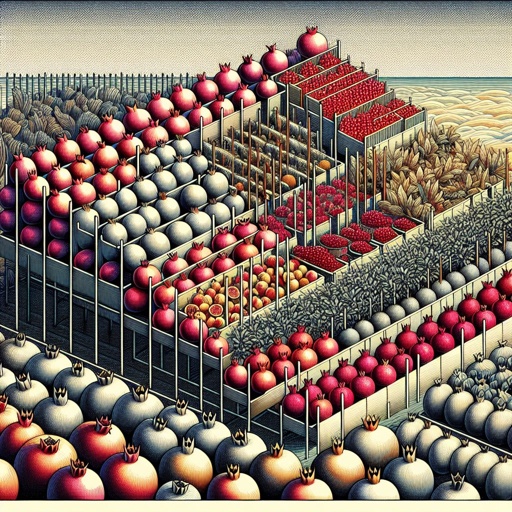
Jeremiah 52:23 - "And there were ninety and six pomegranates on a side; and all the pomegranates upon the network were an hundred round about."

Jeremiah 52:29 - "In the eighteenth year of Nebuchadrezzar he carried away captive from Jerusalem eight hundred thirty and two persons:"

Jeremiah 52:13 - "And burned the house of the LORD, and the king's house; and all the houses of Jerusalem, and all the houses of the great men, burned he with fire:"

Jeremiah 52:33 - "And changed his prison garments: and he did continually eat bread before him all the days of his life."
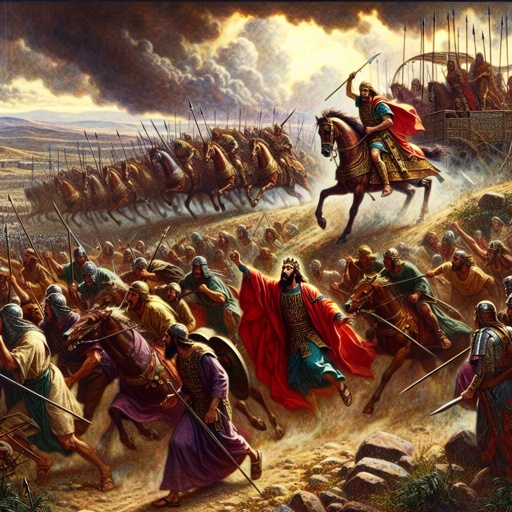
Jeremiah 52:8 - "¶ But the army of the Chaldeans pursued after the king, and overtook Zedekiah in the plains of Jericho; and all his army was scattered from him."

Jeremiah 52:10 - "And the king of Babylon slew the sons of Zedekiah before his eyes: he slew also all the princes of Judah in Riblah."

Job 30:28

Job 30:28

Job 30:28

Job 30:28

Job 30:28

Jeremiah 52:9 - "Then they took the king, and carried him up unto the king of Babylon to Riblah in the land of Hamath; where he gave judgment upon him."

Jeremiah 30:1 - "The word that came to Jeremiah from the LORD, saying,"

Jeremiah 29:30 - "¶ Then came the word of the LORD unto Jeremiah, saying,"