What does Job 1:2 mean?
"And there were born unto him seven sons and three daughters." - Job 1:2
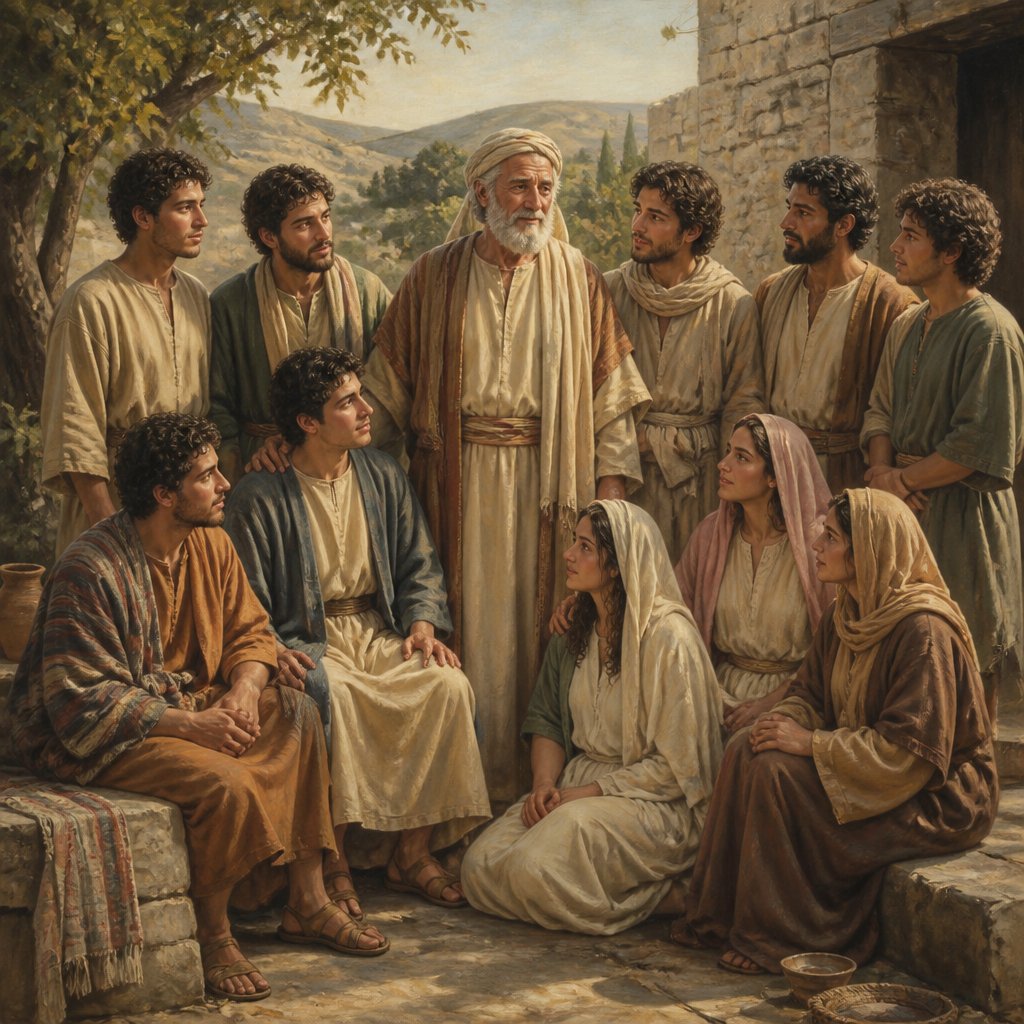
Job 1:2 in the King James Version of the Bible reads, "And there were born unto him seven sons and three daughters." This verse is from the book of Job, which is considered one of the oldest books in the Bible and is found in the Old Testament. The book of Job is a complex and profound exploration of the nature of suffering, the sovereignty of God, and the human response to hardship.
The context of this verse is important in understanding its significance. Job is described as a man of great wealth and prosperity, with a large family consisting of seven sons and three daughters. The number ten is significant in many biblical contexts, symbolizing completeness or perfection. In this case, it represents the completeness of Job's family and the fullness of his blessings.
The theme of family is central to this verse and the book of Job as a whole. Job's family is a source of joy and pride for him, and their well-being is of utmost importance to him. This verse highlights the abundance and blessings that Job enjoys, setting the stage for the trials and tribulations to come.
The symbolism of the number of children in the verse is also significant. In ancient Hebrew culture, large families were seen as a sign of God's favor and blessing. The fact that Job has ten children – seven sons and three daughters – underscores his standing in the community and his reputation as a righteous and prosperous man.
Furthermore, the inclusion of both sons and daughters in the verse is noteworthy. In many ancient cultures, including the Hebrew culture, sons were highly prized for their ability to carry on the family name and inheritance. Daughters, on the other hand, were often seen as a burden or a lesser blessing. In this verse, the equal mention of sons and daughters highlights the value that Job places on all of his children and the completeness of his joy in his family.
The numerical symbolism in the verse also points to the idea of balance and harmony. The number seven is often associated with divine perfection or completeness in the Bible, while the number three is seen as representative of the divine Trinity – the Father, the Son, and the Holy Spirit. In this way, the combination of seven sons and three daughters symbolizes the wholeness and perfection of Job's family, as well as the divine blessing and favor that he enjoys.
In a broader sense, this verse serves as a reminder of the transient nature of earthly blessings and the impermanence of worldly success. Job's abundant family and wealth will soon be shattered by a series of calamities, leading him to question the very nature of his faith and the justice of God. This verse sets the stage for the profound theological and philosophical questions that will be explored throughout the book of Job.
In conclusion, Job 1:2 is a rich and multi-layered verse that speaks to the themes of family, blessing, and the transient nature of earthly prosperity. Its numerical symbolism adds depth and significance to the blessings that Job enjoys, while also foreshadowing the trials and tribulations that lie ahead. The verse serves as a powerful introduction to the book of Job, setting the stage for the profound exploration of suffering, faith, and the sovereignty of God that will unfold in the chapters to come.
Have questions about Job 1:2?
Dive deeper into this scripture with Bible Chat — an AI-powered tool for exploring God's Word through conversation. Ask questions, get context, and grow in your understanding of the Bible.
Get Our Apps


Job 1:2 Artwork

Job 1:2 - "And there were born unto him seven sons and three daughters."
"And there were born unto him seven sons and three daughters." - Job 1:2

Job 3:2 - "And Job spake, and said,"

Job 12:1 - "And Job answered and said,"

Job 23:1 - "Then Job answered and said,"

Job 42:1 - "Then Job answered the LORD, and said,"

Job 9:1 - "Then Job answered and said,"

Job 19:1 - "Then Job answered and said,"

Job 21:1 - "But Job answered and said,"

Job 26:1 - "But Job answered and said,"

Job 6:1 - "But Job answered and said,"

Job 16:1 - "Then Job answered and said,"

Job 2:1 - "Again there was a day when the sons of God came to present themselves before the LORD, and Satan came also among them to present himself before the LORD."

"And Job spake, and said," - Job 3:2

Job 38:1 - "Then the LORD answered Job out of the whirlwind, and said,"

Job 40:1 - "Moreover the LORD answered Job, and said,"

Job 1:22 - "In all this Job sinned not, nor charged God foolishly."

Job 27:1 - "Moreover Job continued his parable, and said,"

Job 29:1 - "Moreover Job continued his parable, and said,"

Job 1:1 - "There was a man in the land of Uz, whose name was Job; and that man was perfect and upright, and one that feared God, and eschewed evil."

"Then Job answered and said," - Job 19:1

"Then Job answered and said," - Job 9:1

Job 3:1 - "After this opened Job his mouth, and cursed his day."

Job 1:1

Job 1:9 - "Then Satan answered the LORD, and said, Doth Job fear God for nought?"

"And Job answered and said," - Job 12:1

"Then Job answered and said," - Job 23:1

"Then Job answered and said," - Job 16:1

"But Job answered and said," - Job 21:1

"But Job answered and said," - Job 26:1