What does Job 10:9 mean?
“Remember, I beseech thee, that thou hast made me as the clay; and wilt thou bring me into dust again?” — Job 10:9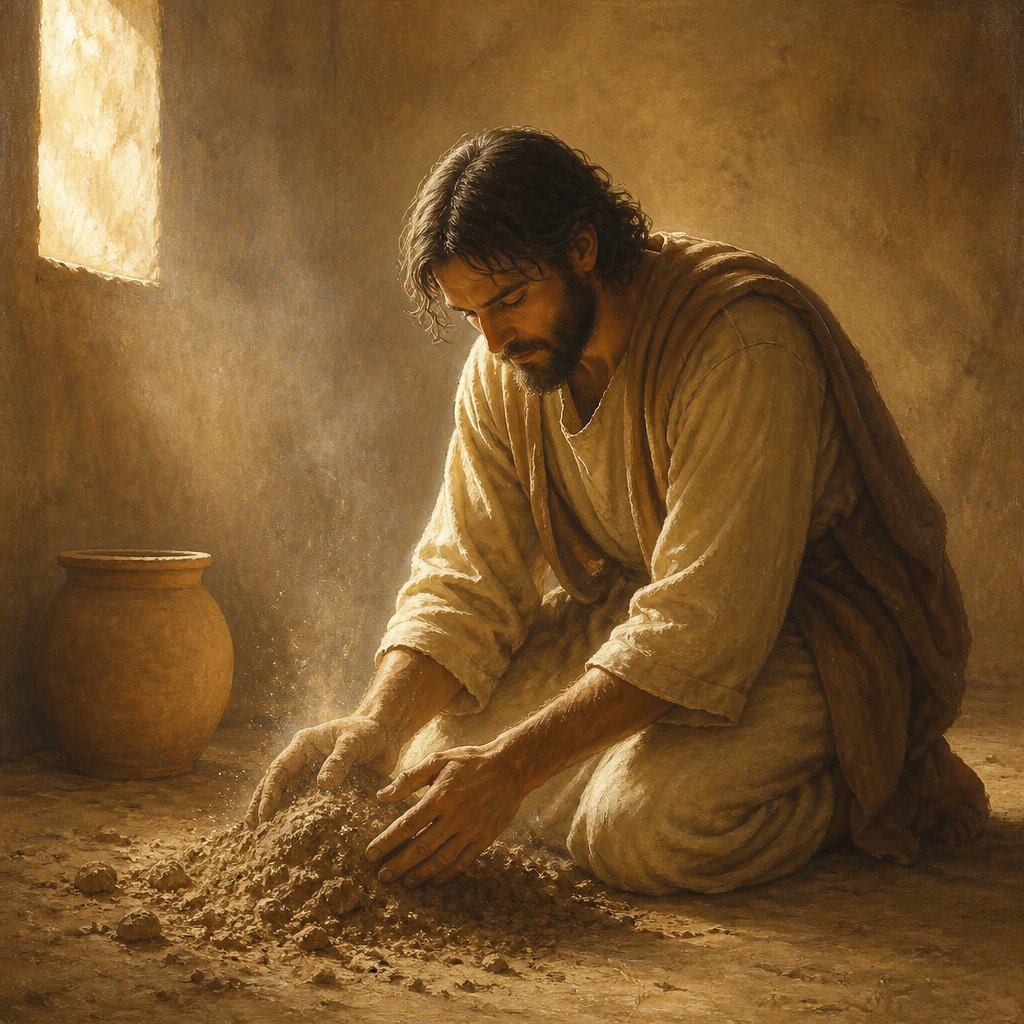
Job 10:9 (KJV) says, "Remember, I beseech thee, that thou hast made me as the clay; and wilt thou bring me into dust again?"
This verse is part of a larger passage in the book of Job, which tells the story of a man who experiences immense suffering and turmoil, and questions why God has allowed these things to happen to him. In this particular verse, Job is pleading with God, asking Him to remember that He is the one who formed Job out of clay, and to consider the frailty of human life before returning him to dust.
The verse captures a deep sense of vulnerability and helplessness, as Job acknowledges that his very existence is dependent on the will of God. He compares himself to clay, a material that is moldable and fragile, and implies that his fate is in the hands of a higher power. By appealing to God's role as the creator, Job is essentially asking God to consider the care and craftsmanship that went into forming him, and to have mercy on him in light of his weakness.
This verse is rich with themes of creation, mortality, and the relationship between God and humanity. The imagery of clay being shaped by a potter underscores the idea of God as the ultimate creator, with the power to shape and mold human beings according to His will. This concept is echoed in other parts of the Bible, such as Isaiah 64:8, which says, "But now, O Lord, thou art our father; we are the clay, and thou our potter; and we all are the work of thy hand."
Additionally, Job's reference to returning to dust alludes to the biblical idea of humans coming from dust and returning to dust, as stated in Genesis 3:19. This serves as a reminder of the fleeting nature of life and the inevitability of death, highlighting the fragility of human existence and the need for divine intervention and guidance.
The verse also contains a strong element of lament and plea for God's mercy. Job is essentially asking God to remember the inherent limitations and weaknesses of human beings, and to act with compassion and understanding in light of these vulnerabilities. This reflects a common theme in the book of Job, as the protagonist grapples with feelings of abandonment and despair, but continues to plead with God for justice and compassion.
Symbolically, the reference to clay and dust evokes a sense of humility and dependence, emphasizing humanity's reliance on God as the source of life and the ultimate authority. The act of forming someone from clay implies a deliberate and intentional process, suggesting that each individual is a unique creation with a specific purpose and destiny ordained by God. At the same time, the notion of returning to dust highlights the transient and transient nature of human existence, underscoring the need for divine grace and redemption.
In conclusion, Job 10:9 (KJV) is a poignant and thought-provoking verse that delves into deep existential and theological themes. It offers a powerful portrayal of human vulnerability and dependence on God, while also conveying a sense of desperation and longing for understanding and compassion. Through its rich symbolism and evocative imagery, this verse captures the essence of the human experience and the timeless quest for meaning and connection with the divine.
Get our apps


Artwork for Job 10:9

Job 10:9 - "Remember, I beseech thee, that thou hast made me as the clay; and wilt thou bring me into dust again?"
"Remember, I beseech thee, that thou hast made me as the clay; and wilt thou bring me into dust again?" - Job 10:9

Job 9:10 - "Which doeth great things past finding out; yea, and wonders without number."

Job 30:9-10 - "And now I have become their song; I am a byword to them. They abhor me, they keep aloof from me; they do not hesitate to spit at the sight of me."

Job 9:1 - "Then Job answered and said,"

"Which doeth great things past finding out; yea, and wonders without number." - Job 9:10

"Then Job answered and said," - Job 9:1

Job 1:9 - "Then Satan answered the LORD, and said, Doth Job fear God for nought?"

Job 9:9 - "Which maketh Arcturus, Orion, and Pleiades, and the chambers of the south."

Job 42:10 - "And the LORD turned the captivity of Job, when he prayed for his friends: also the LORD gave Job twice as much as he had before."

Job 1:9 no words

Job 10:10 - "Hast thou not poured me out as milk, and curdled me like cheese?"

Job 1:9 no words

Job 42:9 - "So Eliphaz the Temanite and Bildad the Shuhite and Zophar the Naamathite went, and did according as the LORD commanded them: the LORD also accepted Job."

Job 9:29 - "If I be wicked, why then labour I in vain?"

Job 29:9 - "The princes refrained talking, and laid their hand on their mouth."

Job 4:9 - "By the blast of God they perish, and by the breath of his nostrils are they consumed."

Job 39:9 - "Will the unicorn be willing to serve thee, or abide by thy crib?"

Job 12:9 - "Who knoweth not in all these that the hand of the LORD hath wrought this?"

Psalm 10:9-10

Psalm 10:9-10

Job 37:10 - "By the breath of God frost is given: and the breadth of the waters is straitened."

Job 18:10 - "The snare is laid for him in the ground, and a trap for him in the way."

Job 37:9 - "Out of the south cometh the whirlwind: and cold out of the north."

Job 24:9 - "They pluck the fatherless from the breast, and take a pledge of the poor."

Job 9:35 - "Then would I speak, and not fear him; but it is not so with me."

Job 9:7 - "Which commandeth the sun, and it riseth not; and sealeth up the stars."

Job 36:9 - "Then he sheweth them their work, and their transgressions that they have exceeded."

Job 9:26 - "They are passed away as the swift ships: as the eagle that hasteth to the prey."

Job 9:23 - "If the scourge slay suddenly, he will laugh at the trial of the innocent."