What does Job 12:6 mean?
“The tabernacles of robbers prosper, and they that provoke God are secure; into whose hand God bringeth abundantly.” — Job 12:6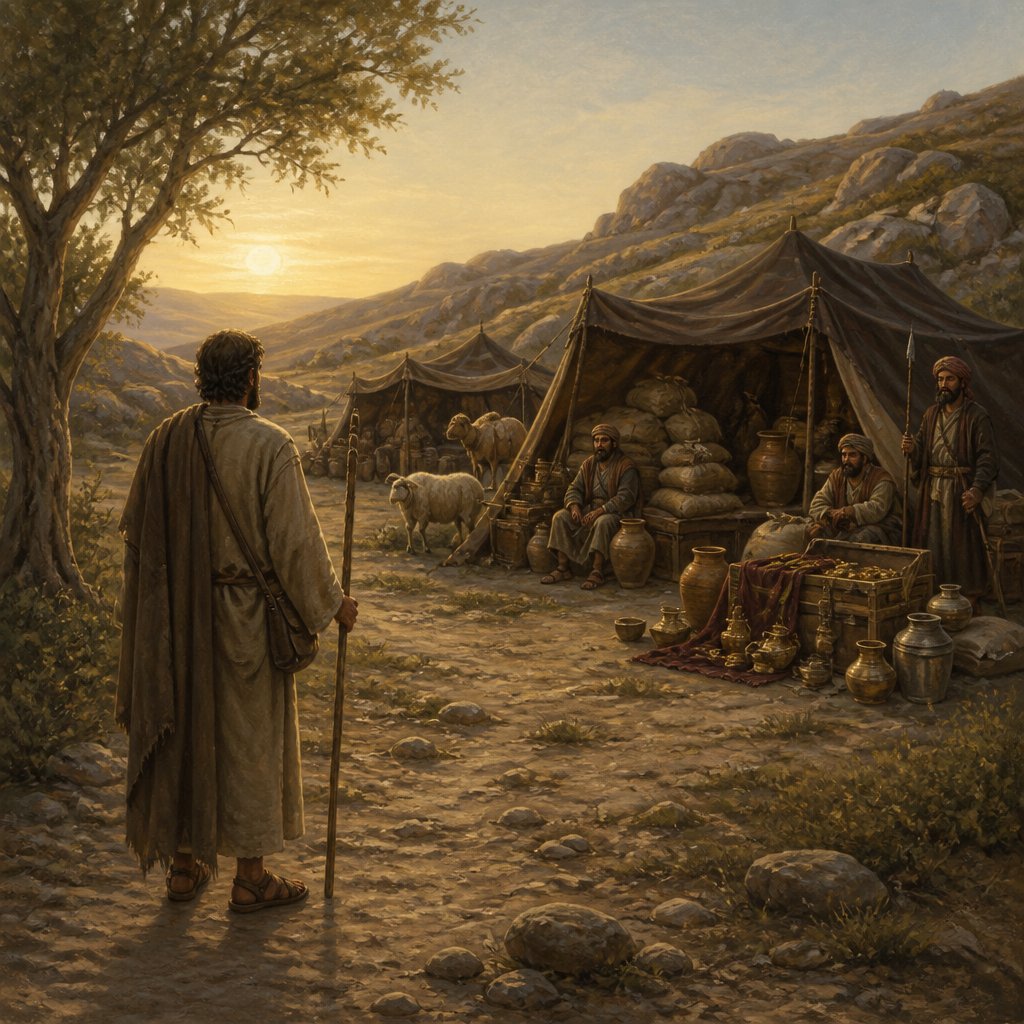
The book of Job, found in the Old Testament of the Bible, is one of the most profound and thought-provoking books in the entire Bible. It deals with the age-old question of why good people suffer and why evil seems to go unpunished. Job, the central character, is depicted as a righteous man who faces immense suffering and loss. Throughout the book, Job questions the fairness and justice of God in allowing him to suffer, and his friends offer various explanations and justifications for his suffering.
In Job 12:6, Job responds to his friends' attempts to comfort and advise him by expressing his frustration with their lack of understanding. The verse reads, "The tabernacles of robbers prosper, and they that provoke God are secure; into whose hand God bringeth abundantly." In this verse, Job points out the apparent contradiction in the world where the wicked seem to prosper and the righteous suffer. It reflects the theme of the book of Job, which is the problem of human suffering and the inscrutability of God's ways.
The verse captures the age-old question of theodicy – the problem of reconciling the existence of evil and suffering with the existence of a just and loving God. It raises profound questions about the nature of divine justice and the moral order of the universe. Job is grappling with the mystery of why evil people seem to thrive while the righteous suffer. This is a timeless human inquiry, and the verse continues to resonate with modern readers who are confronted with the same questions about the nature of suffering and the apparent injustices in the world.
Job’s words also serve as a critique of the conventional wisdom held by his friends. They maintain that suffering is a direct result of sin and that prosperity is a sign of God's favor. Job challenges this simplistic understanding of the world, asserting that the reality is far more complex and that the righteous can suffer while the wicked prosper. This challenges his friends to re-examine their assumptions about the relationship between righteousness, prosperity, and suffering.
The verse is also a reflection of the social and political context of the time in which Job lived. In the ancient Near East, a person's prosperity and well-being were often viewed as a sign of divine favor, while suffering and misfortune were seen as a punishment for sin. Job's observations about the apparent prosperity of robbers and the security of those who provoke God would have been particularly resonant in this context. His words serve as a powerful critique of the prevailing worldview of his time, challenging the cultural assumptions about the relationship between morality and prosperity.
The symbolism in this verse is powerful and echoes throughout the entire book of Job. It serves as a reminder of the complexity of human experience and the enigma of divine providence. It challenges us to reconsider our assumptions about the relationship between morality and prosperity and to recognize the limitations of our understanding. The verse also highlights the need for humility in the face of the mystery of suffering and the inscrutability of God's ways.
In conclusion, Job 12:6 is a deeply profound and thought-provoking verse that captures the central themes and concerns of the book of Job. It reflects the timeless human inquiry into the problem of suffering and the enigma of divine justice. Job's words challenge conventional wisdom and cultural assumptions about the relationship between morality and prosperity, and they serve as a powerful reminder of the limitations of human understanding and the need for humility in the face of the mysteries of life.
Get our apps


Artwork for Job 12:6

Job 12:6 - "The tabernacles of robbers prosper, and they that provoke God are secure; into whose hand God bringeth abundantly."
"The tabernacles of robbers prosper, and they that provoke God are secure; into whose hand God bringeth abundantly." - Job 12:6

Job 6:12 - "Is my strength the strength of stones? or is my flesh of brass?"

"Is my strength the strength of stones? or is my flesh of brass?" - Job 6:12

Job 12:1 - "And Job answered and said,"

Job 6:1 - "But Job answered and said,"

Job 12:12 - "With the ancient is wisdom; and in length of days understanding."

"And Job answered and said," - Job 12:1

Job 40:6 - "¶ Then answered the LORD unto Job out of the whirlwind, and said,"

"But Job answered and said," - Job 6:1

Job 32:12 - "Yea, I attended unto you, and, behold, there was none of you that convinced Job, or that answered his words:"

Job 27:6

Job 6:6 - "Can that which is unsavoury be eaten without salt? or is there any taste in the white of an egg?"

"With the ancient is wisdom; and in length of days understanding." - Job 12:12

Job 12:16 - "With him is strength and wisdom: the deceived and the deceiver are his."

"¶ Then answered the LORD unto Job out of the whirlwind, and said," - Job 40:6

Job 21:12 - "They take the timbrel and harp, and rejoice at the sound of the organ."

Job 12:2 - "No doubt but ye are the people, and wisdom shall die with you."

Job 12:13 - "With him is wisdom and strength, he hath counsel and understanding."

Job 12:19 - "He leadeth princes away spoiled, and overthroweth the mighty."

Job 28:12 - "But where shall wisdom be found? and where is the place of understanding?"

Job 12:9 - "Who knoweth not in all these that the hand of the LORD hath wrought this?"

Job 17:12 - "They change the night into day: the light is short because of darkness."

Job 12:18 - "He looseth the bond of kings, and girdeth their loins with a girdle."

Job 30:6 - "To dwell in the clifts of the valleys, in caves of the earth, and in the rocks."

Job 28:6 - "The stones of it are the place of sapphires: and it hath dust of gold."

Job 12:21 - "He poureth contempt upon princes, and weakeneth the strength of the mighty."

Job 36:12 - "But if they obey not, they shall perish by the sword, and they shall die without knowledge."

Job 12:11 - "Doth not the ear try words? and the mouth taste his meat?"

Job 35:12 - "There they cry, but none giveth answer, because of the pride of evil men."