What does Job 13:24 mean?
“Wherefore hidest thou thy face, and holdest me for thine enemy?” — Job 13:24
Job 13:24 in the King James Version (KJV) states: "Wherefore hidest thou thy face, and holdest me for thine enemy?"
This verse comes from the Book of Job in the Old Testament, and it is part of a larger passage in which Job, a righteous man who experiences immense suffering, is questioning God's apparent abandonment of him. In the preceding verses, Job laments his plight and expresses his desire to speak directly to God in order to plead his case. He desperately wants to understand why he is suffering and seeks a resolution to his anguish.
The verse "Wherefore hidest thou thy face, and holdest me for thine enemy?" captures the emotional turmoil and spiritual crisis that Job is going through. He feels as if God has turned away from him and is treating him like an enemy, despite his loyalty and devotion. Job is filled with confusion, anger, and a deep sense of betrayal as he grapples with the unjust suffering that has befallen him.
In order to fully understand the depth of Job's despair, it is important to consider the broader context of the Book of Job. The story of Job, which is set against the backdrop of a heavenly wager between God and Satan, grapples with the existential questions of human suffering and divine justice. Job is a man of great integrity and righteousness, yet he is subjected to a series of calamities, including the loss of his wealth, the death of his children, and a debilitating illness. Despite his anguish, Job remains steadfast in his faith, refusing to curse God and die, as his wife urges him to do.
Job's friends, who visit him during his time of suffering, offer various explanations for his misfortune, asserting that he must have sinned and brought these afflictions upon himself. However, Job vehemently protests his innocence and struggles to make sense of his suffering in the context of a just and merciful God. He longs for an audience with God so that he can present his case and seek vindication.
The verse in question reveals Job's raw and anguished plea for God to reveal Himself and explain the reasons behind his suffering. The imagery of God hiding His face evokes a sense of abandonment and rejection, while the accusation of being held as an enemy conveys the deep emotional distress that Job is experiencing. This verse encapsulates Job's desperate desire for clarity, resolution, and ultimately, reconciliation with the divine.
The themes of suffering, faith, and theodicy (the problem of evil and divine justice) are central to the Book of Job, and they continue to resonate with readers throughout the ages. Job's relentless quest for understanding and justice reflects the universal human struggle to find meaning in the face of adversity and to reconcile the existence of suffering with the concept of a benevolent and omnipotent God.
In addition to its thematic significance, Job 13:24 also carries profound symbolic and theological implications. The image of God hiding His face is a recurring motif in the Hebrew Bible, signifying the withdrawal of divine favor and protection. In this context, it represents a crisis of faith and a sense of spiritual abandonment. The accusation of being held as an enemy underscores the profound sense of alienation and estrangement that Job is experiencing, as well as the need for divine reconciliation and restoration.
In conclusion, Job 13:24 encapsulates the intense emotional and spiritual turmoil that Job experiences as he grapples with his suffering and seeks to understand God's role in his plight. This verse illuminates the profound themes of faith, suffering, and divine justice that permeate the Book of Job, and it resonates with readers as a poignant expression of the universal human quest for meaning in the midst of adversity. Ultimately, Job's story serves as a powerful testament to the resilience of faith in the face of inexplicable hardship and as a profound meditation on the inscrutable ways of God.
Get our apps


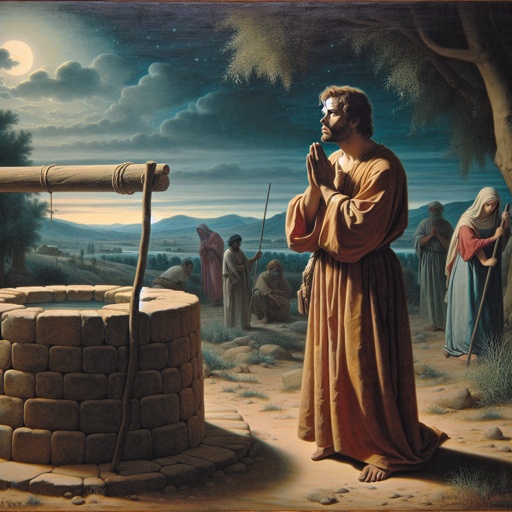
Artwork for Job 13:24

Job 13:24 - "Wherefore hidest thou thy face, and holdest me for thine enemy?"

"Wherefore hidest thou thy face, and holdest me for thine enemy?" - Job 13:24

Job 24:13 - "They are of those that rebel against the light; they know not the ways thereof, nor abide in the paths thereof."

"They are of those that rebel against the light; they know not the ways thereof, nor abide in the paths thereof." - Job 24:13

Job 24:24 - "They are exalted for a little while, but are gone and brought low; they are taken out of the way as all other, and cut off as the tops of the ears of corn."

Job 19:24 - "That they were graven with an iron pen and lead in the rock for ever!"

Job 24:8 - "They are wet with the showers of the mountains, and embrace the rock for want of a shelter."

Job 24:9 - "They pluck the fatherless from the breast, and take a pledge of the poor."

Job 24:7 - "They cause the naked to lodge without clothing, that they have no covering in the cold."

Job 21:24 - "His breasts are full of milk, and his bones are moistened with marrow."

Job 36:24 - "Remember that thou magnify his work, which men behold."

Job 24:14 - "The murderer rising with the light killeth the poor and needy, and in the night is as a thief."

Job 24:3 - "They drive away the ass of the fatherless, they take the widow's ox for a pledge."

Job 28:24 - "For he looketh to the ends of the earth, and seeth under the whole heaven;"

Job 24:21 - "He evil entreateth the barren that beareth not: and doeth not good to the widow."

Job 39:13-25

Job 2:11-13

Job 24:4 - "They turn the needy out of the way: the poor of the earth hide themselves together."

Job 24:6 - "They reap every one his corn in the field: and they gather the vintage of the wicked."

Job 24:2 - "Some remove the landmarks; they violently take away flocks, and feed thereof."

Job 29:24 - "If I laughed on them, they believed it not; and the light of my countenance they cast not down."

Job 2:11-13

Job 2:11-13

Job 40:24 - "He taketh it with his eyes: his nose pierceth through snares."

Job 41:24 - "His heart is as firm as a stone; yea, as hard as a piece of the nether millstone."

Job 24:11 - "Which make oil within their walls, and tread their winepresses, and suffer thirst."

Luke 13:24
Genesis 24-13

Job 39:24 - "He swalloweth the ground with fierceness and rage: neither believeth he that it is the sound of the trumpet."

Job 37:24 - "Men do therefore fear him: he respecteth not any that are wise of heart."