What does Job 13:25 mean?
“Wilt thou break a leaf driven to and fro? and wilt thou pursue the dry stubble?” — Job 13:25
Job 13:25 in the King James Version of the Bible reads, "Wilt thou break a leaf driven to and fro? and wilt thou pursue the dry stubble?" This verse is part of a larger passage in which Job is expressing his frustration and despair to his friends.
In order to understand the full meaning of this verse, it's important to look at the context in which it appears. The book of Job is one of the most fascinating and enigmatic books in the Bible. It tells the story of a man named Job who is tested by God. Despite being a righteous and blameless man, Job suffers devastating losses, including the deaths of his children, the loss of his wealth, and his own physical afflictions. Throughout the book, Job questions God, his friends, and himself, as he struggles to make sense of his suffering and find a reason for his hardships.
In the broader context of the book of Job, this verse is part of Job's lament to his friends, who have been trying to make sense of his suffering by attributing it to some hidden sin in his life. Job responds with a bitter and anguished plea, asking God if He would crush a weak and fragile leaf, or pursue dry stubble that has no life left in it. This verse is a powerful expression of Job's feelings of hopelessness and despair as he grapples with the tragic events that have befallen him.
The imagery in this verse is rich with symbolism. The "leaf driven to and fro" represents a fragile and vulnerable object that is at the mercy of external forces. Job sees himself as this leaf, tossed about by the storms of life and unable to find stability or peace. The "dry stubble" refers to something that is lifeless and worthless, and Job wonders if God would bother to pursue such a thing. This imagery captures the depth of Job's despair and his sense of worthlessness in the face of his suffering.
One of the major themes in the book of Job is the problem of evil and the question of why the innocent suffer. Job's dialogue with his friends and his own inner turmoil wrestle with this profound and enduring theological question. This verse reflects Job's struggle to understand why God would allow him to endure such suffering and why he feels abandoned and forsaken. It encapsulates the emotional and existential anguish that Job experiences throughout the book.
Ultimately, the book of Job is a complex meditation on the nature of suffering, the limitations of human understanding, and the mysterious ways of God. Job's lament in this verse captures the raw and unvarnished emotions of a man who is grappling with the deepest questions of human existence. Despite his anguish, Job never loses faith in God, and his story ultimately reflects a steadfast trust in God's ultimate justice and wisdom.
In conclusion, Job 13:25 is a poignant and powerful expression of Job's inner turmoil and despair in the face of his suffering. Through vivid imagery and raw emotion, this verse captures the depth of Job's anguish as he grapples with the mysterious ways of God and the unexplainable nature of human suffering. It is a reminder that the Bible grapples with the raw human experience and doesn't shy away from the difficult questions and emotions that come with it.
Get our apps


Artwork for Job 13:25

Job 13:25 - "Wilt thou break a leaf driven to and fro? and wilt thou pursue the dry stubble?"

"Wilt thou break a leaf driven to and fro? and wilt thou pursue the dry stubble?" - Job 13:25

Job 39:13-25

Job 25:1 - "Then answered Bildad the Shuhite, and said,"

Job 28:25 - "To make the weight for the winds; and he weigheth the waters by measure."

Job 21:25 - "And another dieth in the bitterness of his soul, and never eateth with pleasure."

Job 30:25 - "Did not I weep for him that was in trouble? was not my soul grieved for the poor?"

Job 25:5 - "Behold even to the moon, and it shineth not; yea, the stars are not pure in his sight."

Job 36:25 - "Every man may see it; man may behold it afar off."

Job 6:25 - "How forcible are right words! but what doth your arguing reprove?"

Job 25:2 - "Dominion and fear are with him, he maketh peace in his high places."

Job 25:6 - "How much less man, that is a worm? and the son of man, which is a worm?"

Job 38:25 - "Who hath divided a watercourse for the overflowing of waters, or a way for the lightning of thunder;"
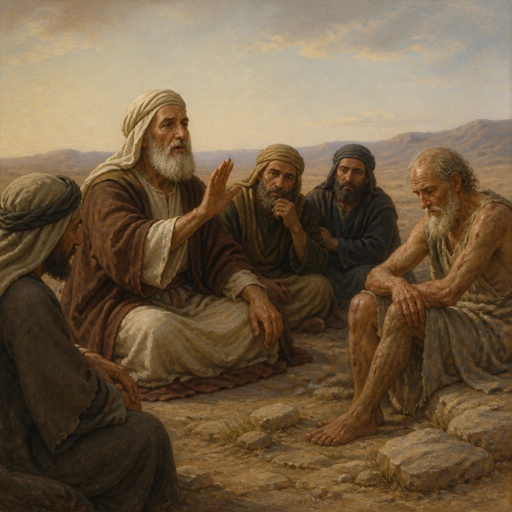
"Then answered Bildad the Shuhite, and said," - Job 25:1

Genesis 25-13

Job 2:11-13

Job 25:3 - "Is there any number of his armies? and upon whom doth not his light arise?"

Job 34:25 - "Therefore he knoweth their works, and he overturneth them in the night, so that they are destroyed."

Job 9:25 - "Now my days are swifter than a post: they flee away, they see no good."

Job 22:25 - "Yea, the Almighty shall be thy defence, and thou shalt have plenty of silver."

Job 2:11-13

Job 2:11-13

Job 15:25 - "For he stretcheth out his hand against God, and strengtheneth himself against the Almighty."

Job 25:4 - "How then can man be justified with God? or how can he be clean that is born of a woman?"

Job 41:25 - "When he raiseth up himself, the mighty are afraid: by reason of breakings they purify themselves."

Job 39:19-25 – "Do you give the horse its strength or clothe its neck with a flowing mane?"

Job 24:25 - "And if it be not so now, who will make me a liar, and make my speech nothing worth?"

Job 12:25 - "They grope in the dark without light, and he maketh them to stagger like a drunken man."

Job 19:25 - "For I know that my redeemer liveth, and that he shall stand at the latter day upon the earth:"

Job 31:25 - "If I rejoiced because my wealth was great, and because mine hand had gotten much;"