What does Job 15:28 mean?
“And he dwelleth in desolate cities, and in houses which no man inhabiteth, which are ready to become heaps.” — Job 15:28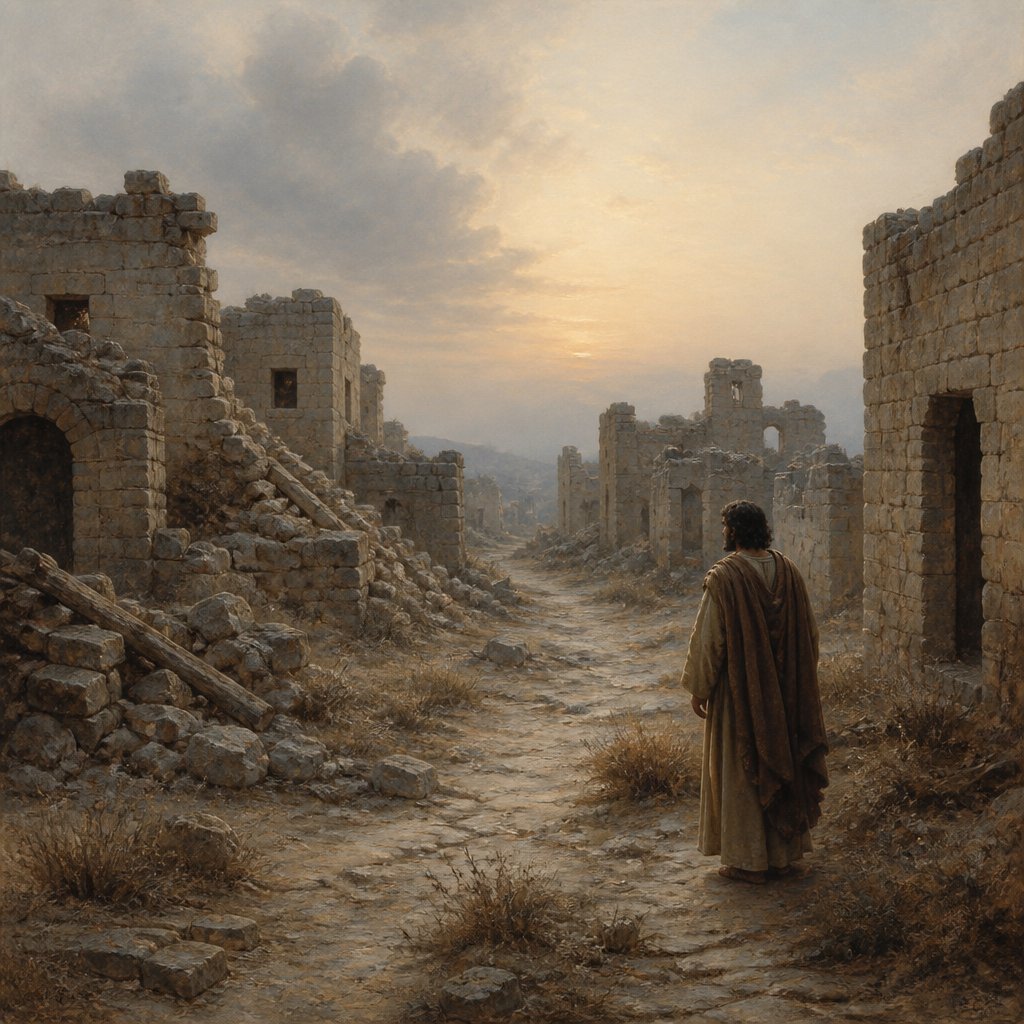
Job 15:28 in the King James Version (KJV) reads, "And he dwelleth in desolate cities, and in houses which no man inhabiteth, which are ready to become heaps." This verse is spoken by Eliphaz, one of Job's friends, as part of his response to Job's lamentations and his insistence on his own innocence in the face of his suffering. Eliphaz is one of Job's three friends who attempt to offer him counsel as he grapples with the trials and tribulations he faces. However, their advice often feels judgmental and lacking in compassion, as they advocate for Job to confess to his sins and repent in order to find relief from his suffering.
The book of Job is a complex and rich text that explores themes of suffering, faith, and the nature of God's justice. In this particular verse, Eliphaz is using vivid imagery to emphasize the consequences of wickedness and the fate of those who reject God's ways. He describes the fate of the wicked as dwelling in desolate cities and uninhabited houses, which are poised to become heaps. This evocative language paints a picture of utter ruin and desolation, emphasizing the severity of the consequences for turning away from God.
The use of desolate cities and uninhabited houses symbolizes the isolation and abandonment that comes with living a life divorced from God's guidance. It represents a state of spiritual and emotional desolation, where one's surroundings reflect the inner turmoil and emptiness of a life devoid of God's presence. The image of houses ready to become heaps conveys a sense of impending destruction and collapse, highlighting the inevitable downfall that awaits those who stray from the path of righteousness.
This verse serves to underscore the belief prevalent in the Old Testament that righteousness and obedience to God lead to prosperity and security, while wickedness and rebellion result in destruction and suffering. Eliphaz uses this imagery to caution Job about the potential consequences of persisting in his claims of innocence and refusing to acknowledge any wrongdoing. He implies that if Job continues to reject the idea that his suffering is a result of his own sins, he will ultimately face a fate akin to the desolation and ruin described in the verse.
The context of this verse within the larger narrative of Job's suffering further emphasizes its significance. Job, a righteous and faithful man, has endured unimaginable losses and physical afflictions, leading him to question the justice of God. His friends, including Eliphaz, seek to convince him that his suffering must be a result of his own sins, despite Job's protestations of innocence. This verse is one of many instances where Eliphaz and the other friends use harsh and uncompromising language to argue their point, adding to Job's emotional turmoil and sense of isolation.
In contemporary interpretation, Job 15:28 serves as a reminder of the consequences of straying from the path of righteousness and the importance of remaining faithful to God's guidance. It prompts readers to consider the implications of their actions and the potential outcomes of living a life disconnected from God's principles. The imagery of desolate cities and uninhabited houses can also be seen as a warning against the dangers of allowing one's spiritual life to deteriorate, highlighting the need for continual renewal and dedication to the teachings of faith.
In conclusion, Job 15:28 in the KJV provides a powerful and evocative depiction of the consequences of wickedness and the fate of those who reject God's ways. Through compelling imagery and vivid language, the verse underscores the themes of righteousness, suffering, and the complex nature of God's justice. Its placement within the larger narrative of Job's trials adds depth and poignancy to its message, serving as a poignant reminder of the importance of remaining faithful and obedient in the face of adversity.
Get our apps


Artwork for Job 15:28

Job 15:28 - "And he dwelleth in desolate cities, and in houses which no man inhabiteth, which are ready to become heaps."
"And he dwelleth in desolate cities, and in houses which no man inhabiteth, which are ready to become heaps." - Job 15:28

Job 28:15 - "It cannot be gotten for gold, neither shall silver be weighed for the price thereof."
"It cannot be gotten for gold, neither shall silver be weighed for the price thereof." - Job 28:15

Job 28:3

Job 30:28

Job 30:28

Job 30:28

Job 30:28

Job 28:3

Job 28:3

Job 30:28

Job 28:28 - "And unto man he said, Behold, the fear of the Lord, that is wisdom; and to depart from evil is understanding."

Job 28:20 - "Whence then cometh wisdom? and where is the place of understanding?"

Job 28:14 - "The depth saith, It is not in me: and the sea saith, It is not with me."

Job 28:6 - "The stones of it are the place of sapphires: and it hath dust of gold."

Job 28:1 - "Surely there is a vein for the silver, and a place for gold where they fine it."

Job 28:16 - "It cannot be valued with the gold of Ophir, with the precious onyx, or the sapphire."

Job 28:12 - "But where shall wisdom be found? and where is the place of understanding?"

Job 28:25 - "To make the weight for the winds; and he weigheth the waters by measure."

Job 13:28 - "And he, as a rotten thing, consumeth, as a garment that is moth eaten."

Job 28:8 - "The lion's whelps have not trodden it, nor the fierce lion passed by it."

Job 28:2 - "Iron is taken out of the earth, and brass is molten out of the stone."

Job 38:28 - "Hath the rain a father? or who hath begotten the drops of dew?"

Job 28:7 draw a hidden path

Genesis 28-15

Job 28:23 - "God understandeth the way thereof, and he knoweth the place thereof."

Job 28:24 - "For he looketh to the ends of the earth, and seeth under the whole heaven;"

Job 28:13 - "Man knoweth not the price thereof; neither is it found in the land of the living."

Job 36:28 - "Which the clouds do drop and distil upon man abundantly."