What does Job 20:16 mean?
"He shall suck the poison of asps: the viper’s tongue shall slay him." - Job 20:16

Job 20:16 in the King James Version of the Bible reads, "He shall suck the poison of asps: the viper's tongue shall slay him." This verse is part of a speech made by one of Job's friends, Zophar, as he attempts to explain why Job is suffering. In this verse, Zophar is describing the fate of the wicked, using powerful imagery to convey the consequences of their actions.
To fully understand the meaning and commentary of this verse, it is necessary to provide some context. The Book of Job is a profound meditation on the nature of suffering and the justice of God. The main character, Job, is a righteous man who experiences immense suffering, losing his wealth, health, and family. Throughout the book, Job questions why he is suffering and expresses his longing for an explanation from God. Three of Job's friends, Eliphaz, Bildad, and Zophar, visit him and offer their own perspectives on his suffering, claiming that it is a result of his sin. However, Job maintains his innocence and seeks understanding from God.
In Job 20:16, Zophar continues his argument that the wicked will face a severe and inevitable judgment. The imagery of sucking the poison of asps and being slain by the viper's tongue illustrates the deadly consequences of wickedness. This portrayal of the wicked facing the wrath of God's judgment is consistent with the overarching theme of retribution found throughout the Book of Job. Zophar's words serve as a warning about the consequences of turning away from God and living a life of deceit and wickedness.
The verse also addresses the theme of the power of words and the consequences of speaking deceitfully. The imagery of the viper's tongue slaying the wicked emphasizes the destructive force of lies and deceit. This aligns with the broader theme of truth and integrity found in the Book of Job. Throughout the book, Job insists on his innocence and challenges the accusations of his friends. Zophar's speech serves as a reminder of the importance of speaking truth and the dire consequences of spreading falsehoods.
Symbolism plays a significant role in this verse, as well. The asp and viper are highly venomous snakes, and their association with the wicked reflects the danger and corruption of sinful behavior. The imagery of sucking the poison of asps and being slain by the viper's tongue also conveys a sense of inevitability and finality. By using these symbols, Zophar is underscoring the severity of the judgment that awaits the wicked.
In addition to the themes of judgment, truth, and the consequences of wickedness, Job 20:16 also contributes to the larger theological discussion present in the Book of Job. It raises profound questions about the nature of suffering and the justice of God. The verse serves as a reminder of the complexities of human existence and the importance of grappling with the moral and ethical implications of our actions.
Overall, Job 20:16, quoted from the King James Version of the Bible, presents a powerful and evocative description of the fate of the wicked. It conveys the themes of judgment, truth, and the consequences of wickedness, using vivid imagery and symbolism to underscore its message. The verse contributes to the broader theological exploration found in the Book of Job, prompting readers to consider the profound questions raised by the nature of suffering and the justice of God.
Have questions about Job 20:16?
Dive deeper into this scripture with Bible Chat — an AI-powered tool for exploring God's Word through conversation. Ask questions, get context, and grow in your understanding of the Bible.
Get Our Apps


Job 20:16 Artwork
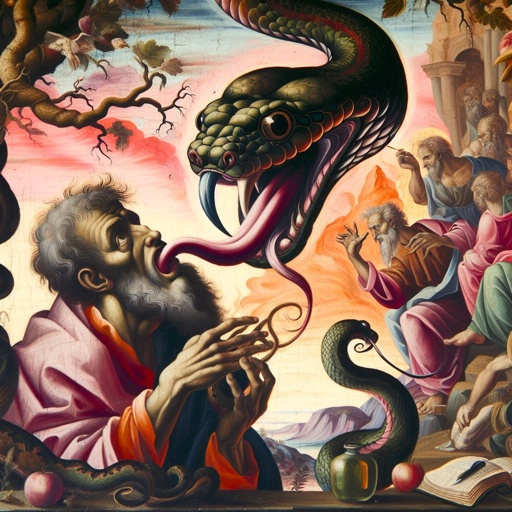
Job 20:16 - "He shall suck the poison of asps: the viper's tongue shall slay him." The image should not depict explicit or offensive content but be symbolic.

"He shall suck the poison of asps: the viper's tongue shall slay him." - Job 20:16

Job 16:20 - "My friends scorn me: but mine eye poureth out tears unto God."

"My friends scorn me: but mine eye poureth out tears unto God." - Job 16:20

Job 16:1 - "Then Job answered and said,"

Job 1:20

Job 1:20

"Then Job answered and said," - Job 16:1

Job 16:16 - "My face is foul with weeping, and on my eyelids is the shadow of death;"

Job 3:20-21 - "Job 3:20-21: Why is light given to those in misery, and life to the bitter of soul, to those who long for death that does not come, who search for it more than for hidden treasure?"

Job 1:20 - "Then Job arose, and rent his mantle, and shaved his head, and fell down upon the ground, and worshipped,"

Job 35:16 - "Therefore doth Job open his mouth in vain; he multiplieth words without knowledge."

Job 20:5 - "That the triumphing of the wicked is short, and the joy of the hypocrite but for a moment?"

Job 20:1 - "Then answered Zophar the Naamathite, and said,"

Job 20:20 - "Surely he shall not feel quietness in his belly, he shall not save of that which he desired."

Job 28:20 - "Whence then cometh wisdom? and where is the place of understanding?"

Job 42:16 - "After this lived Job an hundred and forty years, and saw his sons, and his sons' sons, even four generations."

Job 36:20 - "Desire not the night, when people are cut off in their place."

Job 12:16 - "With him is strength and wisdom: the deceived and the deceiver are his."

Job 33:16 - "Then he openeth the ears of men, and sealeth their instruction,"

Job 20:4 - "Knowest thou not this of old, since man was placed upon earth,"

Mark 16:20
Mark 16:20

Deuteronomy 20:16

Job 20:17 - "He shall not see the rivers, the floods, the brooks of honey and butter."

Job 6:16 - "Which are blackish by reason of the ice, and wherein the snow is hid:"

Job 28:16 - "It cannot be valued with the gold of Ophir, with the precious onyx, or the sapphire."

Mark 16:20

Genesis 20-16

Mark 16:20