What does Job 21:12 mean?
“They take the timbrel and harp, and rejoice at the sound of the organ.” — Job 21:12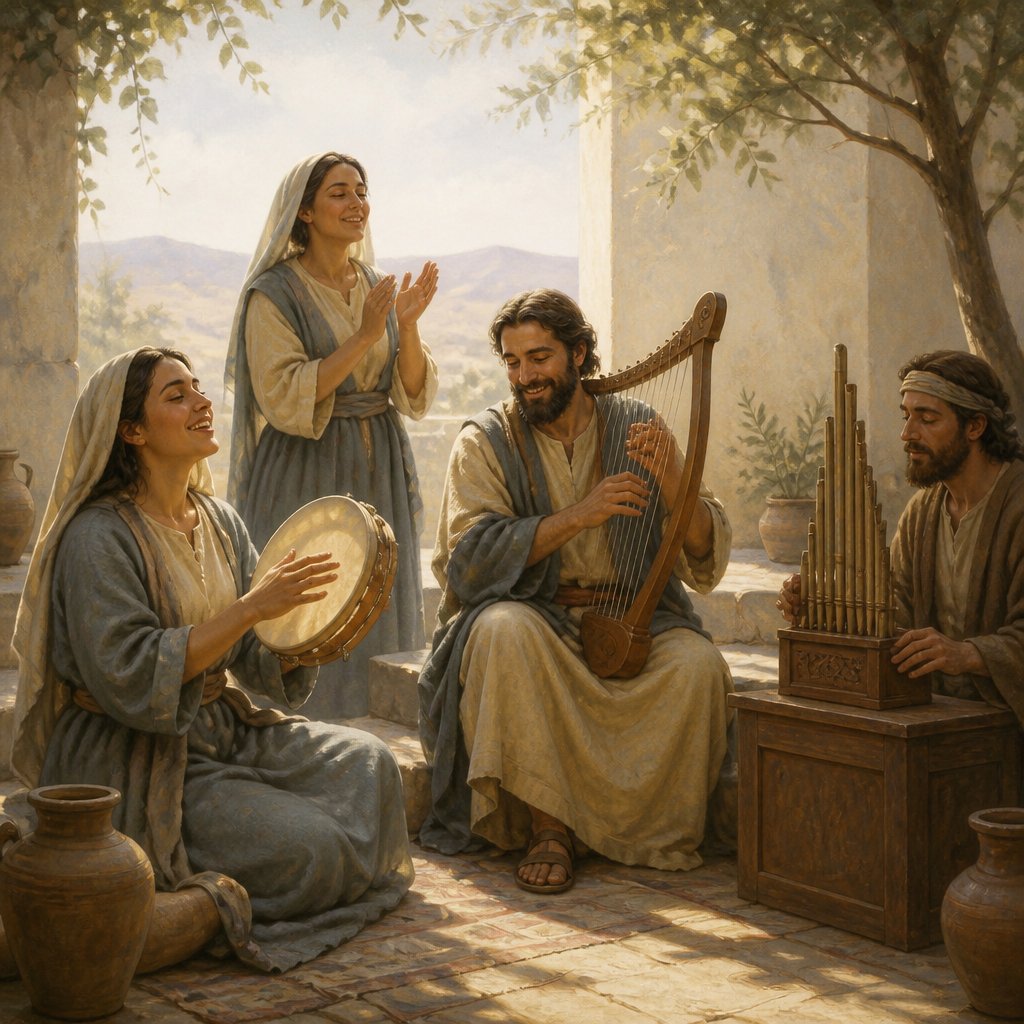
Job 21:12 in the King James Version of the Bible states, "They take the timbrel and harp, and rejoice at the sound of the organ." This verse is a part of a larger passage in the book of Job where Job is responding to his friends who are trying to explain his suffering as a result of his sin. In this specific verse, Job is pointing out that the wicked often live in luxury and pleasure despite their evil deeds, and he uses music as a metaphor for their carefree and joyful lifestyle.
To fully understand the deeper meaning of this verse, it is important to look at the context in which it is situated. The book of Job is a complex and profound exploration of the nature of suffering, faith, and the character of God. Job, a man of great wealth and righteousness, is subjected to unimaginable suffering at the hands of Satan, as a means of testing his faith. Throughout the book, Job grapples with the questions of why the righteous suffer and why the wicked prosper. Job's friends, Eliphaz, Bildad, and Zophar, argue that Job's suffering is a punishment from God for his sins, and they urge him to repent and seek forgiveness. However, Job maintains his innocence and questions the justice of God's actions.
In Job 21, Job challenges the conventional wisdom that the wicked will ultimately suffer and the righteous will prosper. He points out that the wicked often live in comfort and pleasure, seemingly without consequence for their evil deeds. In verse 12, Job uses the imagery of music and celebration to illustrate the apparent contentment and joy of the wicked. The timbrel, harp, and organ were instruments commonly associated with festive and joyous occasions in ancient Israel. By referencing these instruments, Job is highlighting the carefree and indulgent lifestyle of the wicked, despite their lack of moral integrity.
The verse also serves as a commentary on the complexities of life and the apparent disconnect between one's behavior and their consequences. Job is wrestling with the seeming injustice of the world, where the wicked appear to thrive while the righteous suffer. This challenges the traditional understanding of divine justice and calls into question the relationship between human actions and their outcomes.
The symbolism of music in this verse is striking. In many cultures, music is associated with emotions, spirituality, and revelry. The use of musical instruments in Job 21:12 suggests a scene of celebration and merriment, which stands in stark contrast to the suffering and turmoil that Job is experiencing. This serves to underscore the dichotomy between the apparent prosperity of the wicked and the anguish of the righteous.
Furthermore, the verse also speaks to the universal human experience of grappling with the injustices and apparent inequalities of life. Job's lament reflects the age-old question of why the righteous suffer while the wicked prosper. This theme resonates with people of all faiths and backgrounds, as it addresses the fundamental human desire for justice and fairness in the face of adversity.
In conclusion, Job 21:12 is a poignant and profound reflection on the complexities of life and the apparent disconnect between one's actions and their consequences. Through the use of musical imagery, Job highlights the apparent joy and contentment of the wicked, despite their lack of moral integrity. This verse challenges the conventional understanding of divine justice and speaks to the universal human desire for fairness and righteousness. Overall, Job 21:12 is a powerful and timeless meditation on the enigmatic nature of suffering and the pursuit of moral truth.
Get our apps


Artwork for Job 21:12

Job 21:12 - "They take the timbrel and harp, and rejoice at the sound of the organ."

"They take the timbrel and harp, and rejoice at the sound of the organ." - Job 21:12

Job 12:21 - "He poureth contempt upon princes, and weakeneth the strength of the mighty."

Matthew 2:1-2

Genesis 2:1-2

Genesis 2:1-2

"He poureth contempt upon princes, and weakeneth the strength of the mighty." - Job 12:21

Job 21:1 - "But Job answered and said,"

Job 12:1 - "And Job answered and said,"

"But Job answered and said," - Job 21:1

Job 1:21

Job 1:21

Job 3:20-21 - "Job 3:20-21: Why is light given to those in misery, and life to the bitter of soul, to those who long for death that does not come, who search for it more than for hidden treasure?"

Job 12:12 - "With the ancient is wisdom; and in length of days understanding."

"And Job answered and said," - Job 12:1

Job 21:21 - "For what pleasure hath he in his house after him, when the number of his months is cut off in the midst?"

Job 32:12 - "Yea, I attended unto you, and, behold, there was none of you that convinced Job, or that answered his words:"

Job 21:8 - "Their seed is established in their sight with them, and their offspring before their eyes."

Job 21:2 - "Hear diligently my speech, and let this be your consolations."

Job 21:13 - "They spend their days in wealth, and in a moment go down to the grave."

Job 21:18 - "They are as stubble before the wind, and as chaff that the storm carrieth away."

Job 18:21 - "Surely such are the dwellings of the wicked, and this is the place of him that knoweth not God."

Job 21:24 - "His breasts are full of milk, and his bones are moistened with marrow."

"With the ancient is wisdom; and in length of days understanding." - Job 12:12

Job 21:10 - "Their bull gendereth, and faileth not; their cow calveth, and casteth not her calf."

Job 21:11 - "They send forth their little ones like a flock, and their children dance."

Job 21:16 - "Lo, their good is not in their hand: the counsel of the wicked is far from me."

Job 40:21 - "He lieth under the shady trees, in the covert of the reed, and fens."

Job 21:25 - "And another dieth in the bitterness of his soul, and never eateth with pleasure."

Job 21:32 - "Yet shall he be brought to the grave, and shall remain in the tomb."