What does Job 22:9 mean?
“Thou hast sent widows away empty, and the arms of the fatherless have been broken.” — Job 22:9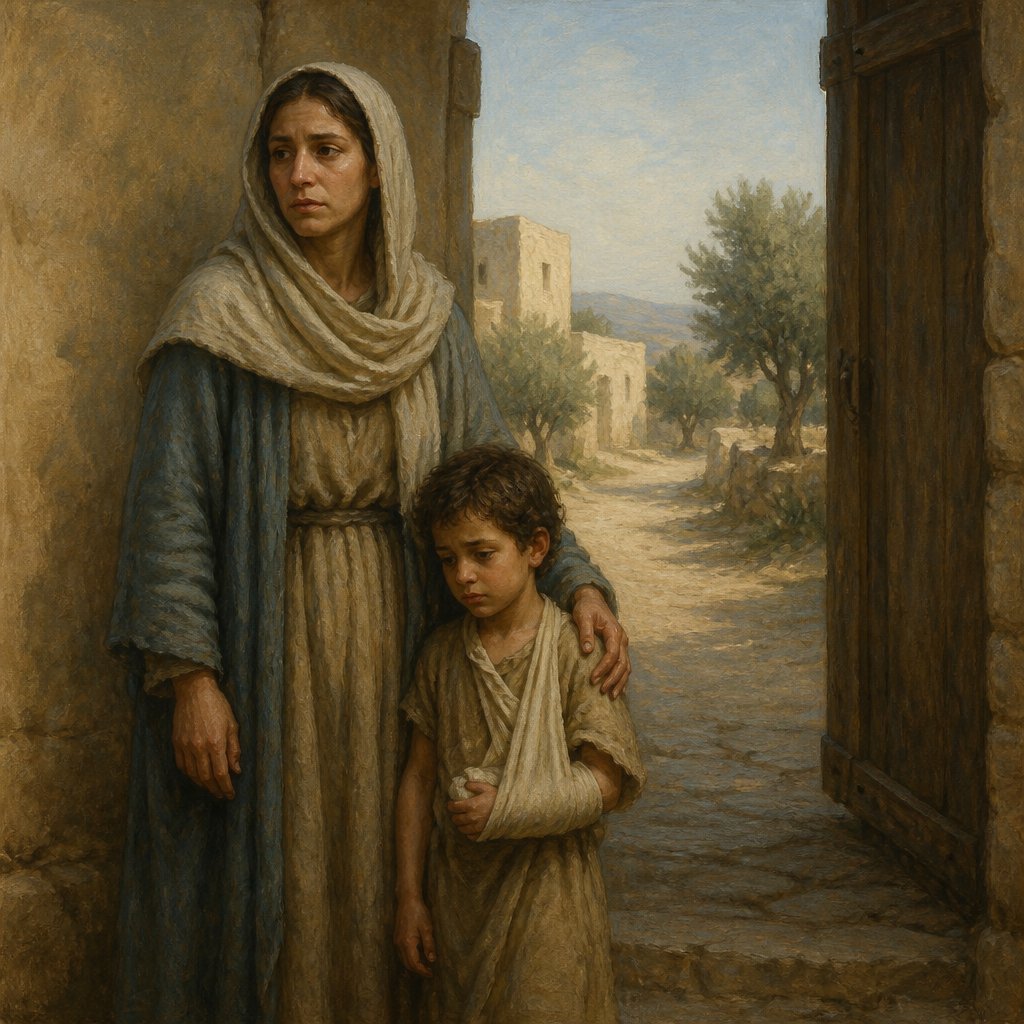
Job 22:9 in the King James Version (KJV) of the Bible states, "Thou hast sent widows away empty, and the arms of the fatherless have been broken." This verse is part of a speech given by Eliphaz, one of Job's friends who came to visit him during his time of suffering. Eliphaz is attempting to convince Job that his suffering is a result of his own sin and that he needs to repent in order to be restored to favor with God.
The verse speaks to the treatment of widows and orphans, highlighting the injustice and cruelty they have faced. In biblical times, widows and orphans were among the most vulnerable members of society, lacking the protection and provision of a male head of household. The Israelites were commanded by God to care for widows and orphans, as seen in passages such as Exodus 22:22-24 and Deuteronomy 14:29. Therefore, Eliphaz's accusation against Job is a serious one, suggesting that Job has failed to uphold this important responsibility.
The theme of justice and compassion for the marginalized is central to this verse. It serves as a reminder of the moral obligation to care for those who are in need, and it condemns those who neglect or mistreat the vulnerable members of society. Throughout the Bible, God's concern for the widows and orphans is evident, and He often aligns Himself with the oppressed and calls His people to do the same.
In the context of the book of Job, this accusation from Eliphaz is meant to further convince Job of his guilt and need for repentance. However, as the reader, we know from the opening chapters of the book that Job's suffering is not a result of his sin, but rather a test permitted by God. This verse serves to highlight the inadequacy of Job's friends in understanding the depth of his suffering and the complexities of God's ways.
Symbolically, the mistreatment of widows and orphans can be seen as a broader representation of injustice and inequality in society. The vulnerable and marginalized are often the first to suffer in times of hardship and are in need of compassion and support. The breaking of the arms of the fatherless represents the stripping away of their protection, leaving them defenseless and in need of care.
Ultimately, this verse serves as a call to action for believers to uphold the values of justice and compassion, particularly towards those who are most in need. It challenges us to examine our own attitudes and actions towards the marginalized and to consider how we can better care for those who are vulnerable in our own communities. The verse also highlights the importance of understanding the context and circumstances of suffering, cautioning against making hasty judgments about the causes of someone's hardships.
In conclusion, Job 22:9 in the King James Version of the Bible carries a powerful message about justice and compassion for the marginalized. It serves as a reminder of our responsibility to care for the vulnerable and condemns the mistreatment of those who are in need. In the context of the book of Job, it illustrates the limitations of human understanding in the face of suffering and calls us to approach the complexities of life with humility and compassion.
Get our apps


Artwork for Job 22:9

Job 22:9 - "Thou hast sent widows away empty, and the arms of the fatherless have been broken."

"Thou hast sent widows away empty, and the arms of the fatherless have been broken." - Job 22:9

Job 9:22 - "This is one thing, therefore I said it, He destroyeth the perfect and the wicked."

"This is one thing, therefore I said it, He destroyeth the perfect and the wicked." - Job 9:22

Job 1:22 - "In all this Job sinned not, nor charged God foolishly."

Job 9:1 - "Then Job answered and said,"

"Then Job answered and said," - Job 9:1

Job 22:1 - "Then Eliphaz the Temanite answered and said,"

Job 1:9 - "Then Satan answered the LORD, and said, Doth Job fear God for nought?"

Job 22:22 - "Receive, I pray thee, the law from his mouth, and lay up his words in thine heart."

Job 9:9 - "Which maketh Arcturus, Orion, and Pleiades, and the chambers of the south."

"In all this Job sinned not, nor charged God foolishly." - Job 1:22

Job 22:5 - "Is not thy wickedness great? and thine iniquities infinite?"

Job 22:19 - "The righteous see it, and are glad: and the innocent laugh them to scorn."

Job 41:22 - "In his neck remaineth strength, and sorrow is turned into joy before him."

Job 22:11 - "Or darkness, that thou canst not see; and abundance of waters cover thee."

Job 1:9 no words

Job 1:9 no words

Job 37:22 - "Fair weather cometh out of the north: with God is terrible majesty."

Job 22:8 - "But as for the mighty man, he had the earth; and the honourable man dwelt in it."

Job 22:12 - "Is not God in the height of heaven? and behold the height of the stars, how high they are!"

Job 3:22 - "Which rejoice exceedingly, and are glad, when they can find the grave?"

Job 22:30 - "He shall deliver the island of the innocent: and it is delivered by the pureness of thine hands."

Job 19:22 - "Why do ye persecute me as God, and are not satisfied with my flesh?"

Job 22:4 - "Will he reprove thee for fear of thee? will he enter with thee into judgment?"

Job 22:20 - "Whereas our substance is not cut down, but the remnant of them the fire consumeth."

Matthew 9:21-22

Matthew 9:21-22

Matthew 9:21-22

Matthew 9:21-22