What does Job 32:16 mean?
“When I had waited, ( for they spake not, but stood still, and answered no more;)” — Job 32:16
Job 32:16 (KJV) reads, "When I had waited, (for they spake not, but stood still, and answered no more;)" This verse is part of the book of Job in the Old Testament, and it is spoken by a character named Elihu.
To fully understand the meaning and commentary of this verse, it is important to provide some context. The book of Job is a complex and profound text that wrestles with the problem of human suffering and the nature of God's justice. The central figure, Job, experiences intense suffering and loses everything he has, including his wealth, health, and family. Throughout the book, Job's friends come to him, and they engage in a series of lengthy conversations, trying to make sense of Job's suffering and to offer explanations for why it is happening to him.
In the specific context of Job 32:16, Elihu, a young man who has been quietly listening to the conversation, feels compelled to speak up. He feels that Job's friends have failed to provide a satisfactory explanation for Job's suffering, and he believes that he has a new perspective to offer.
The verse "When I had waited, (for they spake not, but stood still, and answered no more;)" captures a moment of Elihu's frustration and impatience. He has been waiting for a chance to speak, and now, seeing that Job's friends have fallen silent and have no more answers to offer, he sees an opening to share his own thoughts.
This verse reflects the broader theme of the book of Job, which is the search for understanding in the face of suffering. Throughout the book, Job and his friends grapple with questions about the nature of God, the problem of evil, and the mystery of human suffering. Elihu's frustration in this verse may reflect a broader frustration with the limitations of human wisdom and understanding when it comes to these profound questions.
Elihu's decision to speak up at this moment also foreshadows the speeches that he will deliver in the subsequent chapters of the book. Elihu's speeches are passionate and eloquent, and he offers a new perspective on the problem of suffering. Unlike Job's other friends, Elihu does not accuse Job of wrongdoing or sin as the cause of his suffering. Instead, he focuses on the idea that suffering can serve as a way for God to teach and discipline people, ultimately leading them to a deeper understanding and righteousness.
From a symbolic perspective, the moment captured in Job 32:16 can be seen as a turning point in the book of Job. Elihu's speeches mark a shift in the conversation, and his perspective offers a new angle for understanding the problem of suffering. In this sense, Elihu's decision to speak up can be seen as a symbol of the need for fresh perspectives and new ideas when grappling with difficult and profound questions.
In conclusion, Job 32:16 captures a pivotal moment in the book of Job, reflecting Elihu's frustration and impatience, as well as signaling a shift in the conversation. The verse is part of a larger exploration of the problem of suffering and the nature of God's justice, and it sets the stage for Elihu's speeches, which offer a new perspective on these profound questions. Ultimately, the verse can be seen as a symbol of the need for openness and humility in the search for understanding in the face of suffering.
Get our apps


Artwork for Job 32:16

Job 32:16 - "When I had waited, (for they spake not, but stood still, and answered no more;)"

"When I had waited, (for they spake not, but stood still, and answered no more;)" - Job 32:16

Job 32:1 - "So these three men ceased to answer Job, because he was righteous in his own eyes."

Job 32:12 - "Yea, I attended unto you, and, behold, there was none of you that convinced Job, or that answered his words:"

Job 32:4 - "Now Elihu had waited till Job had spoken, because they were elder than he."

Job 32:3 - "Also against his three friends was his wrath kindled, because they had found no answer, and yet had condemned Job."

Job 16:1 - "Then Job answered and said,"

Job 32:15 - "They were amazed, they answered no more: they left off speaking."

Job 32:8 - "But there is a spirit in man: and the inspiration of the Almighty giveth them understanding."

Job 21:32 - "Yet shall he be brought to the grave, and shall remain in the tomb."

Job 36:32 - "With clouds he covereth the light; and commandeth it not to shine by the cloud that cometh betwixt."

Job 15:32 - "It shall be accomplished before his time, and his branch shall not be green."

Job 32:9 - "Great men are not always wise: neither do the aged understand judgment."

Job 31:32 - "The stranger did not lodge in the street: but I opened my doors to the traveller."

Job 32:18 - "For I am full of matter, the spirit within me constraineth me."
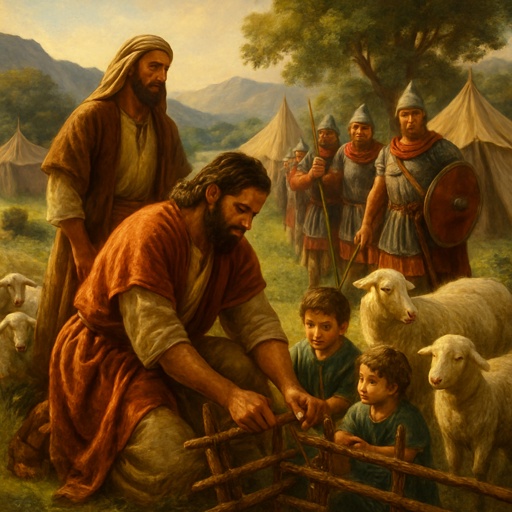
Numbers 32:16-18
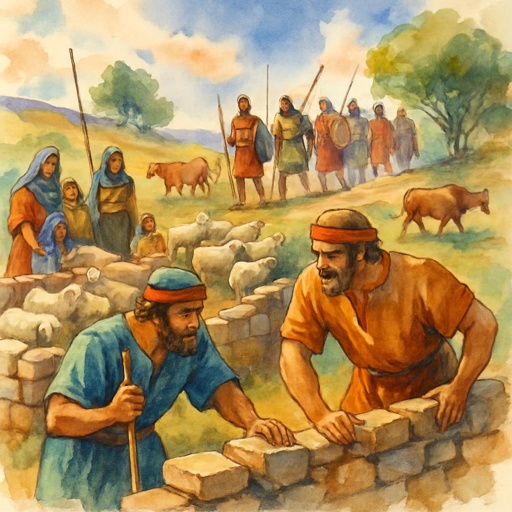
Numbers 32:16-18

Job 32:2 - "Then was kindled the wrath of Elihu the son of Barachel the Buzite, of the kindred of Ram: against Job was his wrath kindled, because he justified himself rather than God."

Job 32:20 - "I will speak, that I may be refreshed: I will open my lips and answer."

Job 32:7 - "I said, Days should speak, and multitude of years should teach wisdom."

Job 32:10 - "Therefore I said, Hearken to me; I also will shew mine opinion."

Job 32:5 - "When Elihu saw that there was no answer in the mouth of these three men, then his wrath was kindled."

"Then Job answered and said," - Job 16:1

Job 16:16 - "My face is foul with weeping, and on my eyelids is the shadow of death;"

Job 41:32 - "He maketh a path to shine after him; one would think the deep to be hoary."

Job 32:17 - "I said, I will answer also my part, I also will shew mine opinion."

Job 32:19 - "Behold, my belly is as wine which hath no vent; it is ready to burst like new bottles."

Job 33:32 - "If thou hast any thing to say, answer me: speak, for I desire to justify thee."

Job 35:16 - "Therefore doth Job open his mouth in vain; he multiplieth words without knowledge."

Job 38:32 - "Canst thou bring forth Mazzaroth in his season? or canst thou guide Arcturus with his sons?"