What does Job 34:20 mean?
"In a moment shall they die, and the people shall be troubled at midnight, and pass away: and the mighty shall be taken away without hand." - Job 34:20
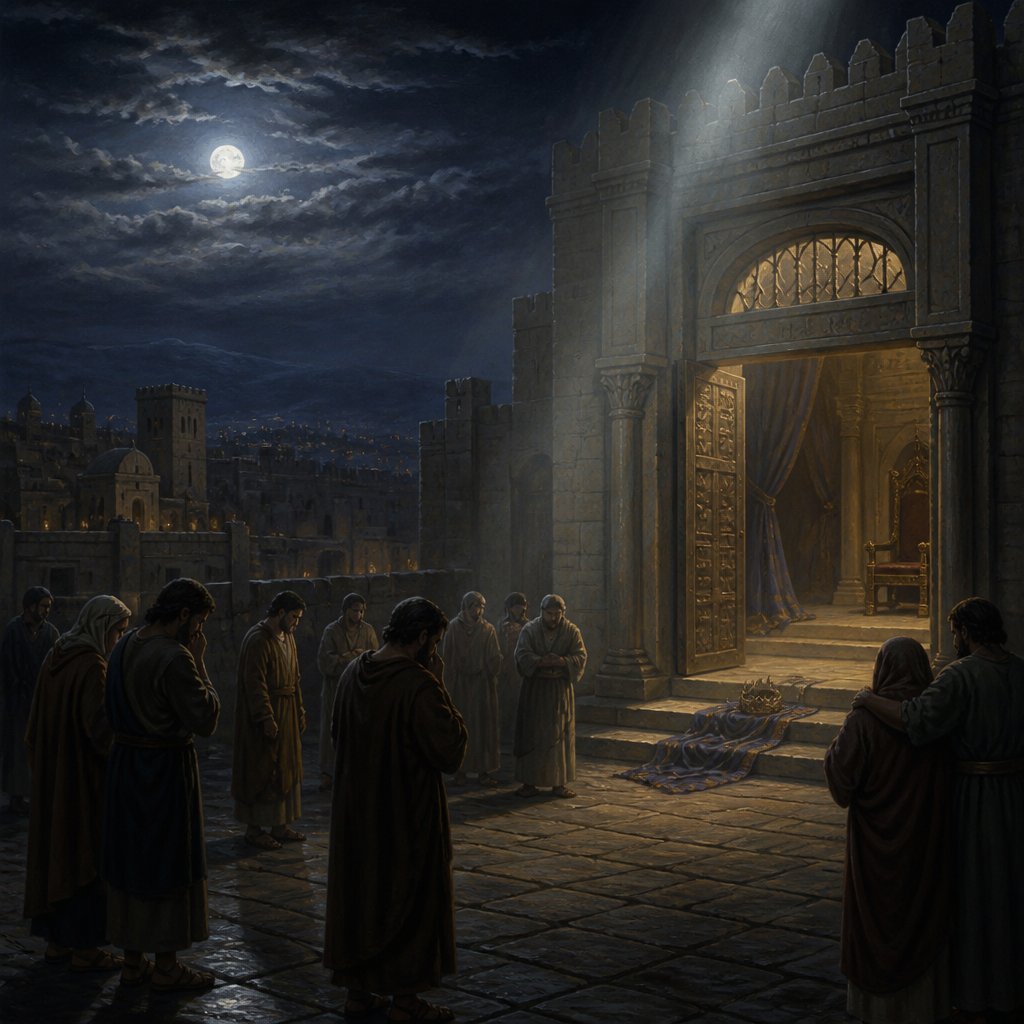
Job 34:20 from the King James Version (KJV) reads, "In a moment shall they die, and the people shall be troubled at midnight, and pass away: and the mighty shall be taken away without hand."
This verse is part of a larger discourse by Elihu, one of Job's friends, who is speaking to Job and his other friends about the justice and righteousness of God. The Book of Job is known for exploring the theme of suffering and the question of why the righteous suffer. In this particular speech, Elihu is challenging Job's understanding of God's justice and reminding him of God's sovereignty and wisdom.
The verse contains several layers of meaning and symbolism that can be explored. The first part of the verse, "In a moment shall they die," speaks to the fleeting nature of human life. It emphasizes the brevity and fragility of human existence, and the inevitability of death. This theme of the transience of life is a common one in the Bible, serving as a reminder for humans to focus on eternal matters and seek God's guidance and grace.
The mention of the people being troubled at midnight and passing away can be seen as a symbolic representation of the sudden and unexpected nature of death. Midnight is often associated with darkness and uncertainty, and in this context, it represents the moments of fear and confusion that can accompany death. The phrase "pass away" reinforces the idea of the transient nature of human life, emphasizing that all people, regardless of their status or accomplishments, will eventually face death.
The latter part of the verse, "and the mighty shall be taken away without hand," can be interpreted as a reference to the powerful and influential individuals who may seem invincible, yet are ultimately subject to the same mortality as everyone else. This highlights the idea that no one can escape the grasp of death, regardless of their earthly power or authority. The concept of being taken away "without hand" can also be seen as a reminder of the divine authority and sovereignty of God over life and death.
In the broader context of the Book of Job, this verse is part of a larger discussion about the nature of suffering and the ways in which God's justice and wisdom are beyond human understanding. Throughout the book, Job and his friends grapple with the question of why a righteous person like Job experiences such profound suffering. Elihu's speech, including the verse in question, serves as a reminder that God's ways are inscrutable and that human understanding of justice and righteousness is limited.
From a thematic perspective, this verse underscores the idea of the transient and fragile nature of human life, and the universal experience of mortality. It also speaks to the theme of divine justice and the limitations of human understanding. The verse serves as a reminder to trust in God's wisdom and sovereignty, even in the face of suffering and uncertainty.
In conclusion, Job 34:20 from the King James Version encapsulates a profound message about the transient nature of human life, the inevitability of death, and the inscrutable nature of God's justice and wisdom. The verse serves as a powerful reminder of the universal experience of mortality and the need for human beings to place their trust in God's sovereignty. It offers a sobering reflection on the fleeting nature of human existence and the limitations of human understanding in the face of divine mysteries.
Have questions about Job 34:20?
Dive deeper into this scripture with Bible Chat — an AI-powered tool for exploring God's Word through conversation. Ask questions, get context, and grow in your understanding of the Bible.
Get Our Apps


Job 34:20 Artwork

Job 34:20 - "In a moment shall they die, and the people shall be troubled at midnight, and pass away: and the mighty shall be taken away without hand."
"In a moment shall they die, and the people shall be troubled at midnight, and pass away: and the mighty shall be taken away without hand." - Job 34:20

Job 34:34 - "Let men of understanding tell me, and let a wise man hearken unto me."

Job 34:35 - "Job hath spoken without knowledge, and his words were without wisdom."

Job 34:7 - "What man is like Job, who drinketh up scorning like water?"

Job 34:36 - "My desire is that Job may be tried unto the end because of his answers for wicked men."

Job 34:5 - "For Job hath said, I am righteous: and God hath taken away my judgment."

Job 34:1 - "Furthermore Elihu answered and said,"

Job 34:3 - "For the ear trieth words, as the mouth tasteth meat."

Job 34:30 - "That the hypocrite reign not, lest the people be ensnared."

Matthew 20:29-34

Lucas 20:34-35

Job 15:34 - "For the congregation of hypocrites shall be desolate, and fire shall consume the tabernacles of bribery."

Job 34:16 - "If now thou hast understanding, hear this: hearken to the voice of my words."

Job 34:26 - "He striketh them as wicked men in the open sight of others;"

Job 21:34 - "How then comfort ye me in vain, seeing in your answers there remaineth falsehood?"

Job 34:21 - "For his eyes are upon the ways of man, and he seeth all his goings."

Job 34:22 - "There is no darkness, nor shadow of death, where the workers of iniquity may hide themselves."

Job 34:25 - "Therefore he knoweth their works, and he overturneth them in the night, so that they are destroyed."

Job 34:12 - "Yea, surely God will not do wickedly, neither will the Almighty pervert judgment."

Job 34:18 - "Is it fit to say to a king, Thou art wicked? and to princes, Ye are ungodly?"

Job 41:34 - "He beholdeth all high things: he is a king over all the children of pride."

Job 34:15 - "All flesh shall perish together, and man shall turn again unto dust."

Job 34:24 - "He shall break in pieces mighty men without number, and set others in their stead."

"Furthermore Elihu answered and said," - Job 34:1

"Job hath spoken without knowledge, and his words were without wisdom." - Job 34:35

Job 34:27 - "Because they turned back from him, and would not consider any of his ways:"

Numbers 34:20 - "And of the tribe of the children of Simeon, Shemuel the son of Ammihud."

Job 34:13 - "Who hath given him a charge over the earth? or who hath disposed the whole world?"

Job 1:20