What does Job 37:3 mean?
“He directeth it under the whole heaven, and his lightning unto the ends of the earth.” — Job 37:3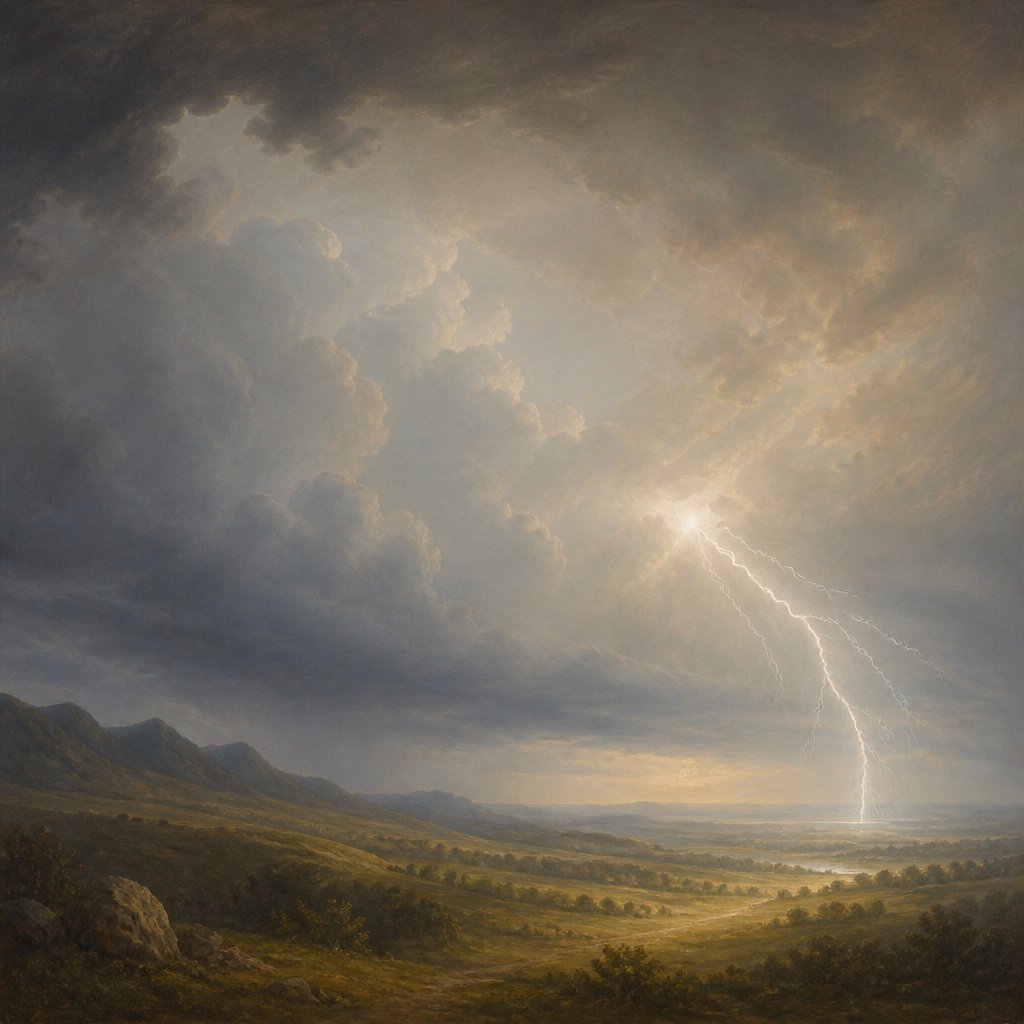
Job 37:3 (KJV) states, "He directeth it under the whole heaven, and his lightning unto the ends of the earth." This verse is part of a longer passage in which Elihu, one of Job's friends, is speaking to him about the greatness and majesty of God. The verse is a reflection on the powerful and all-encompassing nature of God's control over the natural world, particularly in the context of weather and atmospheric phenomena.
The book of Job is a complex and profound exploration of suffering, faith, and the nature of God. The central figure, Job, is a righteous man who experiences a series of unimaginable trials and losses, leading him to question the justice and wisdom of God. Throughout the book, Job's friends attempt to provide explanations for his suffering, but ultimately God speaks to Job and reveals the limitations of human understanding in the face of divine sovereignty. Elihu's speech in Job 37 is part of this larger dialogue, as he seeks to remind Job of God's power and wisdom in the midst of his suffering.
In the verse itself, Elihu speaks of God "directing" the lightning "under the whole heaven" and "unto the ends of the earth." This imagery of God's control over the natural world is a reflection of his sovereignty and omnipotence. The use of the word "directeth" suggests not just a passive observation of natural events, but an active and purposeful guidance of the elements. This reinforces the idea that God is intimately involved in the workings of the world, and that nothing is beyond his reach or outside of his control.
The mention of lightning is significant in this verse, as it is often associated with divine power and judgment in the Bible. In various passages, including the book of Job itself, lightning is used as a symbol of God's majesty and authority. For example, in Job 36:32-33, Elihu describes God as "clothing the thunder with lightning" and using it to accomplish his purposes. This imagery serves to emphasize the awe-inspiring and fearsome nature of God's power, and reinforces the message of God's control over the natural world.
The broader themes of this verse are also relevant to the larger context of the book of Job. Throughout the book, Job grapples with questions of suffering and the apparent silence of God in the face of his anguish. Elihu's speech, including the verse in question, can be seen as an attempt to remind Job of the greatness and mystery of God, and to challenge him to acknowledge the limitations of human understanding. The imagery of God directing the lightning under the whole heaven serves as a powerful and evocative portrayal of God's authority, which ultimately invites Job and the reader to humble themselves before the unknowable majesty of the divine.
From a broader theological perspective, this verse speaks to the concept of divine sovereignty and providence. It reflects the biblical understanding of God as the creator and sustainer of the natural world, with all things subject to his power and authority. This understanding of God's control over the natural world is a recurring theme in the Bible, reinforcing the idea that nothing is beyond God's reach and that everything is ultimately subject to his will.
In conclusion, Job 37:3 is a verse that speaks to the profound and transcendent nature of God's power and authority. It is a reflection on the awe-inspiring control that God exerts over the natural world, particularly in the context of weather and atmospheric phenomena. The verse serves as a powerful reminder of the greatness and mystery of God, challenging the reader to acknowledge the limitations of human understanding and to humble themselves before the divine. Its themes of divine sovereignty and providence are central to the broader theological message of the Bible, and its imagery of lightning and the heavens underscores the biblical understanding of God as the all-powerful and all-encompassing creator and sustainer of the universe.
Get our apps


Artwork for Job 37:3

Job 37:3 - "He directeth it under the whole heaven, and his lightning unto the ends of the earth."
"He directeth it under the whole heaven, and his lightning unto the ends of the earth." - Job 37:3

Job 37:14 - "Hearken unto this, O Job: stand still, and consider the wondrous works of God."

Job 37:8 - "Then the beasts go into dens, and remain in their places."

Job 37:10 - "By the breath of God frost is given: and the breadth of the waters is straitened."

Job 37:9 - "Out of the south cometh the whirlwind: and cold out of the north."

Job 37:13 - "He causeth it to come, whether for correction, or for his land, or for mercy."

Job 37:1 - "At this also my heart trembleth, and is moved out of his place."

Job 37:22 - "Fair weather cometh out of the north: with God is terrible majesty."

Job 38:37 - "Who can number the clouds in wisdom? or who can stay the bottles of heaven,"

Job 37:17 - "How thy garments are warm, when he quieteth the earth by the south wind?"

Job 37:24 - "Men do therefore fear him: he respecteth not any that are wise of heart."

Job 37:2 - "Hear attentively the noise of his voice, and the sound that goeth out of his mouth."

Job 37:16 - "Dost thou know the balancings of the clouds, the wondrous works of him which is perfect in knowledge?"

Job 37:11 - "Also by watering he wearieth the thick cloud: he scattereth his bright cloud:"

Job 37:18 - "Hast thou with him spread out the sky, which is strong, and as a molten looking glass?"

Job 37:21 - "And now men see not the bright light which is in the clouds: but the wind passeth, and cleanseth them."

"Then the beasts go into dens, and remain in their places." - Job 37:8

Job 37:7 - "He sealeth up the hand of every man; that all men may know his work."

"Hearken unto this, O Job: stand still, and consider the wondrous works of God." - Job 37:14

Job 37:6 - "For he saith to the snow, Be thou on the earth; likewise to the small rain, and to the great rain of his strength."

Job 37:20 - "Shall it be told him that I speak? if a man speak, surely he shall be swallowed up."

Job 37:15 - "Dost thou know when God disposed them, and caused the light of his cloud to shine?"

Job 37:5 - "God thundereth marvellously with his voice; great things doeth he, which we cannot comprehend."

Job 3:2 - "And Job spake, and said,"

Job 37:12 - "And it is turned round about by his counsels: that they may do whatsoever he commandeth them upon the face of the world in the earth."

Job 37:19 - "Teach us what we shall say unto him; for we cannot order our speech by reason of darkness."

Job 37:4 - "After it a voice roareth: he thundereth with the voice of his excellency; and he will not stay them when his voice is heard."

Job 37:23 - "Touching the Almighty, we cannot find him out: he is excellent in power, and in judgment, and in plenty of justice: he will not afflict."

Job 31:37 - "I would declare unto him the number of my steps; as a prince would I go near unto him."