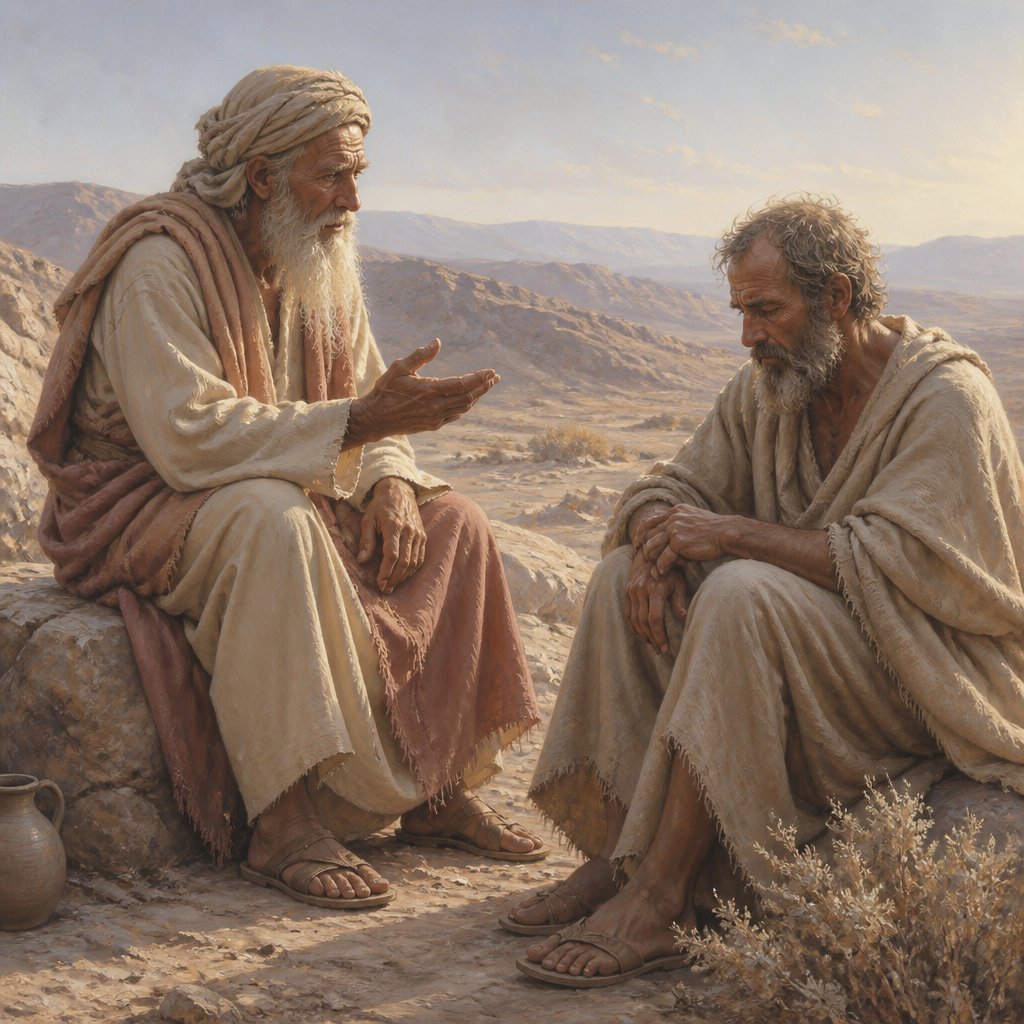
The book of Job in the Bible is often considered one of the most challenging and profound books in the Old Testament. It delves into the timeless questions of suffering, righteousness, and the sovereignty of God. Job 4:1 from the King James Version reads: "Then Eliphaz the Temanite answered and said." This verse marks the beginning of a dialogue between Job and his three friends, Eliphaz, Bildad, and Zophar, who come to comfort him in his time of great suffering.
The book of Job begins with a scene in heaven where Satan challenges God by suggesting that Job's righteousness is only because he is prosperous. God allows Satan to test Job's faith and loyalty, and thus begins a series of tragic events in Job's life. He loses his wealth, children, and health, yet he remains faithful to God. Despite his friends' initial intent to comfort him, they each take turns explaining Job's suffering, attributing it to his sin and encouraging him to repent.
In Job 4:1, Eliphaz, the first of Job's friends to speak, begins his discourse. His dialogue spans several chapters and touches on themes of wisdom, suffering, and the frailty of humanity. Eliphaz serves as a representative of traditional wisdom and carries an air of authority and experience. His words reveal his belief in the direct connection between sin and suffering, offering a worldview that embodies the concept of retributive justice.
Eliphaz's speeches are filled with rich symbolism and deep reflection on human nature and the nature of suffering. His language is poetic and filled with vivid imagery that draws on the natural world and human experience. Throughout his discourse, he urges Job to consider God's justice and to repent of any hidden sins, believing that this is the key to alleviate his suffering.
The overarching theme of suffering and the search for meaning within it permeates the book of Job. This verse represents the beginning of a prolonged philosophical debate about the nature of righteousness and suffering, as well as the role of God in human life. As Eliphaz presents his arguments, he indirectly challenges Job's understanding of faith and righteousness, setting the stage for a deep exploration of these themes.
One of the key contextual aspects of Job 4:1 is the cultural and religious framework of the time. In ancient Near Eastern thought, suffering was often seen as a punishment for sin or wrongdoing. Eliphaz and the other friends reflect this belief, viewing Job's suffering as a consequence of his transgressions. This sets up a tension between traditional religious beliefs and the reality of Job's situation, forcing the reader to grapple with questions of divine justice and human suffering.
Eliphaz's words and the subsequent dialogue with Job also highlight the complexity of human relationships and the struggle to empathize with those who are suffering. While Eliphaz and his friends initially come to comfort Job, their speeches ultimately add to his burden by accusing him of hidden sins. This aspect of the narrative invites reflection on the nature of friendship, empathy, and the importance of speaking truth with compassion.
Symbolism is also a key aspect of Job 4:1 and the larger context of the book. Eliphaz's words are deeply symbolic, drawing on imagery from nature, ancient cultural beliefs, and the human experience. His language serves to convey a sense of awe and mystery in the face of suffering and God's power. The literary richness of the text invites readers to engage with the profound themes it presents, as well as to consider the deeper spiritual and existential questions it raises.
In conclusion, Job 4:1 marks the beginning of a profound and complex dialogue about suffering, righteousness, and the nature of God. Eliphaz's initial speech sets the stage for a deep exploration of these themes, inviting readers to consider the timeless questions raised in the book of Job. As the narrative unfolds, it challenges traditional beliefs about the nature of suffering and offers a profound meditation on the human experience in the face of adversity. Ultimately, Job 4:1 serves as an entry point into a rich and thought-provoking exploration of faith, suffering, and the enduring search for meaning in the midst of hardship.
Get our apps


Artwork for Job 4:1

Job 4:1 - "Then Eliphaz the Temanite answered and said,"
"Then Eliphaz the Temanite answered and said," - Job 4:1

Job 1:4 - "And his sons went and feasted in their houses, every one his day; and sent and called for their three sisters to eat and to drink with them."

Eliphaz speaks to Job in Job 4.

Job 32:4 - "Now Elihu had waited till Job had spoken, because they were elder than he."

Job 4:4 - "Thy words have upholden him that was falling, and thou hast strengthened the feeble knees."

Job 12:1 - "And Job answered and said,"

Job 23:1 - "Then Job answered and said,"

Job 38:4-7

Job 42:1 - "Then Job answered the LORD, and said,"

Job 9:1 - "Then Job answered and said,"

Job 19:1 - "Then Job answered and said,"

Job 21:1 - "But Job answered and said,"

Job 26:1 - "But Job answered and said,"

Job 16:1 - "Then Job answered and said,"

Job 6:1 - "But Job answered and said,"

Job 38:1 - "Then the LORD answered Job out of the whirlwind, and said,"

Job 40:1 - "Moreover the LORD answered Job, and said,"

Job 35:4 - "I will answer thee, and thy companions with thee."

Job 1:22 - "In all this Job sinned not, nor charged God foolishly."

Job 27:1 - "Moreover Job continued his parable, and said,"

Job 29:1 - "Moreover Job continued his parable, and said,"

Job 4:9 - "By the blast of God they perish, and by the breath of his nostrils are they consumed."

Job 13:4 - "But ye are forgers of lies, ye are all physicians of no value."

Job 1:1 - "There was a man in the land of Uz, whose name was Job; and that man was perfect and upright, and one that feared God, and eschewed evil."

"Then Job answered and said," - Job 19:1

"Then Job answered and said," - Job 9:1

Job 3:1 - "After this opened Job his mouth, and cursed his day."

Job 1:1

Job 20:4 - "Knowest thou not this of old, since man was placed upon earth,"