What does Job 4:8 mean?
“Even as I have seen, they that plow iniquity, and sow wickedness, reap the same.” — Job 4:8
Job 4:8 in the King James Version of the Bible states: "Even as I have seen, they that plow iniquity, and sow wickedness, reap the same." This verse is part of a larger conversation between Job and his friends as they try to make sense of his suffering and the nature of God's justice. The verse is spoken by Eliphaz, one of Job's friends, as he tries to convince Job that his suffering is a result of his own sin.
The context of this verse is important for understanding its meaning. Job was a man who was known for his righteousness and his fear of the Lord, yet he experienced immense suffering and loss. His friends, including Eliphaz, came to comfort him but also to challenge his understanding of his circumstances. Eliphaz, in particular, believed that Job's suffering was a result of his own sin and urged him to repent and seek God's forgiveness.
In Job 4:8, Eliphaz uses the metaphor of farming to illustrate the principle of sowing and reaping. He suggests that those who "plow iniquity" and "sow wickedness" will inevitably "reap the same." In other words, he is implying that Job's suffering is a direct consequence of his own wrongdoing. This verse reflects the belief that people receive what they deserve based on their actions, whether good or bad.
The theme of retribution and divine justice is central to this verse. It raises the question of whether suffering is always a result of personal sin and whether God always rewards righteousness and punishes wickedness in a straightforward manner. Eliphaz's perspective aligns with the traditional notion of divine retribution found in the Old Testament, where God rewards the obedient and punishes the disobedient. However, the Book of Job challenges this understanding and grapples with the complexities of human suffering and divine justice.
The symbolism in this verse lies in the imagery of farming and harvesting. Plowing and sowing are the initial stages of cultivation, and reaping is the final stage where the fruits of one's labor are collected. The metaphor of sowing and reaping is commonly used in the Bible to illustrate the spiritual principle of cause and effect, emphasizing the consequences of one's actions.
In the broader context of the Book of Job, this verse serves as a starting point for a profound exploration of suffering and divine justice. Job's friends, including Eliphaz, cling to the traditional understanding of retribution, while Job himself wrestles with the apparent injustice of his plight. The Book of Job ultimately challenges simplistic notions of retribution and presents a more nuanced understanding of human suffering and God's mysterious ways.
In conclusion, Job 4:8 in the King James Version of the Bible reflects the traditional belief in divine retribution, where people reap what they sow in terms of their actions. The verse uses the metaphor of farming to illustrate this principle, and it is spoken in the context of Job's suffering and his friends' attempts to make sense of it. The verse raises important questions about the nature of divine justice and the complexities of human suffering, setting the stage for the profound exploration of these themes in the Book of Job.
Get our apps


Artwork for Job 4:8

Job 4:8 - "Even as I have seen, they that plow iniquity, and sow wickedness, reap the same."
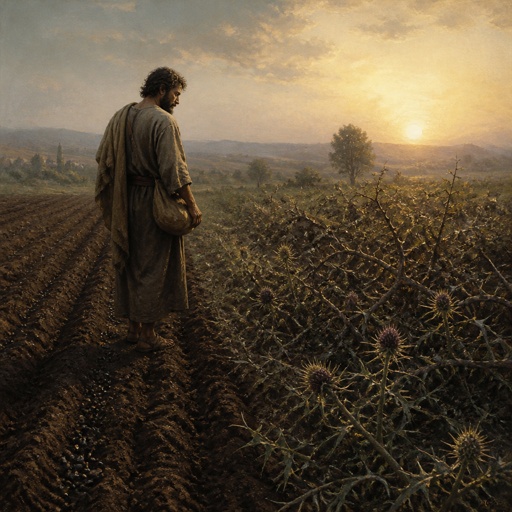
"Even as I have seen, they that plow iniquity, and sow wickedness, reap the same." - Job 4:8

Job 8:4 - "If thy children have sinned against him, and he have cast them away for their transgression;"

Eliphaz speaks to Job in Job 4.

"If thy children have sinned against him, and he have cast them away for their transgression;" - Job 8:4

Job 1:8

Job 8:8 - "For enquire, I pray thee, of the former age, and prepare thyself to the search of their fathers:"

Job 8:1 - "Then answered Bildad the Shuhite, and said,"

Job 37:8 - "Then the beasts go into dens, and remain in their places."

Job 36:8 - "And if they be bound in fetters, and be holden in cords of affliction;"

Job 32:4 - "Now Elihu had waited till Job had spoken, because they were elder than he."

Job 4:4 - "Thy words have upholden him that was falling, and thou hast strengthened the feeble knees."

Job 4:1 - "Then Eliphaz the Temanite answered and said,"

Job 8:19 - "Behold, this is the joy of his way, and out of the earth shall others grow."

Job 38:4-7

Job 21:8 - "Their seed is established in their sight with them, and their offspring before their eyes."

Job 32:8 - "But there is a spirit in man: and the inspiration of the Almighty giveth them understanding."

Job 24:8 - "They are wet with the showers of the mountains, and embrace the rock for want of a shelter."

Job 13:8 - "Will ye accept his person? will ye contend for God?"

Job 28:8 - "The lion's whelps have not trodden it, nor the fierce lion passed by it."

Job 22:8 - "But as for the mighty man, he had the earth; and the honourable man dwelt in it."

Job 8:17 - "His roots are wrapped about the heap, and seeth the place of stones."

Job 8:3 - "Doth God pervert judgment? or doth the Almighty pervert justice?"
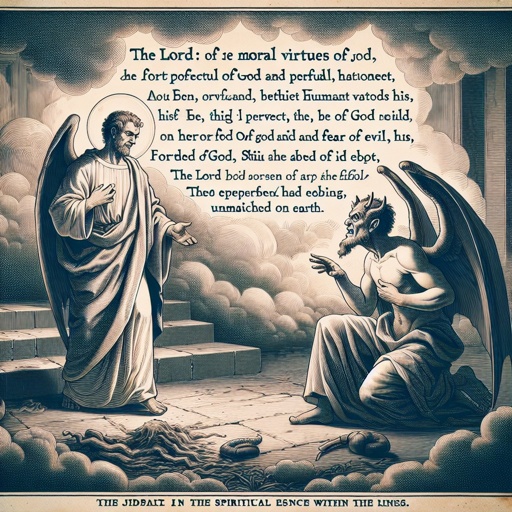
Job 1:8 - "And the LORD said unto Satan, Hast thou considered my servant Job, that there is none like him in the earth, a perfect and an upright man, one that feareth God, and escheweth evil?"

Job 9:8 - "Which alone spreadeth out the heavens, and treadeth upon the waves of the sea."

Job 8:21 - "Till he fill thy mouth with laughing, and thy lips with rejoicing."

Job 35:4 - "I will answer thee, and thy companions with thee."

Job 8:10 - "Shall not they teach thee, and tell thee, and utter words out of their heart?"

Job 41:8 - "Lay thine hand upon him, remember the battle, do no more."

Job 8:13 - "So are the paths of all that forget God; and the hypocrite's hope shall perish:"