What does Job 5:15 mean?
“But he saveth the poor from the sword, from their mouth, and from the hand of the mighty.” — Job 5:15
Job 5:15 (KJV) says, "But he saveth the poor from the sword, from their mouth, and from the hand of the mighty." This verse is part of a longer passage in the book of Job that contains the response of Eliphaz the Temanite to Job's suffering. In this verse, Eliphaz is assuring Job that God is a protector and a deliverer of the poor and oppressed.
The book of Job is a complex and multi-layered text that deals with the problem of suffering and the ways in which one might respond to it. Job, a righteous and prosperous man, is suddenly beset by a series of calamities that rob him of his wealth, health, and family. His friends, including Eliphaz, come to comfort him, but they also offer explanations for his suffering that Job finds unsatisfactory. Throughout the book, Job wrestles with the question of why a just and loving God would allow such terrible things to happen to a faithful servant.
In Job 5:15, Eliphaz is speaking from the perspective of the wisdom tradition, which teaches that those who are righteous and obedient to God will be blessed with prosperity and protection. The idea that God saves the poor from the sword, from their mouth, and from the hand of the mighty reflects this worldview. It suggests that God is actively involved in the lives of the oppressed, intervening to deliver them from their afflictions.
The theme of divine intervention on behalf of the poor and oppressed is a recurring motif in the Bible. Throughout the Old Testament, God is depicted as a defender of the marginalized and a champion of justice. In the book of Psalms, for example, there are numerous references to God's protection of the oppressed and his concern for the welfare of the poor. This theme is also echoed in the New Testament, where Jesus himself is portrayed as a friend to the outcast and a critic of the powerful.
The context of Job 5:15 is significant for understanding its meaning. Eliphaz is speaking to Job, who is himself experiencing profound suffering and has been reduced to a state of poverty and despair. Eliphaz's words are meant to offer comfort and reassurance, but they also reflect a common assumption about the relationship between righteousness and prosperity. In the worldview of Eliphaz and his contemporaries, Job's suffering must be the result of some sin or transgression on his part. By affirming God's protection of the poor, Eliphaz is implicitly suggesting that Job can find deliverance from his afflictions if he repents and returns to a life of obedience.
However, the book of Job ultimately challenges and subverts this conventional wisdom. Job's suffering is not the result of his own sins, but rather the result of a cosmic trial that he cannot fully comprehend. The book raises profound questions about the nature of suffering and the justice of God, and it ultimately resists easy answers or tidy moral lessons.
In terms of symbolism, Job 5:15 can be seen as representing the broader biblical theme of God's concern for the downtrodden. The imagery of being saved "from the sword, from their mouth, and from the hand of the mighty" evokes the idea of a comprehensive and powerful deliverance. The sword can symbolize violence and oppression, while "their mouth" might represent slander or false accusations. The "hand of the mighty" suggests the oppressive power of the ruling class or the wealthy. In this verse, God is portrayed as a protector who intervenes in the lives of the vulnerable and ensures their safety and well-being.
In conclusion, Job 5:15 is a verse that speaks to the theme of divine protection for the poor and oppressed. It reflects the worldview of Eliphaz and his contemporaries, who believed that righteousness would be rewarded with prosperity and security. However, the book of Job as a whole complicates and challenges this perspective, raising profound questions about the nature of suffering and the justice of God. The verse can be seen as a powerful statement of God's concern for the marginalized, and it invites readers to reflect on the ways in which we might respond to the suffering of others.
Get our apps


Artwork for Job 5:15

Job 5:15 - "But he saveth the poor from the sword, from their mouth, and from the hand of the mighty."

"But he saveth the poor from the sword, from their mouth, and from the hand of the mighty." - Job 5:15

Job 15:5 - "For thy mouth uttereth thine iniquity, and thou choosest the tongue of the crafty."
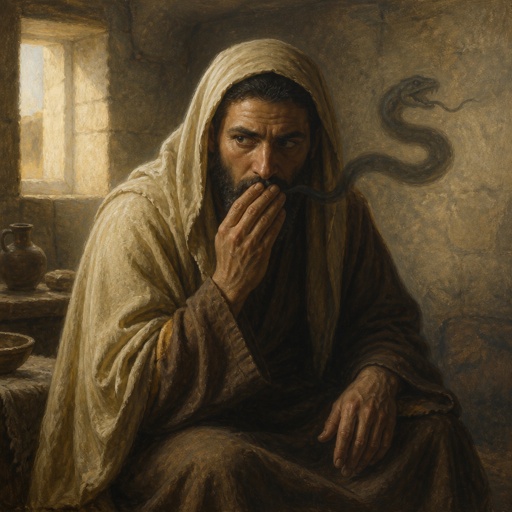
"For thy mouth uttereth thine iniquity, and thou choosest the tongue of the crafty." - Job 15:5

Job 15:15 - "Behold, he putteth no trust in his saints; yea, the heavens are not clean in his sight."

job 42:5

Job 15:1 - "Then answered Eliphaz the Temanite, and said,"

Job 42:15 - "And in all the land were no women found so fair as the daughters of Job: and their father gave them inheritance among their brethren."

Job 34:5 - "For Job hath said, I am righteous: and God hath taken away my judgment."

Job 1:5 no words

Job 1:5 no words

Job 29:15 - "I was eyes to the blind, and feet was I to the lame."

Job 1:5 no words

Job 20:5 - "That the triumphing of the wicked is short, and the joy of the hypocrite but for a moment?"

Job 32:15 - "They were amazed, they answered no more: they left off speaking."

Job 3:15 - "Or with princes that had gold, who filled their houses with silver:"

Job 36:15 - "He delivereth the poor in his affliction, and openeth their ears in oppression."

Job 38:15 - "And from the wicked their light is withholden, and the high arm shall be broken."

Job 15:35 - "They conceive mischief, and bring forth vanity, and their belly prepareth deceit."

Job 15:11 - "Are the consolations of God small with thee? is there any secret thing with thee?"

Job 5:5 - "Whose harvest the hungry eateth up, and taketh it even out of the thorns, and the robber swalloweth up their substance."

Job 5:14 - "They meet with darkness in the daytime, and grope in the noonday as in the night."

Job 15:34 - "For the congregation of hypocrites shall be desolate, and fire shall consume the tabernacles of bribery."

Job 15:32 - "It shall be accomplished before his time, and his branch shall not be green."

Job 15:4 - "Yea, thou castest off fear, and restrainest prayer before God."

Job 17:15 - "And where is now my hope? as for my hope, who shall see it?"

Job 15:19 - "Unto whom alone the earth was given, and no stranger passed among them."

Job 15:31 - "Let not him that is deceived trust in vanity: for vanity shall be his recompence."

Job 15:18 - "Which wise men have told from their fathers, and have not hid it:"

Job 28:15 - "It cannot be gotten for gold, neither shall silver be weighed for the price thereof."