What does Job 6:10 mean?
“Then should I yet have comfort; yea, I would harden myself in sorrow: let him not spare; for I have not concealed the words of the Holy One.” — Job 6:10
Job 6:10 in the King James Version of the Bible states, "Then should I yet have comfort; yea, I would harden myself in sorrow: let him not spare; for I have not concealed the words of the Holy One."
This verse comes from the book of Job, which is a part of the Old Testament. Job is a story of a man who experiences extreme suffering and loss, yet remains faithful to God. The verse in question is from a portion of the book where Job is expressing his immense sorrow and despair. He is lamenting his current state and questioning why he is experiencing such suffering.
The first part of the verse, "Then should I yet have comfort; yea, I would harden myself in sorrow," expresses a sense of desperation and longing for relief. Job is saying that if certain things were different, he could have found comfort in his situation. However, the reality is that he is faced with such overwhelming grief that he feels the need to "harden" himself against it. This language reveals the depth of Job's pain and the need for some kind of respite.
The second part of the verse, "let him not spare; for I have not concealed the words of the Holy One," speaks to Job's faith and trust in God, even in the midst of his suffering. Job is essentially saying that if he is to endure this suffering, then God should not hold back from allowing it to continue. Job acknowledges that he has been faithful and has not hidden or denied the words of God. This demonstrates Job's commitment to God and his belief that his suffering is not due to any wrongdoing on his part, but rather a part of a larger plan or purpose.
The themes present in this verse and the book of Job as a whole are numerous. One of the main themes is the concept of suffering and the questions surrounding why good people experience pain and hardship. Job's story challenges the traditional understanding that suffering is a direct result of sin, as he is described as a righteous and blameless man. This verse specifically addresses the idea of suffering and how one can endure it while maintaining faith and trust in God.
Another theme is that of faith and trust in God, even in the midst of trials. Job's unwavering commitment to God is evident throughout the book, even as he grapples with deep sorrow and despair. This verse demonstrates Job's willingness to accept whatever comes his way, believing that he has been faithful and obedient to God.
The context of this verse is crucial to understanding its meaning. Job is speaking in response to his friends, who have come to comfort him in his time of suffering. However, their attempts to console him are met with Job's overwhelming grief and despair, leading him to question the purpose of his suffering and his own ability to endure it. This verse is part of Job's lament, as he expresses his anguish and asks for relief from his pain.
In terms of symbolism, the hardening of oneself in sorrow can be seen as a metaphor for the protective barriers that people put up in response to emotional pain. Job's plea for God not to spare him reflects the human desire for honesty and transparency in dealing with suffering. This can also be seen as a plea for God to not hold back in allowing him to experience the full weight of his sorrow, as a way of confronting and processing his emotions.
In conclusion, Job 6:10 is a powerful and poignant verse that encapsulates the themes of suffering, faith, and the human experience. It reflects the depth of Job's anguish and his unwavering trust in God, even in the midst of profound sorrow. The verse serves as a reminder of the complexities of human suffering and the ways in which faith can provide comfort and hope in the face of adversity.
Get our apps


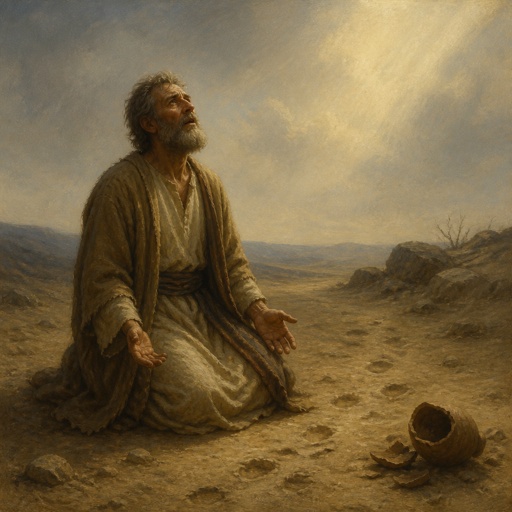
Artwork for Job 6:10

Job 6:10 - "Then should I yet have comfort; yea, I would harden myself in sorrow: let him not spare; for I have not concealed the words of the Holy One."

"Then should I yet have comfort; yea, I would harden myself in sorrow: let him not spare; for I have not concealed the words of the Holy One." - Job 6:10

Job 10:6 - "That thou enquirest after mine iniquity, and searchest after my sin?"
"That thou enquirest after mine iniquity, and searchest after my sin?" - Job 10:6

Job 6:1 - "But Job answered and said,"

Job 40:6 - "¶ Then answered the LORD unto Job out of the whirlwind, and said,"

"But Job answered and said," - Job 6:1

Job 42:10 - "And the LORD turned the captivity of Job, when he prayed for his friends: also the LORD gave Job twice as much as he had before."

Job 27:6

Job 10:10 - "Hast thou not poured me out as milk, and curdled me like cheese?"

Job 6:6 - "Can that which is unsavoury be eaten without salt? or is there any taste in the white of an egg?"

"¶ Then answered the LORD unto Job out of the whirlwind, and said," - Job 40:6

Job 30:6 - "To dwell in the clifts of the valleys, in caves of the earth, and in the rocks."

Job 18:10 - "The snare is laid for him in the ground, and a trap for him in the way."

Job 37:10 - "By the breath of God frost is given: and the breadth of the waters is straitened."

Job 28:6 - "The stones of it are the place of sapphires: and it hath dust of gold."

Job 29:10 - "The nobles held their peace, and their tongue cleaved to the roof of their mouth."

Job 6:16 - "Which are blackish by reason of the ice, and wherein the snow is hid:"

Job 36:6 - "He preserveth not the life of the wicked: but giveth right to the poor."

Job 42:6 - "Wherefore I abhor myself, and repent in dust and ashes."

Job 26:6 - "Hell is naked before him, and destruction hath no covering."

Job 38:10 - "And brake up for it my decreed place, and set bars and doors,"

Job 6:19 - "The troops of Tema looked, the companies of Sheba waited for them."

Job 6:12 - "Is my strength the strength of stones? or is my flesh of brass?"

Job 6:18 - "The paths of their way are turned aside; they go to nothing, and perish."

Job 10:5 - "Are thy days as the days of man? are thy years as man's days,"

Job 21:10 - "Their bull gendereth, and faileth not; their cow calveth, and casteth not her calf."

Job 10:4 - "Hast thou eyes of flesh? or seest thou as man seeth?"

Job 13:6 - "Hear now my reasoning, and hearken to the pleadings of my lips."

Job 5:10 - "Who giveth rain upon the earth, and sendeth waters upon the fields:"