What does Job 6:22 mean?
"Did I say, Bring unto me? or, Give a reward for me of your substance?" - Job 6:22

Job 6:22 (KJV) says, "Did I say, Bring unto me? or, Give a reward for me of your substance?" This verse is part of Job's response to his friend Eliphaz, who has been accusing him of sin and urging him to confess and repent. Job is defending himself against these accusations, affirming his innocence and questioning why he should be expected to beg for pity from his friends.
The book of Job in the Old Testament is a complex and profound exploration of suffering, faith, and divine sovereignty. Job is a wealthy and righteous man who experiences a series of devastating trials, including the loss of his children, his wealth, and his health. Throughout the book, Job struggles to understand why he is suffering and to reconcile his belief in God's justice with the apparent injustice of his situation.
In this verse, Job is expressing his frustration with his friends' lack of empathy and understanding. He is asking them if he has ever requested help or sought a reward from them. This statement emphasizes Job's desire for genuine compassion and support, rather than being accused and judged by those he thought were his friends.
The verse reflects the theme of the book of Job, which is the mystery of suffering and the human struggle to make sense of it. Job's words reveal his deep emotional pain and his feeling of isolation and abandonment. Despite his suffering, Job refuses to confess to sins he has not committed, and he questions the fairness of his plight.
Job's question also highlights the issue of fairness and justice. He is suggesting that it would be unjust for God to bring such suffering upon him without cause. In essence, Job is challenging the assumption that suffering is always a result of sin and that those who suffer must somehow be responsible for their own misfortune.
The context of this verse is important for understanding its full significance. Job is engaged in a dialogue with his friends who have come to comfort him but end up accusing him of being responsible for his own suffering. Job's response is part of his plea for understanding and consolation, as he grapples with the immense trials he is facing.
The symbolism in this verse lies in the contrast between Job's righteous character and his friends' lack of empathy and understanding. Job's integrity and faithfulness are evident throughout the book, despite the hardships he endures. His friends, on the other hand, are quick to accuse and judge him, failing to demonstrate the compassion and support he needs.
Ultimately, Job's question in this verse serves as a poignant reminder of the importance of empathy, compassion, and solidarity in the face of suffering. It challenges the simplistic notion that suffering is always a punishment for sin and calls for a deeper understanding of the complexities of human experience.
In conclusion, Job 6:22 is a powerful expression of Job's anguish and his plea for understanding and consolation. It encapsulates the central themes of the book of Job, including the mystery of suffering, the search for justice, and the importance of empathy and compassion. As readers, we are invited to reflect on the profound questions raised by Job's words and to consider the deeper meaning of suffering within the context of faith and human experience.
Have questions about Job 6:22?
Dive deeper into this scripture with Bible Chat — an AI-powered tool for exploring God's Word through conversation. Ask questions, get context, and grow in your understanding of the Bible.
Get Our Apps


Job 6:22 Artwork

Job 6:22 - "Did I say, Bring unto me? or, Give a reward for me of your substance?"

"Did I say, Bring unto me? or, Give a reward for me of your substance?" - Job 6:22

Job 22:6 - "For thou hast taken a pledge from thy brother for nought, and stripped the naked of their clothing."
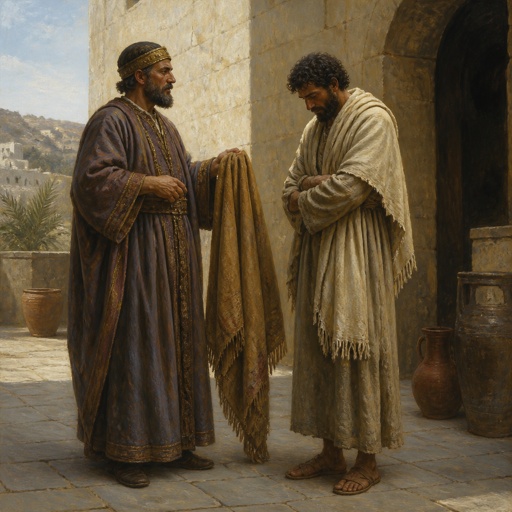
"For thou hast taken a pledge from thy brother for nought, and stripped the naked of their clothing." - Job 22:6

Job 1:22 - "In all this Job sinned not, nor charged God foolishly."

Job 6:1 - "But Job answered and said,"

Job 40:6 - "¶ Then answered the LORD unto Job out of the whirlwind, and said,"

Job 22:1 - "Then Eliphaz the Temanite answered and said,"

Job 22:22 - "Receive, I pray thee, the law from his mouth, and lay up his words in thine heart."

"But Job answered and said," - Job 6:1

"In all this Job sinned not, nor charged God foolishly." - Job 1:22

Job 22:5 - "Is not thy wickedness great? and thine iniquities infinite?"

Job 22:19 - "The righteous see it, and are glad: and the innocent laugh them to scorn."

Job 41:22 - "In his neck remaineth strength, and sorrow is turned into joy before him."

Job 27:6

Job 22:11 - "Or darkness, that thou canst not see; and abundance of waters cover thee."

Job 6:6 - "Can that which is unsavoury be eaten without salt? or is there any taste in the white of an egg?"

Job 37:22 - "Fair weather cometh out of the north: with God is terrible majesty."

Job 22:8 - "But as for the mighty man, he had the earth; and the honourable man dwelt in it."

Job 22:12 - "Is not God in the height of heaven? and behold the height of the stars, how high they are!"

Job 3:22 - "Which rejoice exceedingly, and are glad, when they can find the grave?"

Job 22:30 - "He shall deliver the island of the innocent: and it is delivered by the pureness of thine hands."

Job 19:22 - "Why do ye persecute me as God, and are not satisfied with my flesh?"

Job 22:4 - "Will he reprove thee for fear of thee? will he enter with thee into judgment?"

Job 22:20 - "Whereas our substance is not cut down, but the remnant of them the fire consumeth."

Job 9:22 - "This is one thing, therefore I said it, He destroyeth the perfect and the wicked."

"Then Eliphaz the Temanite answered and said," - Job 22:1

Job 22:10 - "Therefore snares are round about thee, and sudden fear troubleth thee;"

Job 36:22 - "Behold, God exalteth by his power: who teacheth like him?"

Job 40:22 - "The shady trees cover him with their shadow; the willows of the brook compass him about."