What does John 10:27-28 mean?
"My sheep hear my voice, and I know them, and they follow me: And I give unto them eternal life; and they shall never perish, neither shall any [man] pluck them out of my hand." - John 10:27-28
!["My sheep hear my voice, and I know them, and they follow me:
And I give unto them eternal life; and they shall never perish, neither shall any [man] pluck them out of my hand." - John 10:27-28](https://media.bible.art/ad4be693-9837-419c-aa28-1d12bec3e454-compressed.jpg)
John 10:27–28 in the KJV reads, “My sheep hear my voice, and I know them, and they follow me: And I give unto them eternal life; and they shall never perish, neither shall any man pluck them out of my hand.”
These words belong to Jesus’ “good shepherd” teaching in John 10, a passage shaped by the imagery of shepherding that would have been immediately familiar in the world of Scripture. In the Old Testament, God is often spoken of as Shepherd, and God’s people as His flock. When Jesus says “My sheep,” He is not merely borrowing a comforting rural metaphor; He is placing Himself in the role of the divine Shepherd who gathers, guides, defends, and preserves His people. The backdrop in John 10 includes conflict with religious leaders and questions about His identity and authority. Against that tension Jesus describes the difference between true belonging and mere proximity: some are near enough to argue with Him, but only His sheep recognize and respond to Him as their shepherd.
“My sheep hear my voice” speaks first to recognition and receptivity. In the shepherding world, a flock could be exposed to many voices: strangers, hirelings, thieves, the noise of a crowded place. Yet the sheep that belong to a particular shepherd learn his call, and they respond because that voice is not anonymous to them. Spiritually, “hear” is more than the physical act of listening; it carries the sense of receiving, acknowledging, and yielding. The verse does not describe a sheep that merely hears sound, but one that hears in such a way that the shepherd’s call becomes directive and authoritative. The “voice” of Christ in John’s Gospel is bound up with His words, His self-revelation, His teaching, and ultimately His person. The sheep are marked by an inward responsiveness to who He is and what He says.
“And I know them” adds a second theme that deepens the comfort and also the weight of the statement. In Scripture, to “know” is often relational and covenantal, not merely informational. Jesus is not saying He is aware of their existence; He is saying they are His in a personal, owned, recognized way. The knowledge runs both directions in this verse: they recognize His voice, and He recognizes them as His own. That mutuality is important in John’s Gospel, where true discipleship is not just correct opinions about Jesus but an actual belonging to Him. The statement implies intimacy and care: a shepherd knows the condition of his flock, the needs of individual sheep, the dangers of the terrain, and the threats that approach. Christ’s knowledge means His people are not handled as a faceless crowd; they are personally held in His attention.
“And they follow me” shows that the hearing and the knowing are not meant to remain invisible. Following is the outward evidence of inward recognition. The sheep do not follow because they have been coerced by force, but because they have been drawn by a trusted voice. In the context of John 10, Jesus contrasts Himself with those who do not truly shepherd—thieves who take, hirelings who flee, strangers whose voices are not safe. To follow Christ, then, is to walk after His leading rather than be driven by competing claims of authority. The verse presents discipleship as movement: a life that aligns with Christ’s direction and remains in His company.
Verse 28 turns from description to promise: “And I give unto them eternal life.” “Give” is crucial; eternal life is not achieved, purchased, or earned by the sheep. It is bestowed by the Shepherd. In John’s Gospel, “eternal life” is more than unending duration; it is life of a different order, life that belongs to the age and kingdom of God, life grounded in communion with the One who is Himself the source of life. That Jesus gives it underscores His authority and sufficiency. He does not point them to a life outside Himself; He grants it as part of belonging to Him.
The next words intensify the assurance: “and they shall never perish.” The language is emphatic: it is not a fragile life that might collapse under pressure. In a shepherding frame, perishing evokes the dangers that stalk sheep—predators, cliffs, starvation, scattering, abandonment. Jesus is declaring that the final outcome for His sheep is not destruction. This does not deny that sheep may face hardship; the larger shepherd image assumes danger exists. The promise is that the dangers will not have the last word. Their life, because it is given by Him, will not end in ultimate ruin.
“Neither shall any man pluck them out of my hand” adds a powerful symbol of security and possession. The “hand” in Scripture often represents power, grasp, protection, and authority. To be in Christ’s hand is to be held by His strength rather than by one’s own. “Pluck” suggests a violent snatching, the act of a predator or thief pulling prey away. That imagery matches the earlier themes of thieves and robbers that threaten the flock. Jesus’ promise is that no external force can overpower His grip. The phrase “any man” broadens the protection: it is not limited to a particular enemy or circumstance. The emphasis is not on the sheep’s ability to cling, but on the Shepherd’s ability to hold.
Taken together, John 10:27–28 presents a portrait of salvation and discipleship that is both personal and secure. The sheep are not defined by their cleverness but by their response to Christ’s voice; they are not left to uncertainty but are known; they are not saved by their strength but are given eternal life; they are not finally vulnerable to the thief’s hand because they are kept in Christ’s hand. In the wider context of John 10, where Jesus is distinguishing true shepherding from false leadership and true belonging from unbelief, these verses function as a dividing line: the decisive mark of His people is that they recognize Him, and the decisive comfort of His people is that He will not lose them. The significance lies in how the passage ties together identity, relationship, obedience, gift, and preservation in a single shepherd’s promise spoken by Christ Himself.
Have questions about John 10:27-28?
Dive deeper into this scripture with Bible Chat — an AI-powered tool for exploring God's Word through conversation. Ask questions, get context, and grow in your understanding of the Bible.
Get Our Apps


John 10:27-28 Artwork
!["My sheep hear my voice, and I know them, and they follow me:
And I give unto them eternal life; and they shall never perish, neither shall any [man] pluck them out of my hand." - John 10:27-28](https://media.bible.art/0b5cc646-9105-4703-bb1b-421d592e0b48-thumbnail.jpg)
"My sheep hear my voice, and I know them, and they follow me: And I give unto them eternal life; and they shall never perish, neither shall any [man] pluck them out of my hand." - John 10:27-28
!["My sheep hear my voice, and I know them, and they follow me:
And I give unto them eternal life; and they shall never perish, neither shall any [man] pluck them out of my hand." - John 10:27-28](https://media.bible.art/130a5540-a81b-4817-a57a-8e20aa42185e-thumbnail.jpg)
"My sheep hear my voice, and I know them, and they follow me: And I give unto them eternal life; and they shall never perish, neither shall any [man] pluck them out of my hand." - John 10:27-28

John 10:27 - "My sheep hear my voice, and I know them, and they follow me:"
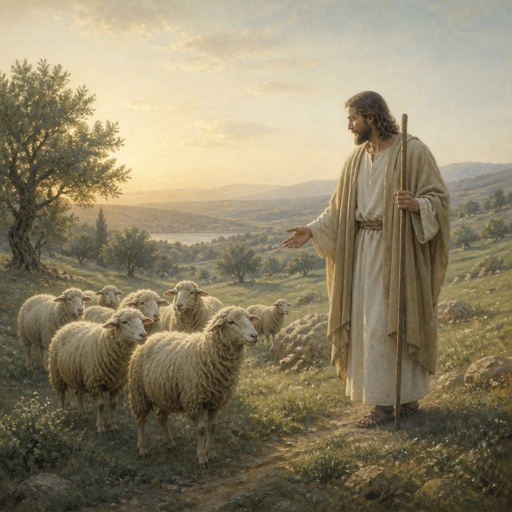
"My sheep hear my voice, and I know them, and they follow me:" - John 10:27
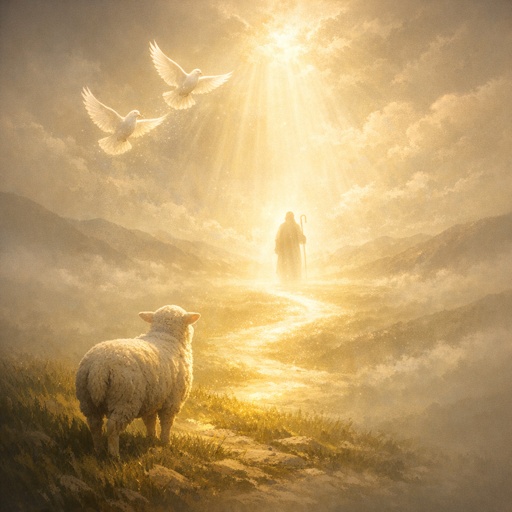
"My sheep hear my voice, and I know them, and they follow me:" - John 10:27

John 10:28 - "And I give unto them eternal life; and they shall never perish, neither shall any man pluck them out of my hand."

Proverbs 17:27-28

Proverbs 17:27-28

Exodus 23:27-28

Proverbs 17:27-28

Luke 13:28-27

Luke 13:28-27

Luke 13:28-27

John 5:28

John 14:28

John 5:28

John 5:28

John 1:28 - "These things were done in Bethabara beyond Jordan, where John was baptizing."

John 20:27

John 20:27

John 10:10

John 10:10

John 10:10

John 19:25-27

1 John 2:27

John 3:27 - "John answered and said, A man can receive nothing, except it be given him from heaven."

John 10:10

John 10:10

John 10:10

John 10:10