What does John 10:3 mean?
“To him the porter openeth; and the sheep hear his voice: and he calleth his own sheep by name, and leadeth them out.” — John 10:3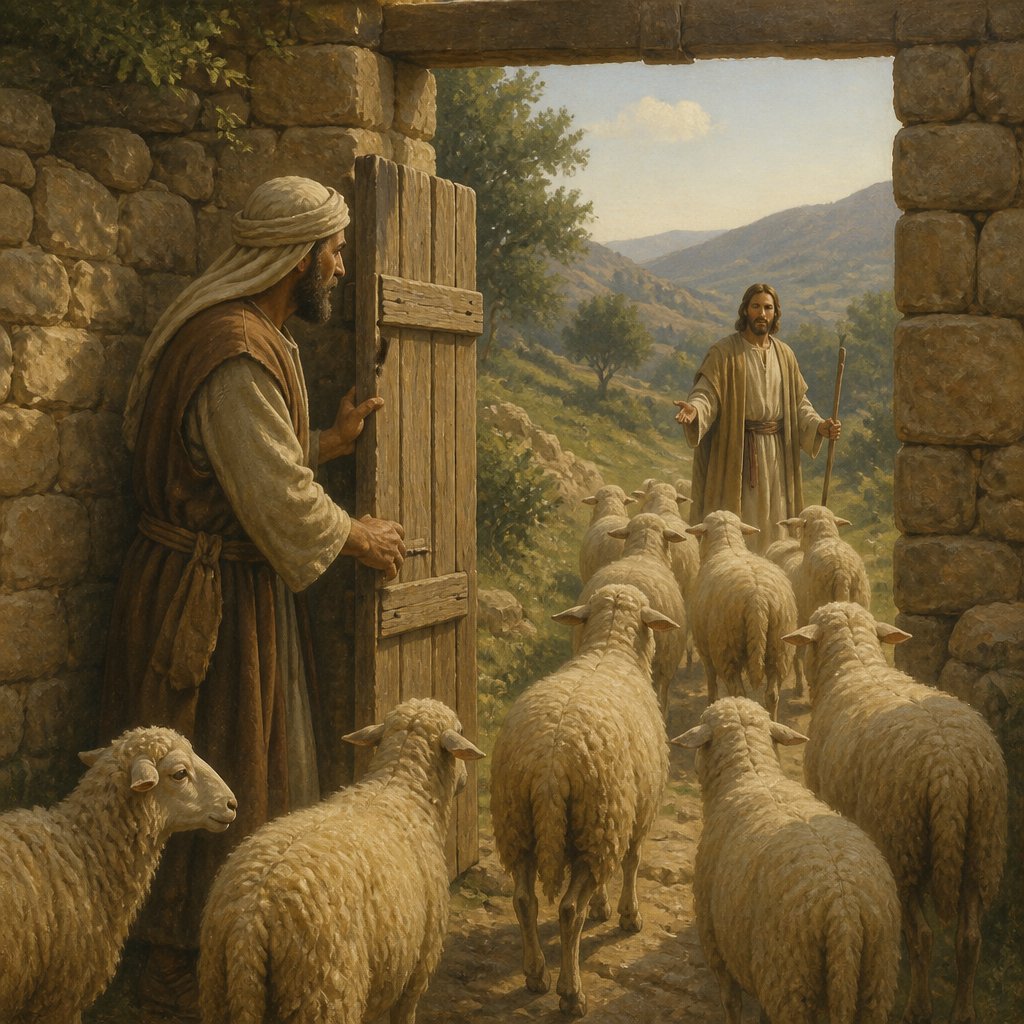
John 10:3 KJV: "To him the porter openeth; and the sheep hear his voice: and he calleth his own sheep by name, and leadeth them out."
In this verse from the book of John in the King James Version of the Bible, Jesus uses the metaphor of a shepherd and his sheep to illustrate the relationship between himself and his followers. This verse is part of a larger passage in which Jesus speaks about being the Good Shepherd who protects and leads his flock. In this particular verse, he highlights the intimacy and personal connection he has with his followers.
One of the key themes of this verse is the idea of hearing and recognizing the voice of the shepherd. In the metaphor, the sheep represent Jesus's followers, and the shepherd represents Jesus himself. Just as a shepherd calls his sheep by name and they recognize his voice and follow him, Jesus calls each of his followers by name and they hear and recognize his voice. This illustrates the deep personal relationship that Jesus has with his followers. It emphasizes the idea that Jesus knows each of his followers intimately and personally, and they are able to discern his voice and follow his guidance.
This verse also speaks to the idea of being led by the shepherd. The shepherd leads his sheep out, guiding them to safety, nourishment, and rest. This speaks to the role of Jesus as a guide and protector for his followers. He leads them out of harm's way, providing them with spiritual nourishment and rest. This reinforces the idea of trust and reliance on Jesus as the ultimate source of guidance and protection.
The context of this verse is important to consider. In the larger passage of John 10, Jesus is addressing the Pharisees and teaching about the nature of his relationship with his followers. He contrasts himself with the religious leaders of the time, portraying himself as the true shepherd who cares for his flock, in contrast to the hired hand who does not have a personal investment in the well-being of the sheep. By using this metaphor, Jesus is also subtly criticizing the religious leaders for their failure to truly care for and lead their followers.
Symbolically, the shepherd and sheep metaphor is rich with meaning. Throughout the Bible, the image of the shepherd is used to represent God and his relationship with his people. In the Old Testament, God is often portrayed as the shepherd of Israel, guiding and caring for his chosen people. In the New Testament, Jesus assumes this role as the Good Shepherd who leads and protects his followers. The sheep, on the other hand, represent the followers of Jesus, who are in need of guidance, protection, and care.
Overall, this verse from John 10:3 KJV speaks to the deep personal relationship that Jesus has with his followers. It emphasizes the themes of hearing and recognizing the voice of the shepherd, being led by the shepherd, and the intimate care and guidance that Jesus provides for his followers. The metaphor of the shepherd and his sheep is a powerful and enduring symbol of the relationship between God and his people, and this verse serves as a reminder of Jesus's role as the ultimate guide and protector for his followers.
Get our apps


Artwork for John 10:3
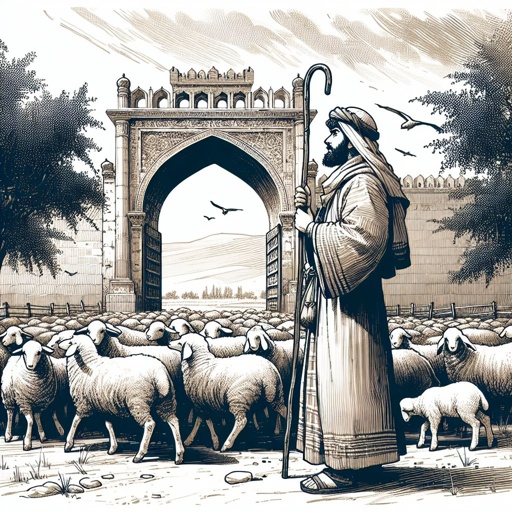
John 10:3 - "To him the porter openeth; and the sheep hear his voice: and he calleth his own sheep by name, and leadeth them out."
"To him the porter openeth; and the sheep hear his voice: and he calleth his own sheep by name, and leadeth them out." - John 10:3

John 3:10 - "Jesus answered and said unto him, Art thou a master of Israel, and knowest not these things?"

1 John 3:10 - "In this the children of God are manifest, and the children of the devil: whosoever doeth not righteousness is not of God, neither he that loveth not his brother."

John 10:10

John 10:10

John 10:10

John 10:10

John 10:10

John 10:10

John 10:10

"Jesus answered and said unto him, Art thou a master of Israel, and knowest not these things?" - John 3:10

John 3:3

John 3:24 - "For John was not yet cast into prison."

John 10:41 - "And many resorted unto him, and said, John did no miracle: but all things that John spake of this man were true."

John 3:3-8

John 10:30

John 9:10

John 10:30

John 10:9

John 10:9

John 10:9

John 3

3 John 1:10 - "Wherefore, if I come, I will remember his deeds which he doeth, prating against us with malicious words: and not content therewith, neither doth he himself receive the brethren, and forbiddeth them that would, and casteth them out of the church."

1 John 3:1-3

John 10:40 - "And went away again beyond Jordan into the place where John at first baptized; and there he abode."

John 3:16

John 10:42 - "And many believed on him there."
John 3:16

John 3:16