What does John 11:18 mean?
“Now Bethany was nigh unto Jerusalem, about fifteen furlongs off:” — John 11:18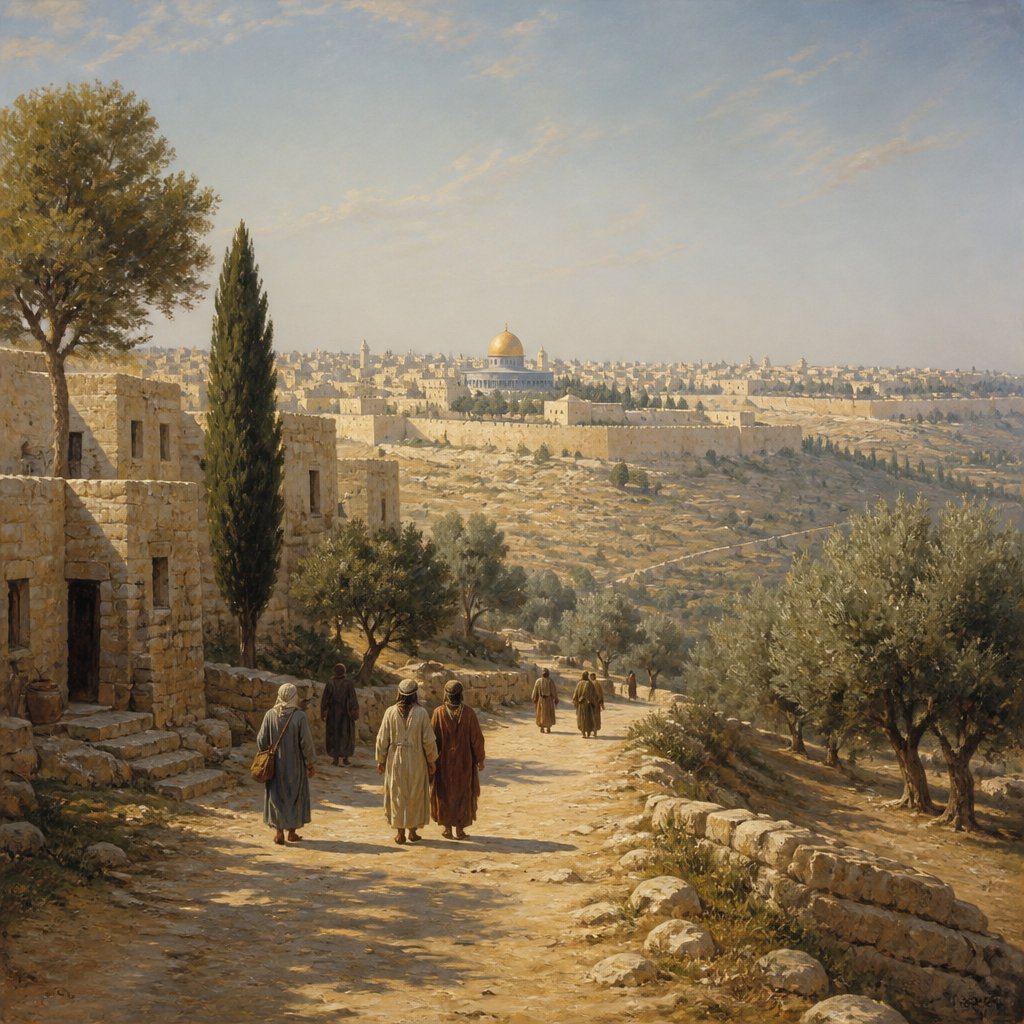
John 11:18 in the King James Version of the Bible states, "Now Bethany was nigh unto Jerusalem, about fifteen furlongs off." This verse appears in the context of the story of the raising of Lazarus from the dead, which is a well-known and significant miracle performed by Jesus Christ. In order to fully understand the meaning and significance of this verse, it is important to consider the broader themes and context of the Gospel of John and the larger narrative within which this verse is situated.
The Gospel of John is unique among the four canonical gospels in its focus on the divinity of Jesus Christ. Throughout the Gospel, Jesus is portrayed as the Word made flesh, the light of the world, and the Son of God. The story of the raising of Lazarus is one of the sign miracles recorded in the Gospel of John, and it serves as a powerful testimony to the divinity and power of Jesus.
In this particular verse, the author provides a geographical detail about the location of Bethany in relation to Jerusalem. This detail is significant in that it sets the stage for the miraculous events that are about to unfold. It highlights the proximity of Bethany to the center of Jewish religious and political power, thus emphasizing the public nature of the miracle that is about to take place. Additionally, the mention of the distance of "about fifteen furlongs" serves to evoke a sense of specific, concrete details that lend authenticity to the narrative.
The broader context of the story of the raising of Lazarus is one of suffering, mourning, and ultimately, the triumph of life over death. When Jesus arrives in Bethany, he is met by the grieving sisters of Lazarus, Martha and Mary, who are mourning the death of their brother. This sets the stage for one of the most poignant and powerful scenes in the entire New Testament, as Jesus weeps with compassion for the sorrow of his friends and then proceeds to call Lazarus forth from the grave, demonstrating his power over death.
In this context, the mention of the proximity of Bethany to Jerusalem serves to underscore the public nature of the miracle that is about to take place. By locating the events in a specific geographical location and emphasizing its closeness to the seat of religious and political power, the author of the Gospel of John is drawing attention to the significance of what is about to occur. The raising of Lazarus is not a private or isolated event, but rather a public demonstration of the power and authority of Jesus Christ.
Symbolically, the proximity of Bethany to Jerusalem can also be interpreted as a foreshadowing of the events that will soon unfold in the city. Just a short time after the raising of Lazarus, Jesus will enter Jerusalem to great acclaim, only to be condemned to death and crucified. The combination of these two events serves to underscore the central theme of the Gospel of John – the paradox of the exaltation of Jesus Christ as the Son of God and the humiliation of his death on the cross.
In conclusion, John 11:18 is a seemingly simple geographical detail, but when examined in the broader context of the Gospel of John and the story of the raising of Lazarus, it takes on profound significance. It serves to set the stage for the miraculous events that are about to unfold, and it symbolically foreshadows the ultimate triumph of life over death through the power of Jesus Christ. As such, this verse serves as a powerful reminder of the divine authority and compassion of Jesus, and the promise of eternal life that he offers to all who believe in him.
Get our apps


Artwork for John 11:18

John 11:18 - "Now Bethany was nigh unto Jerusalem, about fifteen furlongs off:"
"Now Bethany was nigh unto Jerusalem, about fifteen furlongs off:" - John 11:18

Matthew 11:18 - "For John came neither eating nor drinking, and they say, He hath a devil."

John 18:11 - "Then said Jesus unto Peter, Put up thy sword into the sheath: the cup which my Father hath given me, shall I not drink it?"

Matthew 11:18 For John came neither eating nor drinking, and they say, ‘He has a demon.’

"For John came neither eating nor drinking, and they say, He hath a devil." - Matthew 11:18

John 7:17-18

John 7:17-18

John 7:17-18

John 7:17-18

John 18:25

john 18:36

John (11:35) Jesus wept.

Exodus 27:1-8

1 tim 1:8

1 John 5:18

1 John 4:18

1 John 4:18
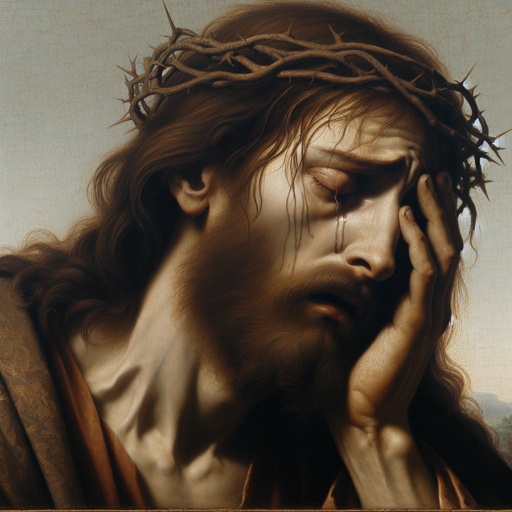
John (11:35) Jesus wept.

John (11:35) Jesus wept.

John 11:35

John 15.1-11

John 11:35

John (11:35) Jesus wept.

John (11:35) Jesus wept.

John (11:35) Jesus wept.

John (11:35) Jesus wept.

John (11:35) Jesus wept.

John (11:35) Jesus wept.
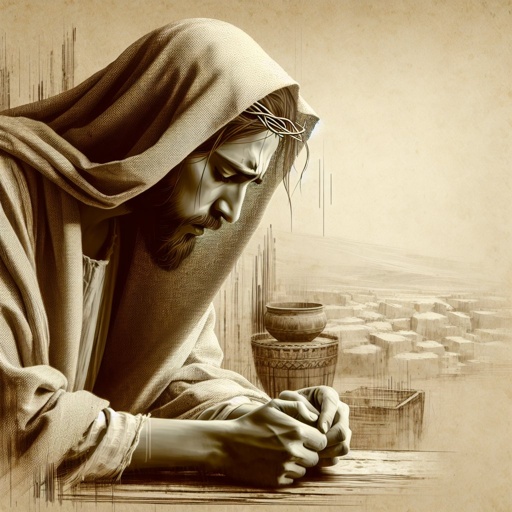
John 11:35 - "Jesus wept."