What does John 11:32 mean?
"Then when Mary was come where Jesus was, and saw him, she fell down at his feet, saying unto him, Lord, if thou hadst been here, my brother had not died." - John 11:32
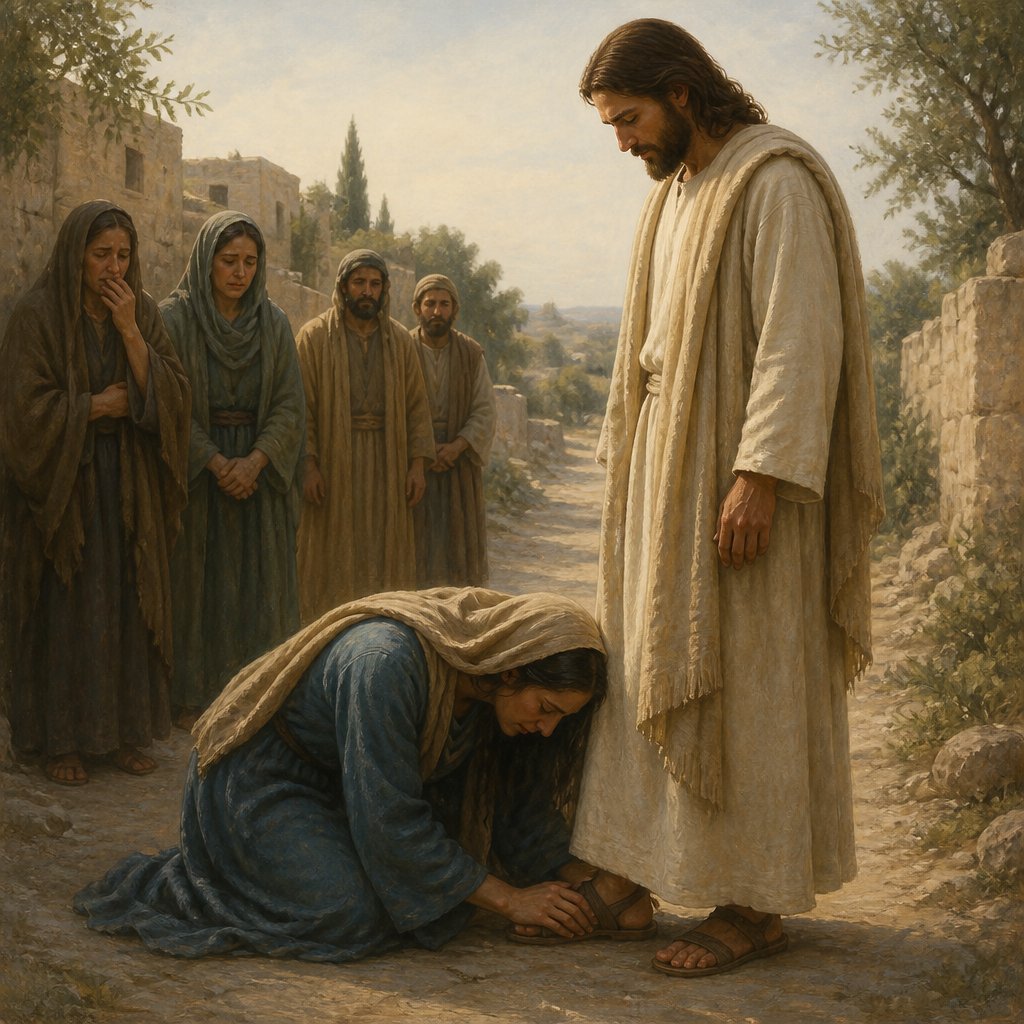
John 11:32 in the King James Version (KJV) reads, "Then when Mary was come where Jesus was, and saw him, she fell down at his feet, saying unto him, Lord, if thou hadst been here, my brother had not died." This verse is part of the larger story of the raising of Lazarus from the dead, a pivotal moment in the ministry of Jesus Christ.
The context of this verse is important for understanding its deeper meaning. In the preceding verses, we read that Lazarus, the brother of Mary and Martha, had fallen ill and eventually died. This news reached Jesus, who was some distance away, and upon hearing it, he made the decision to travel to Bethany, where Lazarus was. By the time Jesus arrived, Lazarus had already been dead for four days. Mary, one of Lazarus' sisters, went out to meet Jesus, expressing her grief and lamenting that if Jesus had been present, her brother would not have died.
The themes present in this verse are multifaceted and offer rich material for reflection and meditation. One notable theme is the display of human emotion and vulnerability in the face of loss and suffering. Mary's raw and honest expression of grief at the death of her brother resonates deeply with many people who have experienced similar loss in their own lives. Her statement to Jesus, "Lord, if thou hadst been here, my brother had not died," is a poignant reminder of the human longing for the presence and intervention of a higher power in times of crisis.
Another theme present in this verse is the concept of faith and its testing. Mary's statement to Jesus conveys her belief in his ability to heal and restore her brother, even after his death. However, it also reveals a degree of disappointment and confusion at Jesus' perceived absence when he was needed most. This raises questions about the nature of faith and the ways in which it is challenged by the unpredictability of life's circumstances.
Furthermore, the symbolism in this verse is deeply significant. Mary's act of falling at Jesus' feet conveys a sense of humility, reverence, and submission to his authority. It also reflects the profound emotional and spiritual weight of her plea for help. In the cultural context of the time, such a gesture would have been a powerful demonstration of respect and supplication.
Additionally, the verse can be seen as a forerunner to the miracle that is about to take place – the raising of Lazarus from the dead. Mary's declaration to Jesus serves as a catalyst for the miraculous events that follow, highlighting the connection between human faith and divine intervention.
In conclusion, John 11:32 is a verse that is rich in meaning and significance. It invites readers to delve into the complexities of human emotion, faith, and the mysterious ways in which God chooses to work in the world. Its themes of grief, faith, and the interaction between the divine and the human provide valuable insights for spiritual contemplation and offer comfort to those who are facing their own trials and challenges. Ultimately, this verse serves as a reminder of the power of belief and the transformative potential of encountering the presence of Jesus Christ in the midst of our deepest sorrows.
Have questions about John 11:32?
Dive deeper into this scripture with Bible Chat — an AI-powered tool for exploring God's Word through conversation. Ask questions, get context, and grow in your understanding of the Bible.
Get Our Apps


John 11:32 Artwork

John 11:32 - "Then when Mary was come where Jesus was, and saw him, she fell down at his feet, saying unto him, Lord, if thou hadst been here, my brother had not died."
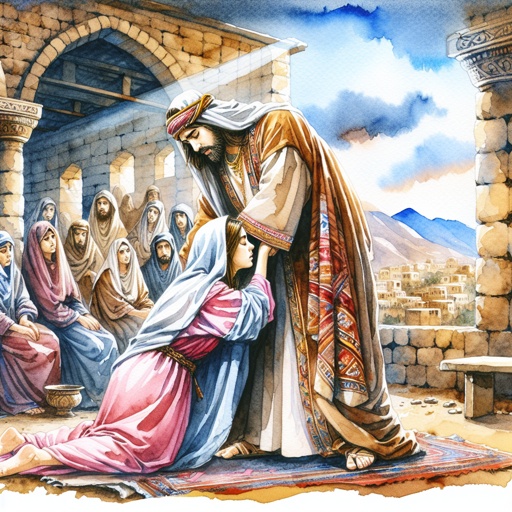
John 11:32 Then, when Mary came where Jesus was, and saw Him, she fell down at His feet, saying to Him, “Lord, if You had been here, my brother would not have died.”
"Then when Mary was come where Jesus was, and saw him, she fell down at his feet, saying unto him, Lord, if thou hadst been here, my brother had not died." - John 11:32

Mark 11:32 - "But if we shall say, Of men; they feared the people: for all men counted John, that he was a prophet indeed."
"But if we shall say, Of men; they feared the people: for all men counted John, that he was a prophet indeed." - Mark 11:32

John 1:32 - "And John bare record, saying, I saw the Spirit descending from heaven like a dove, and it abode upon him."

Nehemiah 11:32 - "And at Anathoth, Nob, Ananiah,"

Romans 11:25-32

Luke 15:11-32

John 8:32 - "And ye shall know the truth, and the truth shall make you free."

John 4:32 - "But he said unto them, I have meat to eat that ye know not of."

1 Kings 11:29-32

John 9:32 - "Since the world began was it not heard that any man opened the eyes of one that was born blind."

John 12:32 - "And I, if I be lifted up from the earth, will draw all men unto me."

1 Chronicles 11:32 - "Hurai of the brooks of Gaash, Abiel the Arbathite,"

John 3:32 - "And what he hath seen and heard, that he testifieth; and no man receiveth his testimony."

John 5:32 - "¶ There is another that beareth witness of me; and I know that the witness which he witnesseth of me is true."

John 13:32 - "If God be glorified in him, God shall also glorify him in himself, and shall straightway glorify him."

John 18:32 - "That the saying of Jesus might be fulfilled, which he spake, signifying what death he should die."

"And at Anathoth, Nob, Ananiah," - Nehemiah 11:32

John 7:32 - "¶ The Pharisees heard that the people murmured such things concerning him; and the Pharisees and the chief priests sent officers to take him."

John 19:32 - "Then came the soldiers, and brake the legs of the first, and of the other which was crucified with him." respectful, symbolic bible verse art

John (11:35) Jesus wept.

John (11:35) Jesus wept.

John (11:35) Jesus wept.

Genesis 11:32 - "And the days of Terah were two hundred and five years: and Terah died in Haran."

John 11:35

John 15.1-11

John 11:35

John (11:35) Jesus wept.