What does John 11:42 mean?
“And I knew that thou hearest me always: but because of the people which stand by I said it, that they may believe that thou hast sent me.” — John 11:42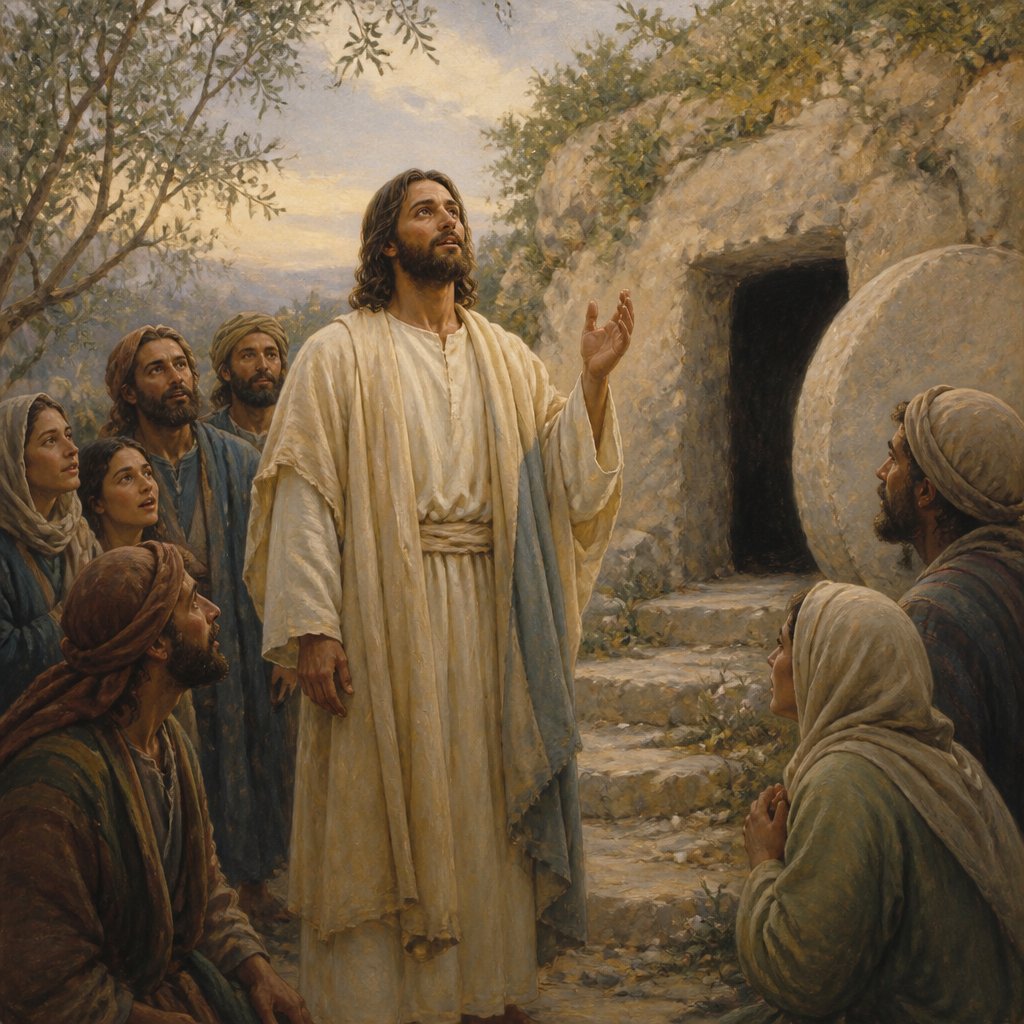
John 11:42 from the King James Version (KJV) of the Bible reads, "And I knew that thou hearest me always: but because of the people which stand by I said it, that they may believe that thou hast sent me."
This verse is a part of the larger narrative of the raising of Lazarus from the dead, a miracle performed by Jesus Christ. The story begins with Jesus receiving news that his friend Lazarus is very ill. Despite the urgency of the situation, Jesus waits two more days before beginning his journey to Lazarus. By the time he arrives, Lazarus has already died and been placed in a tomb. This sets the stage for one of the most powerful and emotionally charged miracles in the New Testament.
In this particular verse, Jesus is speaking to God the Father, expressing his gratitude for always hearing him. He acknowledges that he is aware of God's constant presence and support in his life. However, Jesus also mentions that he vocalized this acknowledgment for the benefit of the people around him, so that they may believe that God has sent him.
The broader theme of this verse is the relationship between Jesus and God the Father, as well as the purpose of Jesus' miracles. Throughout the Gospels, Jesus frequently demonstrates his close connection to the Father through his prayers and actions. Here, Jesus affirms his knowledge of God's constant presence and support. This speaks to the deep and intimate relationship between the members of the Holy Trinity and serves as a model of relational devotion for believers. Jesus' communication with the Father also serves as an example of prayerful communication for Christians today, as they seek to maintain their own relationship with God through prayer.
Another key theme in this verse is the purpose of Jesus' miracles. Jesus states that he vocalized his acknowledgment of God's constant support so that the people around him would believe that God had sent him. This underscores the fact that Jesus' miracles were not just displays of power, but also served as signs to point people to the truth of his divine identity. Throughout the Gospels, the miracles of Jesus are presented as evidence of his authority and his role as the Son of God. In this way, this verse serves to reinforce the larger Gospel message of Jesus' messianic identity and mission.
In its wider context, this verse also holds significant symbolic and theological meaning. It emphasizes the triune nature of God, with Jesus relating to the Father while also being the physical embodiment of God's message to humanity. It also speaks to the dual nature of Jesus as both fully human and fully divine, a concept that is central to Christian theology. Through his acknowledgment of God's constant support, Jesus models the reliance on and reverence for the Father that believers are encouraged to emulate in their own lives.
In conclusion, John 11:42 from the King James Version (KJV) of the Bible captures a crucial moment in the relationship between Jesus and the Father, as well as the purpose of Jesus' miracles. It highlights the intimate connection between the members of the Trinity and serves as a model for believers' own prayerful communication with God. Furthermore, it contributes to the larger Gospel narrative by emphasizing Jesus' divine identity and mission. This verse ultimately offers rich theological and symbolic meaning that continues to resonate with Christians today.
Get our apps


Artwork for John 11:42

John 11:42 - "And I knew that thou hearest me always: but because of the people which stand by I said it, that they may believe that thou hast sent me."
"And I knew that thou hearest me always: but because of the people which stand by I said it, that they may believe that thou hast sent me." - John 11:42

John 1 29-42

John 1 29-42

John 10:42 - "And many believed on him there."

John 1 29-42

John 1 29-42

"And many believed on him there." - John 10:42

John 5:42 - "But I know you, that ye have not the love of God in you."

John 19:42 - "There laid they Jesus therefore because of the Jews' preparation day; for the sepulchre was nigh at hand."

John 7:42 - "Hath not the scripture said, That Christ cometh of the seed of David, and out of the town of Bethlehem, where David was?"

1 Chronicles 11:42 - "Adina the son of Shiza the Reubenite, a captain of the Reubenites, and thirty with him,"

1 Kings 11:42 - "And the time that Solomon reigned in Jerusalem over all Israel was forty years."

Genesis 42:11 - "We are all one man's sons; we are true men, thy servants are no spies."

John 6:42 - "And they said, Is not this Jesus, the son of Joseph, whose father and mother we know? how is it then that he saith, I came down from heaven?"

Daniel 11:42 - "He shall stretch forth his hand also upon the countries: and the land of Egypt shall not escape."

John 12:42 - "¶ Nevertheless among the chief rulers also many believed on him; but because of the Pharisees they did not confess him, lest they should be put out of the synagogue:"

"But I know you, that ye have not the love of God in you." - John 5:42

John 4:42 - "And said unto the woman, Now we believe, not because of thy saying: for we have heard him ourselves, and know that this is indeed the Christ, the Saviour of the world."

isaiah 42:11 I, even I, am the Lord, And besides Me there is no savior.

John 7:42 Has not the Scripture said that the Christ comes from the seed of David and from the town of Bethlehem, where David was?”

"There laid they Jesus therefore because of the Jews' preparation day; for the sepulchre was nigh at hand." - John 19:42

John 1:42 - "And he brought him to Jesus. And when Jesus beheld him, he said, Thou art Simon the son of Jona: thou shalt be called Cephas, which is by interpretation, A stone."

isaiah 42:11 I, even I, am the Lord, And besides Me there is no savior.

isaiah 42:11 I, even I, am the Lord, And besides Me there is no savior.

John (11:35) Jesus wept.

John (11:35) Jesus wept.

John (11:35) Jesus wept.

John 11:35

John 15.1-11