What does John 11:48 mean?
“If we let him thus alone, all men will believe on him: and the Romans shall come and take away both our place and nation.” — John 11:48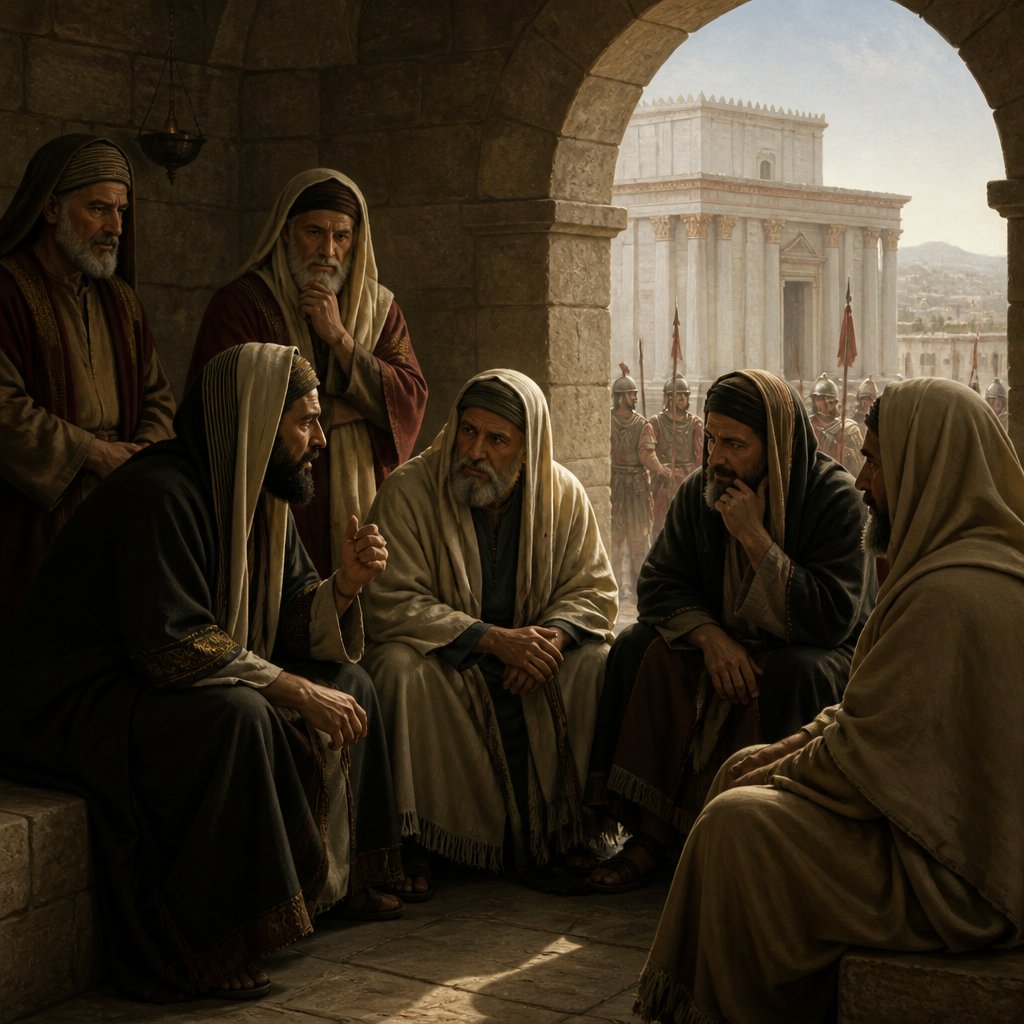
John 11:48 (KJV) states, "If we let him thus alone, all men will believe on him: and the Romans shall come and take away both our place and nation."
In this verse, we find a group of Jewish religious leaders discussing what to do about Jesus, who has been gaining a large following. The context of this verse is the raising of Lazarus by Jesus, which was a miraculous and public event that garnered a lot of attention. The religious leaders were concerned about the growing popularity of Jesus and the impact it might have on their own political and religious standing.
At the heart of this verse is the theme of power and control. The religious leaders were worried that if Jesus continued to attract followers, it would threaten their authority and influence over the Jewish people. They feared that the Romans, who currently occupied their land, would see Jesus as a threat and would take action against them as a result. This fear of losing their power led them to consider taking action against Jesus.
The symbolism in this verse is also significant. The mention of the Romans taking away "our place and nation" represents the broader political context of the time. The Jewish people were living under Roman rule, and any threat to their stability and order could result in harsh consequences from their Roman rulers. The fear of losing their place and nation reflects the deep-seated concern for the survival of their cultural and religious identity in the face of foreign occupation.
Furthermore, this verse highlights the underlying tension between the religious leaders and Jesus. The Jewish religious leadership saw Jesus as a threat to their authority and were willing to do whatever it took to maintain their position. This conflict sets the stage for the eventual crucifixion of Jesus and the ongoing persecution of his followers by the religious and political authorities.
In a broader sense, this verse speaks to the larger theme of the struggle between earthly power and divine authority. The religious leaders were more concerned with maintaining their political and religious control than recognizing the authority and power of Jesus as the Son of God. Their shortsightedness and fear-driven actions ultimately set the stage for the crucifixion, which was part of God's plan for the redemption of humanity.
In conclusion, John 11:48 (KJV) is a crucial verse that sets the stage for the events leading to the crucifixion of Jesus. It speaks to the themes of power and control, the political and religious context of the time, and the symbolic struggle between earthly power and divine authority. It serves as a reminder to us to recognize and submit to the ultimate authority of God, even in the face of earthly pressures and fears.
Get our apps


Artwork for John 11:48

John 11:48 - "If we let him thus alone, all men will believe on him: and the Romans shall come and take away both our place and nation."
"If we let him thus alone, all men will believe on him: and the Romans shall come and take away both our place and nation." - John 11:48

John 6:48 - "I am that bread of life."

John 7:48 - "Have any of the rulers or of the Pharisees believed on him?"
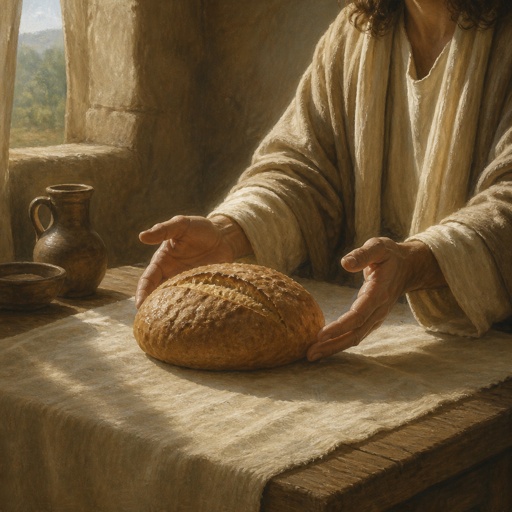
"I am that bread of life." - John 6:48

John 4:48 - "Then said Jesus unto him, Except ye see signs and wonders, ye will not believe."

John 8:48 - "Then answered the Jews, and said unto him, Say we not well that thou art a Samaritan, and hast a devil?"
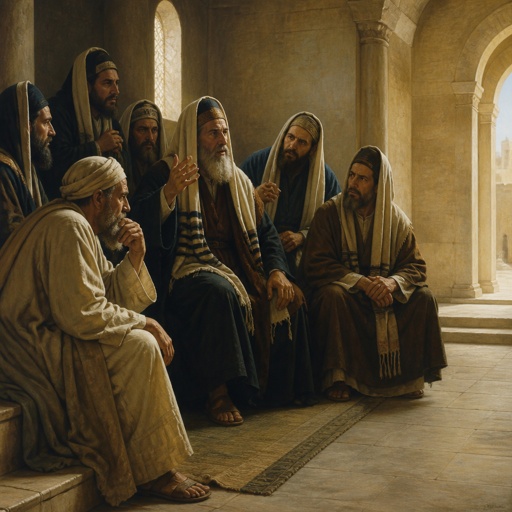
"Have any of the rulers or of the Pharisees believed on him?" - John 7:48

Psalms 48:11 - "Let mount Zion rejoice, let the daughters of Judah be glad, because of thy judgments."

Luke 11:48 - "Truly ye bear witness that ye allow the deeds of your fathers: for they indeed killed them, and ye build their sepulchres."

John 12:48 - "He that rejecteth me, and receiveth not my words, hath one that judgeth him: the word that I have spoken, the same shall judge him in the last day."

Philippians 4:8

Numbers 4:8
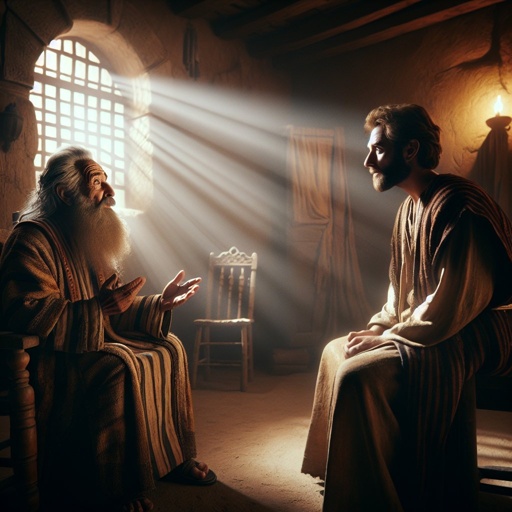
Genesis 48:11 - "And Israel said unto Joseph, I had not thought to see thy face: and, lo, God hath shewed me also thy seed."
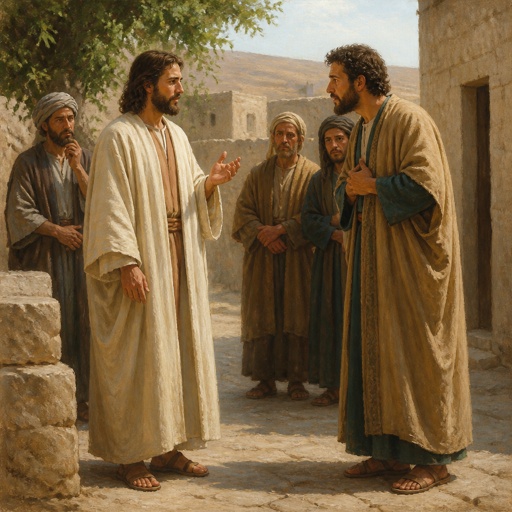
"Then said Jesus unto him, Except ye see signs and wonders, ye will not believe." - John 4:48

Isaiah 48:11 - "For mine own sake, even for mine own sake, will I do it: for how should my name be polluted? and I will not give my glory unto another."

John (11:35) Jesus wept.
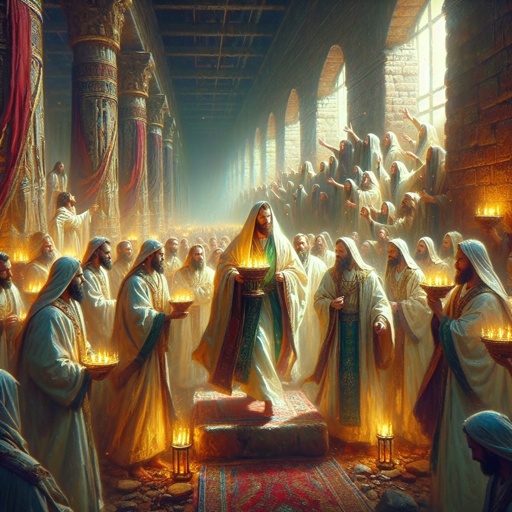
Ezekiel 48:11 - "It shall be for the priests that are sanctified of the sons of Zadok; which have kept my charge, which went not astray when the children of Israel went astray, as the Levites went astray."

John 1:48 - "Nathanael saith unto him, Whence knowest thou me? Jesus answered and said unto him, Before that Philip called thee, when thou wast under the fig tree, I saw thee."
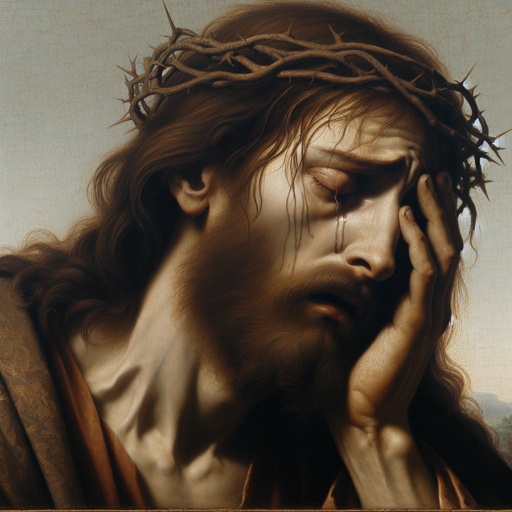
John (11:35) Jesus wept.

John (11:35) Jesus wept.

John 11:35

John 15.1-11

John 11:35

John (11:35) Jesus wept.

John (11:35) Jesus wept.

John (11:35) Jesus wept.

John (11:35) Jesus wept.
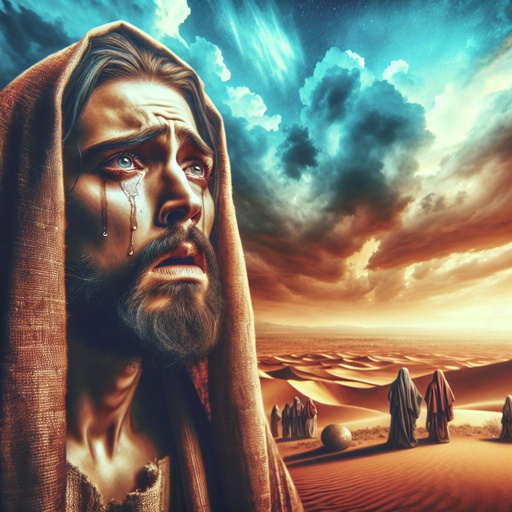
John (11:35) Jesus wept.

John (11:35) Jesus wept.