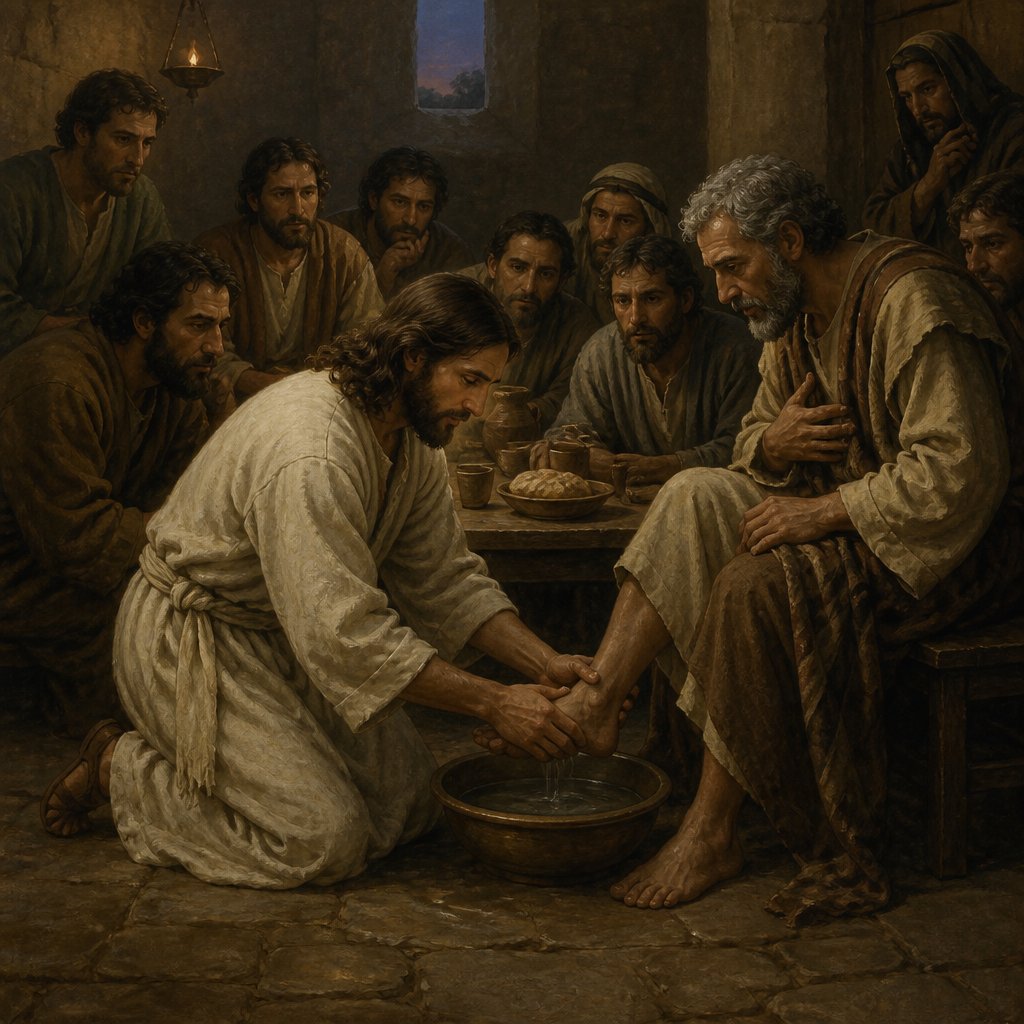
John 13:1-17 from the King James Version (KJV) reads:
"Now before the feast of the passover, when Jesus knew that his hour was come that he should depart out of this world unto the Father, having loved his own which were in the world, he loved them unto the end. And supper being ended, the devil having now put into the heart of Judas Iscariot, Simon's son, to betray him; Jesus knowing that the Father had given all things into his hands, and that he was come from God, and went to God; He riseth from supper, and laid aside his garments; and took a towel, and girded himself. After that he poureth water into a bason, and began to wash the disciples' feet, and to wipe them with the towel wherewith he was girded. Then cometh he to Simon Peter: and Peter saith unto him, Lord, dost thou wash my feet? Jesus answered and said unto him, What I do thou knowest not now; but thou shalt know hereafter. Peter saith unto him, Thou shalt never wash my feet. Jesus answered him, If I wash thee not, thou hast no part with me. Simon Peter saith unto him, Lord, not my feet only, but also my hands and my head. Jesus saith to him, He that is washed needeth not save to wash his feet, but is clean every whit: and ye are clean, but not all. For he knew who should betray him; therefore said he, Ye are not all clean. So after he had washed their feet, and had taken his garments, and was set down again, he said unto them, Know ye what I have done to you? Ye call me Master and Lord: and ye say well; for so I am. If I then, your Lord and Master, have washed your feet; ye also ought to wash one another's feet. For I have given you an example, that ye should do as I have done to you. Verily, verily, I say unto you, The servant is not greater than his lord; neither he that is sent greater than he that sent him. If ye know these things, happy are ye if ye do them."
This passage from the Gospel of John offers a powerful and profound lesson in humility, service, and sacrificial love. It takes place at the Last Supper, a pivotal moment in the life of Jesus and His disciples.
Before delving into the deeper meanings and themes of this passage, it's important to provide some context. The Last Supper was a Passover meal, a significant Jewish holiday commemorating the liberation of the Israelites from slavery in Egypt. Jesus and His disciples gathered to share in this meal, but it was also a time of great tension and anticipation, as Jesus knew that His "hour" was near and that He would soon be betrayed and crucified.
The passage begins with the profound statement that Jesus, in His love for His disciples, loved them "unto the end," emphasizing the depth and constancy of His love. Despite the impending betrayal and crucifixion, Jesus's love for His disciples remained unwavering.
The act of Jesus washing His disciples' feet is a powerful and symbolic gesture. In ancient Jewish culture, foot-washing was a task reserved for the lowest of servants, yet here we see Jesus, the Son of God, taking on this humble role. This act of service and humility exemplifies Jesus's teachings about greatness and leadership, as He later explains that those who serve are the greatest among them.
As Jesus goes from disciple to disciple, washing their feet, Peter initially resists, unable to fathom his Lord and Savior performing such a menial task. However, Jesus teaches Peter and the others that this act is a symbol of spiritual cleansing and humility. He tells Peter, "If I wash thee not, thou hast no part with me," highlighting the spiritual significance of the foot-washing.
The conversation between Jesus and Peter also underscores the importance of recognizing and accepting the spiritual cleansing that Jesus offers. When Peter insists that Jesus wash not only his feet but also his hands and head, Jesus explains that those who have been washed need only to have their feet washed, indicating that they are already spiritually clean but need continual cleansing due to their ongoing contact with the sinful world.
After washing the disciples' feet, Jesus asks them if they understand the significance of His actions, emphasizing that He is their Master and Lord, yet He has humbled Himself to serve them. He then encourages them to follow His example, teaching them that true greatness lies in serving others and that they should humbly serve one another.
Jesus concludes this passage with a powerful declaration: "If ye know these things, happy are ye if ye do them." This serves as both a challenge and a blessing, as Jesus encourages His disciples to not only understand His teachings but also to put them into action. It's a reminder that true happiness and fulfillment come from living out His teachings in our daily lives.
The overarching themes of this passage include humility, sacrificial love, and servant leadership. Jesus's act of washing His disciples' feet is a tangible demonstration of His teachings on serving others, spiritual cleansing, and the upside-down nature of the Kingdom of God, where the first shall be last and the last shall be first.
The symbolism in this passage is profound and multi-layered. The act of foot-washing represents spiritual renewal and cleansing, as well as the humbling of oneself to serve others. It also serves as a powerful symbol of Jesus's own sacrificial love and the ultimate act of service He would perform on the cross.
In conclusion, John 13:1-17 is a rich and powerful passage that offers timeless lessons on humility, service, and sacrificial love. It challenges us to examine our own attitudes towards serving others and living out the teachings of Jesus in our daily lives. As we meditate on this passage, may we be inspired to follow the example of Jesus, the ultimate servant-leader, and to find true fulfillment and happiness in living out His teachings.
Get our apps


Artwork for John 13:1-17

John 13:1-17 - "Now before the feast of the passover, when Jesus knew that his hour was come that he should depart out of this world unto the Father, having loved his own which were in the world, he loved them unto the end. And supper being ended, the devil having now put into the heart of Judas Iscariot, Simon's son, to betray him; Jesus knowing that the Father had given all things into his hands, and that he was come from God, and went to God; He riseth from supper, and laid aside his garments; and took a towel, and girded himself. After that he poureth water into a bason, and began to wash the disciples' feet, and to wipe them with the towel wherewith he was girded. Then cometh he to Simon Peter: and Peter saith unto him, Lord, dost thou wash my feet? Jesus answered and said unto him, What I do thou knowest not now; but thou shalt know hereafter. Peter saith unto him, Thou shalt never wash my feet. Jesus answered him, If I wash thee not, thou hast no part with me. Simon Peter saith unto him, Lord, not my feet only, but also my hands and my head. Jesus saith to him, He that is washed needeth not save to wash his feet, but is clean every whit: and ye are clean, but not all. For he knew who should betray him; therefore said he, Ye are not all clean. So after he had washed their feet, and had taken his garments, and was set down again, he said unto them, Know ye what I have done to you? Ye call me Master and Lord: and ye say well; for so I am. If I then, your Lord and Master, have washed your feet; ye also ought to wash one another's feet. For I have given you an example, that ye should do as I have done to you. Verily, verily, I say unto you, The servant is not greater than his lord; neither he that is sent greater than he that sent him. If ye know these things, happy are ye if ye do them."
"Now before the feast of the passover, when Jesus knew that his hour was come that he should depart out of this world unto the Father, having loved his own which were in the world, he loved them unto the end. And supper being ended, the devil having now put into the heart of Judas Iscariot, Simon's son, to betray him; Jesus knowing that the Father had given all things into his hands, and that he was come from God, and went to God; He riseth from supper, and laid aside his garments; and took a towel, and girded himself. After that he poureth water into a bason, and began to wash the disciples' feet, and to wipe them with the towel wherewith he was girded. Then cometh he to Simon Peter: and Peter saith unto him, Lord, dost thou wash my feet? Jesus answered and said unto him, What I do thou knowest not now; but thou shalt know hereafter. Peter saith unto him, Thou shalt never wash my feet. Jesus answered him, If I wash thee not, thou hast no part with me. Simon Peter saith unto him, Lord, not my feet only, but also my hands and my head. Jesus saith to him, He that is washed needeth not save to wash his feet, but is clean every whit: and ye are clean, but not all. For he knew who should betray him; therefore said he, Ye are not all clean. So after he had washed their feet, and had taken his garments, and was set down again, he said unto them, Know ye what I have done to you? Ye call me Master and Lord: and ye say well; for so I am. If I then, your Lord and Master, have washed your feet; ye also ought to wash one another's feet. For I have given you an example, that ye should do as I have done to you. Verily, verily, I say unto you, The servant is not greater than his lord; neither he that is sent greater than he that sent him. If ye know these things, happy are ye if ye do them." - John 13:1-17

Matthew 17:13 - "Then the disciples understood that he spake unto them of John the Baptist."

John 13:17 - "If ye know these things, happy are ye if ye do them."

John 1:17

John 1:17

John 1:17

John 17:13 - "And now come I to thee; and these things I speak in the world, that they might have my joy fulfilled in themselves."
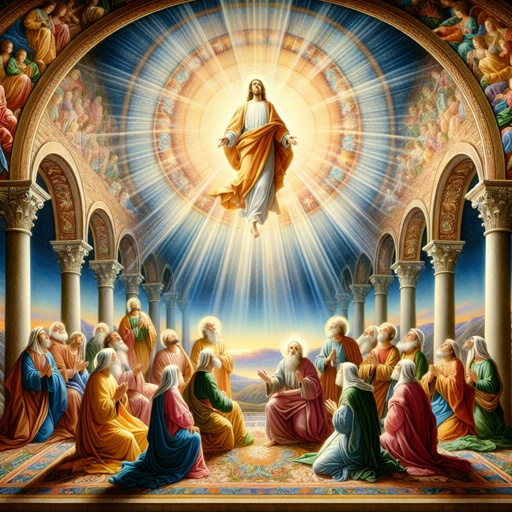
Johan 1:13-17

1 John 4:13

1 John 5:17 - "All unrighteousness is sin: and there is a sin not unto death."

Combine the authority theme described in Romans 13:1-7 and Revelation 13:1-10.

BORN AGAIN JOHN 3:1-13

John 1:17 - "For the law was given by Moses, but grace and truth came by Jesus Christ."
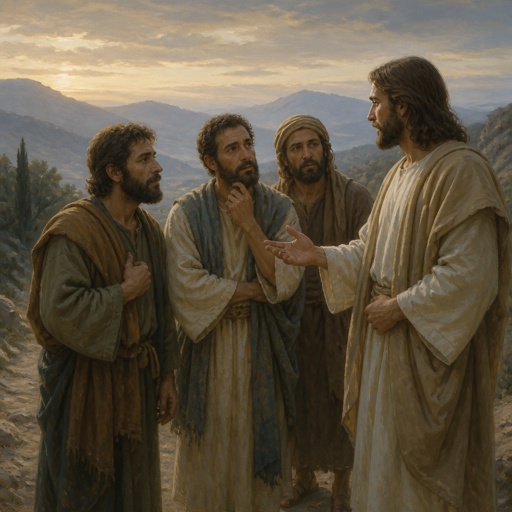
"Then the disciples understood that he spake unto them of John the Baptist." - Matthew 17:13
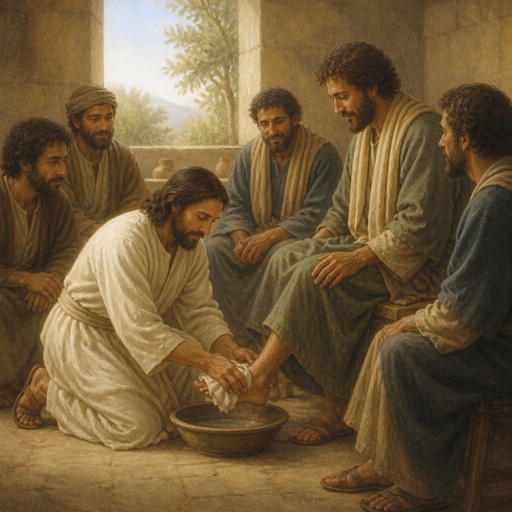
"If ye know these things, happy are ye if ye do them." - John 13:17

1 John 3:13 - "Marvel not, my brethren, if the world hate you."

2 John 1:13 - "The children of thy elect sister greet thee. Amen."

1 John 2:17 - "And the world passeth away, and the lust thereof: but he that doeth the will of God abideth for ever."

John 1:13 - "Which were born, not of blood, nor of the will of the flesh, nor of the will of man, but of God."
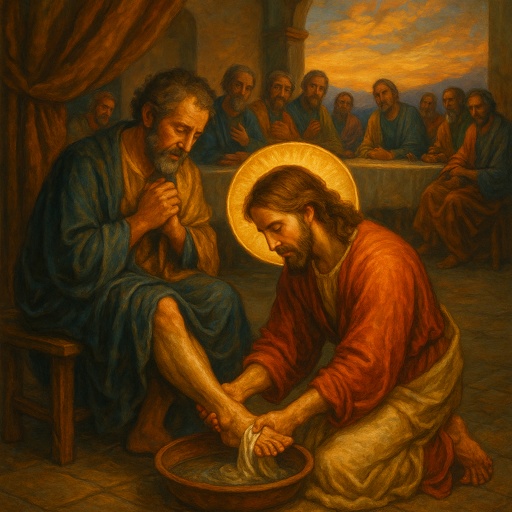
"Now before the feast of the passover, when Jesus knew that his hour was come that he should depart out of this world unto the Father, having loved his own which were in the world, he loved them unto the end." - John 13:1

3 John 1:13 - "I had many things to write, but I will not with ink and pen write unto thee:"

Matthew 17:1 - "And after six days Jesus taketh Peter, James, and John his brother, and bringeth them up into an high mountain apart,"

"All unrighteousness is sin: and there is a sin not unto death." - 1 John 5:17

1 John 4:17 - "Herein is our love made perfect, that we may have boldness in the day of judgment: because as he is, so are we in this world."

1 John 4:13 - "Hereby know we that we dwell in him, and he in us, because he hath given us of his Spirit."

John 7:17-18

John 7:17-18

"Marvel not, my brethren, if the world hate you." - 1 John 3:13

John 7:17-18