What does John 13:16 mean?
"Verily, verily, I say unto you, The servant is not greater than his lord; neither he that is sent greater than he that sent him." - John 13:16
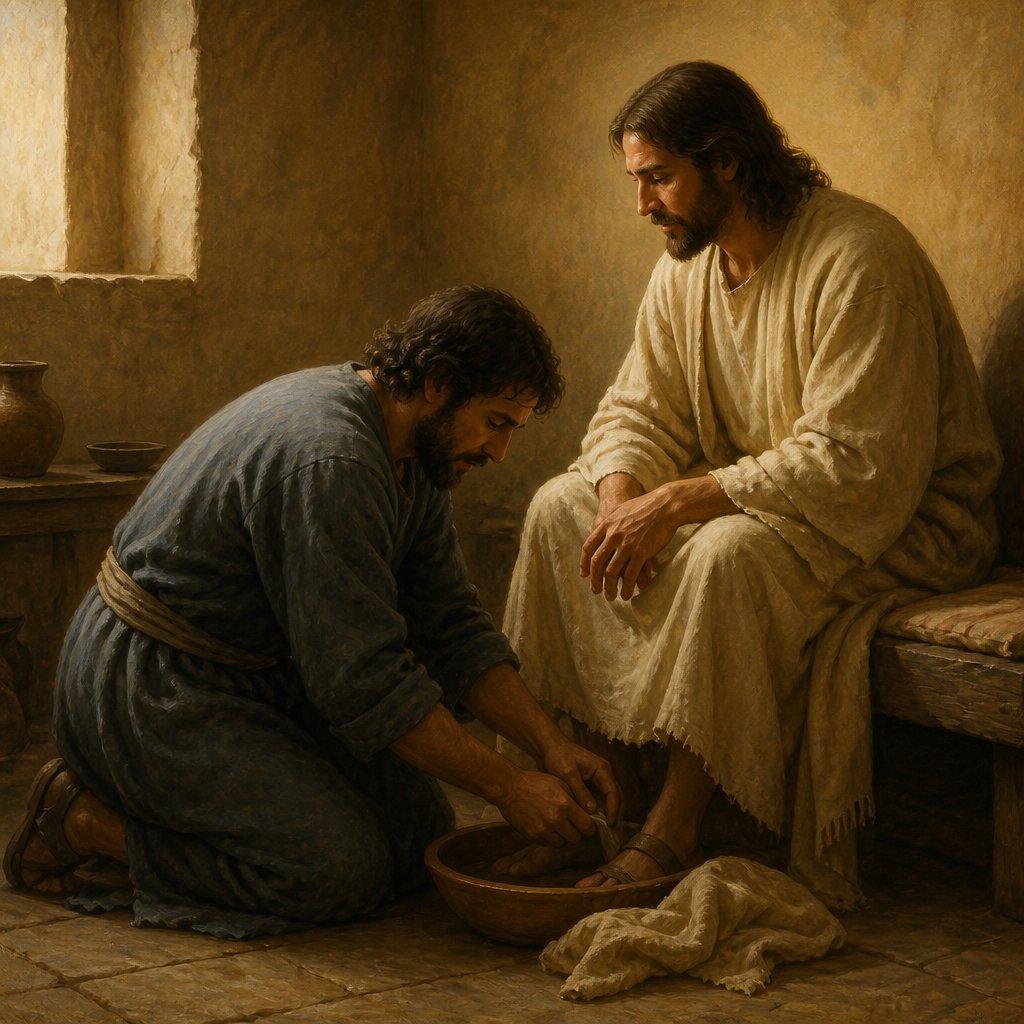
John 13:16 (KJV) states, "Verily, verily, I say unto you, The servant is not greater than his lord; neither he that is sent greater than he that sent him." This verse is spoken by Jesus during the Last Supper, as he humbly washes the feet of his disciples. In this act and in this verse, Jesus exemplifies the importance of humility and service, and sets an example for his followers to follow.
The verse begins with the phrase "Verily, verily," which is a way of emphasizing the importance and truth of what is being said. Jesus is speaking with authority and conviction, making it clear that this is an important message that his followers should take to heart. This phrase is used to underscore the truth and gravity of the statement that follows.
The first part of the verse, "The servant is not greater than his lord," speaks to the hierarchy and order that Jesus has established. He is the Lord and Master, and his disciples are his servants. This statement challenges the societal norms of the time, where those in positions of authority and power were typically served by those beneath them. Jesus is flipping this idea on its head, teaching that true greatness comes from serving others and putting their needs above our own.
The second part of the verse, "neither he that is sent greater than he that sent him," further reinforces this idea of hierarchy and authority. In the context of the Last Supper, Jesus is preparing to send out his disciples to continue his work and spread his message. He is reminding them that even though they are being sent out as his messengers, they are not greater than he who has sent them. This serves as a reminder to remain humble and to remember that they are still under his authority and guidance.
The themes of humility, service, and authority are central to this verse. Jesus is using this moment to teach his disciples about the true nature of leadership and greatness in the Kingdom of God. He is showing them that true leadership is found in serving others, and that they should approach their ministry with humility and a willingness to put others first.
The context of the verse is also important to consider. Jesus is speaking these words during the Last Supper, a deeply significant and intimate moment with his closest followers. He is preparing to leave them and knows that they will face challenges and opposition in the days ahead. This message of serving others and remaining humble would have been especially relevant and meaningful for them as they set out to continue his work.
The symbolism in this verse is also worth exploring. The act of washing the disciples' feet, which directly precedes this statement, is a powerful symbol of humility and service. By taking on the role of a servant and performing this menial task, Jesus is demonstrating what true leadership looks like. This act and the subsequent statement in John 13:16 are a visual and verbal reminder of the values that Jesus wants his followers to uphold.
In conclusion, John 13:16 from the King James Version of the Bible carries a message of humility, service, and authority. It challenges societal norms and provides a model for true leadership in the Kingdom of God. This verse is a call for believers to approach their lives and ministries with a servant's heart, and to remember that true greatness is found in serving others and following the example set by Jesus. It is a powerful and timeless message that continues to resonate with Christians today.
Have questions about John 13:16?
Dive deeper into this scripture with Bible Chat — an AI-powered tool for exploring God's Word through conversation. Ask questions, get context, and grow in your understanding of the Bible.
Get Our Apps


John 13:16 Artwork

John 13:16 - "Verily, verily, I say unto you, The servant is not greater than his lord; neither he that is sent greater than he that sent him."
"Verily, verily, I say unto you, The servant is not greater than his lord; neither he that is sent greater than he that sent him." - John 13:16

John 16:13 - "Howbeit when he, the Spirit of truth, is come, he will guide you into all truth: for he shall not speak of himself; but whatsoever he shall hear, that shall he speak: and he will shew you things to come."

John 16:33

John 16:33

John 16:33

John 13

John 16:33

John 16:33

John 16:33

John 3:16

John 4:16

John 3:16

john 3:16

John 3:16

John 3:16

John 4:16

John 3:16

John 14:16

John 4:16

John 4:16

John 3:16

John 3:16

John 16 : 33

john 3:16

John 3:16

John 3:16

John 3:16

John 4:16

John 3:16