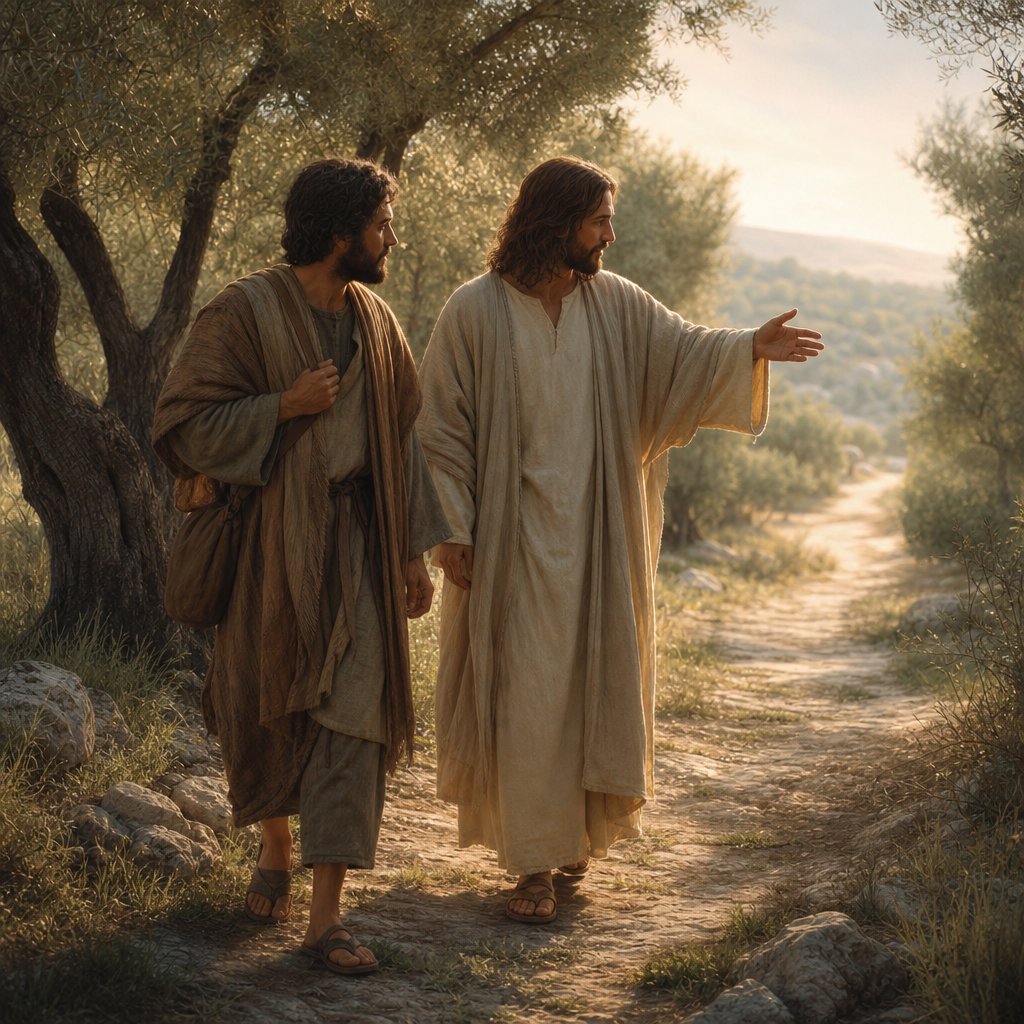
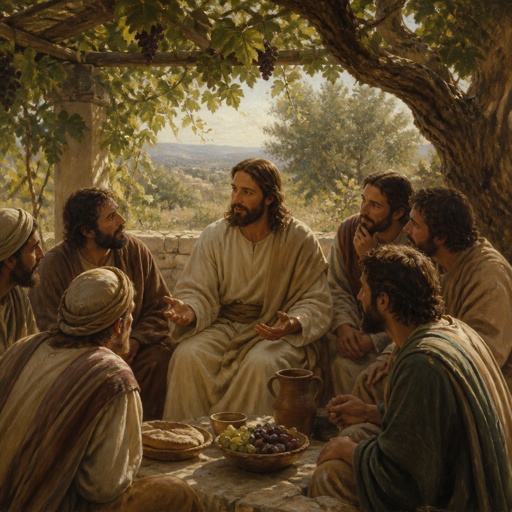
John 14:15 in the King James Version reads, “If ye love me, keep my commandments.” The sentence is short, but it sits inside one of the most intimate and weighty moments in the Gospel: Jesus is speaking to his disciples on the night of the Last Supper, just before his betrayal and crucifixion. John 14 is part of a longer farewell discourse in which Jesus comforts troubled hearts, prepares his followers for his departure, and explains what faithful life will look like when he is no longer physically present with them. In that setting, this verse functions like a hinge. Jesus is not merely giving a moral maxim; he is defining how real love for him is made visible and how the relationship between himself and his people will be expressed in the world after he goes to the Father.
The verse begins with “If,” which makes it a test of authenticity rather than a slogan of sentiment. In this moment, the disciples are full of affection, confusion, and fear. They have left everything to follow Jesus, yet they do not fully grasp what is coming. Jesus does not ask them to prove love with dramatic claims or heroic feelings. He directs love into a concrete channel: “keep my commandments.” In KJV diction, “keep” carries more than the idea of occasional obedience; it suggests guarding, holding fast, watching over, and continuing in something. Love is not treated as a private emotion but as covenant loyalty that endures. In the Bible’s own way of speaking, love and obedience are not rivals. Love is the root, and obedience is the fruit that shows the root is alive.
The word “commandments” also matters. Jesus is not speaking as a mere teacher offering advice; he speaks with the authority of the Lord. Within John 14, he repeatedly connects knowing him with keeping his words, and he ties that life of obedience to the Father’s own love and presence. The commands of Jesus, in this context, are not arbitrary tests designed to burden the disciples. They are the shape of life in communion with him. To “keep” them is to remain aligned with his will, his teaching, and his way, especially when the visible support of his bodily presence is about to be removed. The verse therefore carries a pastoral edge: it prepares the disciples for the coming crisis by locating stability not in circumstance but in fidelity to Christ’s word.
A major theme here is that love for Christ is inseparable from submission to Christ. Modern ears often treat love as affirmation without obligation, but John 14:15 presents love as allegiance. Jesus does not say, “If ye fear me,” or “If ye admire me,” but “If ye love me.” Yet that love is not defined by self-chosen expressions; it is defined by honoring what he commands. This is not a denial of grace, because in John’s Gospel obedience is never portrayed as the way to earn Jesus’ love; rather, it is the way love answers love. Jesus has already loved them, washed their feet, and promised them peace. Their obedience is the lived response to a relationship already given.
Another theme is the unity of word and life. John’s Gospel regularly contrasts mere profession with genuine abiding. Here, Jesus places the measure of discipleship in practice: the commandments are to be kept, not merely heard. This matters because the disciples are about to face the temptation to redefine faithfulness under pressure. When Jesus is arrested, loyalties will be tested, and words will be cheap. “Keep my commandments” anticipates that discipleship will require endurance, not just initial enthusiasm. The verse quietly calls for steadfastness.
There is also an important symbolic dimension embedded in the way John frames Jesus’ farewell. Jesus is about to depart, but he is not abandoning his followers to spiritual independence. Immediately after John 14:15, Jesus speaks of another Comforter. The placement is significant: obedience is not presented as a self-powered effort but as life empowered by divine help and sustained by divine presence. The commandments are not a substitute for Jesus; they are part of how Jesus continues to rule, guide, and reveal himself among his people. In this light, John 14:15 symbolizes continuity: though Jesus will no longer walk beside them in the flesh, his will remains with them in his words, and his presence will remain with them through what he will go on to promise.
John 14:15 also echoes older covenant language in Scripture, where love for God is expressed through keeping his commandments. In that biblical pattern, commandments are not merely legal demands; they mark out the path of life with God. By speaking this way, Jesus implicitly places himself where Israel’s Scriptures place the LORD: he is the rightful object of love and the rightful giver of commandments. The significance is profound: to love Jesus is not simply to love a holy man; it is to enter a relationship in which his word is binding and life-giving.
The verse therefore stands against two opposite errors. On one side, it rejects a love that is only verbal, emotional, or occasional, because Jesus anchors love in obedience. On the other side, it rejects a cold legalism, because Jesus grounds obedience in love. The order is important: “If ye love me” comes first, not as a way to flatter the disciples but as the inner reality from which obedience must flow. Jesus is calling for a love that acts, and for obedience that is personal, relational, and directed toward him.
In practical significance, John 14:15 teaches that the clearest evidence of love for Christ is a life that “keeps” what he has said. It means that loyalty to Jesus is not measured primarily by intensity of feeling, religious talk, or public display, but by a sustained guarding of his commands in daily choices. Spoken in the shadow of the cross, it also suggests that following Jesus will be costly, and that love will be proven when obedience is hard. In the economy of John’s Gospel, this is not loss but fellowship: keeping his commandments is the way believers remain close to him, walking in the light of his words, and showing that their love is real because it takes the form Jesus himself names.
Get our apps


Artwork for John 14:15

John 14:15 - "¶ If ye love me, keep my commandments."

John 14:15-21

"¶ If ye love me, keep my commandments." - John 14:15
"¶ If ye love me, keep my commandments." - John 14:15

John 14:15-18 - "If you love me, keep my commands. And I will ask the Father, and he will give you another advocate to help you and be with you forever— the Spirit of truth. The world cannot accept him, because it neither sees him nor knows him. But you know him, for he lives with you and will be in you. I will not leave you as orphans; I will come to you."

John 14:15-17 - "If you love me, keep my commands. And I will ask the Father, and he will give you another advocate to help you and be with you forever— the Spirit of truth. The world cannot accept him, because it neither sees him nor knows him. But you know him, for he lives with you and will be in you."
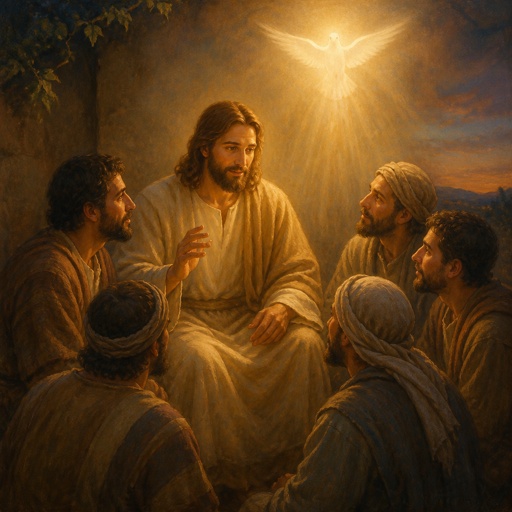
"If you love me, keep my commands. And I will ask the Father, and he will give you another advocate to help you and be with you forever— the Spirit of truth. The world cannot accept him, because it neither sees him nor knows him. But you know him, for he lives with you and will be in you. I will not leave you as orphans; I will come to you." - John 14:15-18
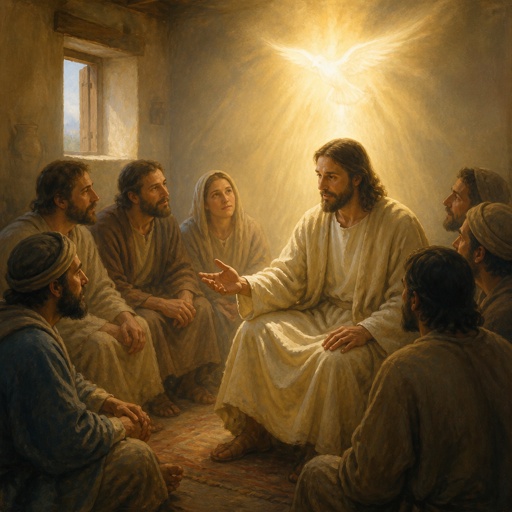
"If you love me, keep my commands. And I will ask the Father, and he will give you another advocate to help you and be with you forever— the Spirit of truth. The world cannot accept him, because it neither sees him nor knows him. But you know him, for he lives with you and will be in you." - John 14:15-17

John 15:14 - "Ye are my friends, if ye do whatsoever I command you."
"Ye are my friends, if ye do whatsoever I command you." - John 15:14

John 3:14-15 - "And as Moses lifted up the serpent in the wilderness, even so must the Son of man be lifted up: That whosoever believeth in him should not perish, but have eternal life."

Mark 1:14-15 - "Now after John was arrested, Jesus came to Galilee, proclaiming the good news of God, and saying, "The time is fulfilled, and the kingdom of God has come near; repent, and believe in the good news.""

John 15:7

John 15:7

John 14

John 14:30

1 John 5:14-15 - "And this is the confidence that we have toward him, that if we ask anything according to his will he hears us. And if we know that he hears us in whatever we ask, we know that we have the requests that we have asked of him."

John 15:5

John 15:5

John 15:14-15 KJVA Ye are my friends, if ye do whatsoever I command you. Henceforth I call you not servants; for the servant knoweth not what his lord doeth: but I have called you friends; for all things that I have heard of my Father I have made known unto you.

John 15:14-15 KJVA Ye are my friends, if ye do whatsoever I command you. Henceforth I call you not servants; for the servant knoweth not what his lord doeth: but I have called you friends; for all things that I have heard of my Father I have made known unto you.

John 3:14

John 14:16

John 14:6

John 15 The Vine

John 14:28

John 20:14

John 14:14 - "If ye shall ask any thing in my name, I will do it."

John 15:26 NLT

John 15:1-8