What does John 14:9 mean?
“Jesus saith unto him, Have I been so long time with you, and yet hast thou not known me, Philip? he that hath seen me hath seen the Father; and how sayest thou then, Shew us the Father?” — John 14:9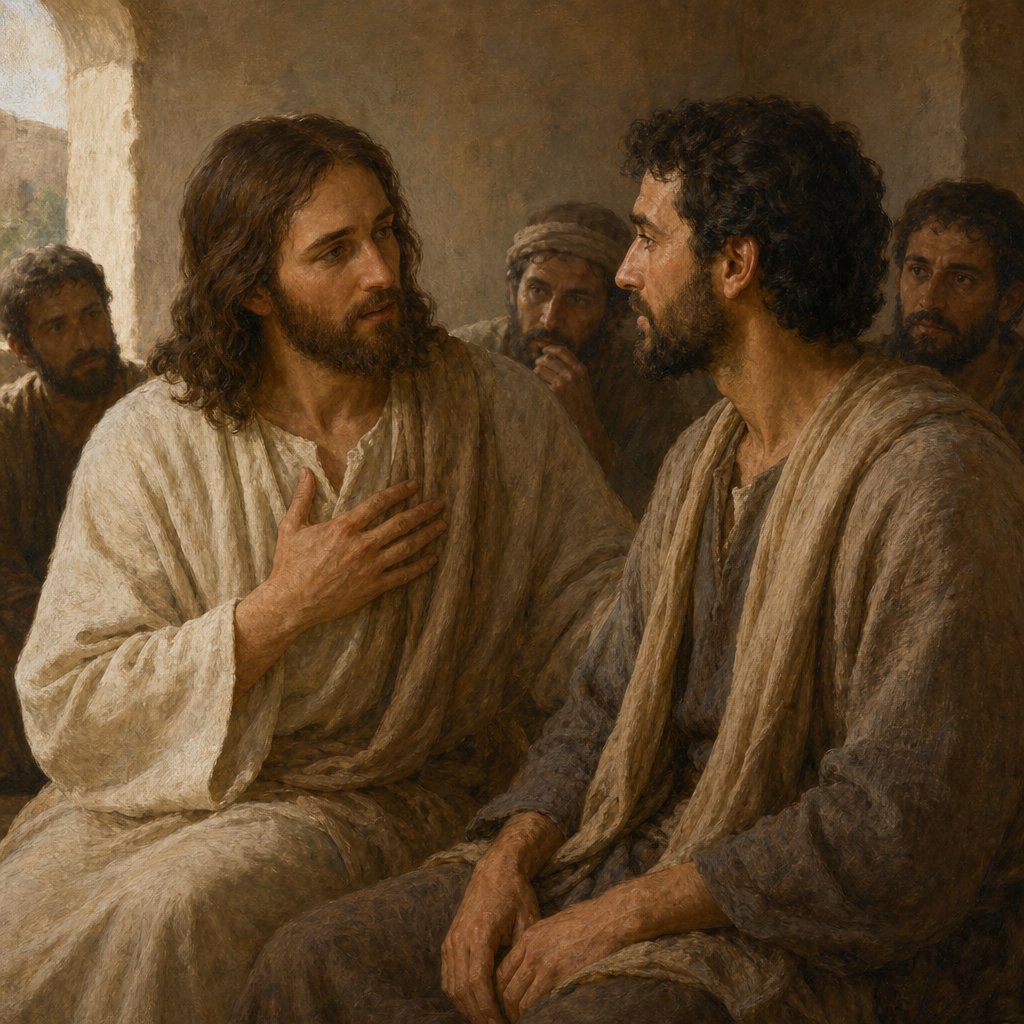
John 14:9 in the King James Version reads, “Jesus saith unto him, Have I been so long time with you, and yet hast thou not known me, Philip? he that hath seen me hath seen the Father; and how sayest thou then, Shew us the Father?” The meaning of the verse rises out of a tender but searching moment in the upper room, on the night before the crucifixion, when Jesus is preparing his disciples for his departure. Philip has just asked, “Lord, shew us the Father, and it sufficeth us” (John 14:8). In Philip’s request there is a yearning that sounds devout, yet it also reveals a lingering expectation that the Father might be disclosed by some further spectacle—some separate vision beyond Jesus himself. Christ answers by turning Philip’s eyes back to what has already been present in front of him for years: the clearest possible showing of the Father has been given in the Son’s own person.
The verse therefore carries the theme of revelation. Jesus is not merely a messenger delivering information about God; he is the embodied disclosure of God’s character. “He that hath seen me hath seen the Father” is not a claim that the Father is the Son in a simple, flattening sense, as though there were no distinction of person in the Godhead. Rather, within the flow of John’s Gospel and especially within this conversation, it means that to truly perceive who Jesus is—his words, works, compassion, authority, holiness, and purpose—is to encounter the Father’s heart and mind made known. Jesus does not offer a second, different picture of God from the Father; he is the Father’s self-disclosure in the world. That is why Philip’s request, “Shew us the Father,” is met with the gentle rebuke, “yet hast thou not known me, Philip?” Knowing Christ is not merely familiarity with his presence; it is recognition of his identity and of what his life unveils about God.
The context deepens the force of the statement. John 14 opens with Jesus comforting troubled hearts: “Let not your heart be troubled: ye believe in God, believe also in me” (John 14:1). He speaks of preparing a place and of coming again, then identifies himself as the exclusive way to the Father: “I am the way, the truth, and the life: no man cometh unto the Father, but by me” (John 14:6). Philip’s question follows immediately. So John 14:9 functions as the hinge between Christ’s claim to be the way to the Father and the disciples’ desire for certainty. Jesus answers that the certainty Philip wants is not found in an additional manifestation, but in properly seeing what has already been given in Jesus. The disciples are being trained to live by faith when sight will soon be denied them; yet Christ insists that faith is not a leap into darkness, because the Father has already been shown in him.
A major theme here is the unity of divine action and divine presence. Jesus has just spoken, in the verses that follow, of mutual indwelling: “Believest thou not that I am in the Father, and the Father in me?” (John 14:10). John 14:9 anticipates that explanation by stating its practical consequence: seeing Jesus is seeing the Father. The Son’s words are not private opinions; the Son’s works are not independent projects; everything in Jesus is the Father’s own will made visible and near. The verse thus presses the reader to consider what “seeing” means in John. It is not merely optical observation. Many saw Jesus physically and did not truly see him. True sight is spiritual recognition—perceiving his glory in the form it has chosen to take: humility, obedience, truth, and sacrificial love.
Symbolically, Philip’s request echoes humanity’s ancient desire to behold God directly, a desire threaded through the Scriptures with both longing and limits. People seek a theophany, a display that would end all doubt. Yet in John 14:9 Jesus teaches that God’s self-showing is now centered in a human life. The “showing” is not chiefly thunder and fire, but the visible reality of the Father’s nature expressed in the Son: grace and truth, authority and meekness, judgment and mercy, purity and compassion. The symbolism of sight is therefore also the symbolism of incarnation. God is not distant, hidden behind inaccessible glory; he is made known in the face and life of Jesus Christ. The rebuke, “Have I been so long time with you,” suggests that revelation has been continuous, daily, relational—meant to be learned by walking with him, hearing him, watching him, and receiving him.
There is also a pastoral significance in how Jesus answers. His words expose a common spiritual mistake: wanting God while bypassing Christ, or wanting an experience of God that is separate from the person and way of Jesus. Philip believes and yet still asks for something “more.” Jesus replies that the “more” is not elsewhere. If Philip would have the Father, he must look steadily at the Son. This guards against a religion of abstractions, as though the Father could be known apart from the Son’s character. It also comforts: the Father is not different from Jesus. Any fear that the Father might be harsher, more distant, less merciful than Christ is corrected by the claim that the one who has seen Jesus has seen the Father. What Jesus is like toward sinners, sufferers, and the weak is what the Father is like in his will and heart as the Son reveals him.
John 14:9, then, is significant because it gathers the Gospel’s testimony into a single sentence. It insists that God has made himself knowable and has done so personally. The Father is not shown by a detached proof but by a living person whose words and works display divine reality. The verse calls the reader to examine Jesus with seriousness: to “see” him is to meet God’s own self-revelation, and to miss him is to miss the Father one is seeking. In the upper room, on the edge of the cross, Jesus is telling Philip—and all who read—that the face of God is not to be sought beyond him, because in him the Father has already drawn near and has been shown.
Get our apps


Artwork for John 14:9

John 14:9 - "Jesus saith unto him, Have I been so long time with you, and yet hast thou not known me, Philip? he that hath seen me hath seen the Father; and how sayest thou then, Shew us the Father?"
"Jesus saith unto him, Have I been so long time with you, and yet hast thou not known me, Philip? he that hath seen me hath seen the Father; and how sayest thou then, Shew us the Father?" - John 14:9
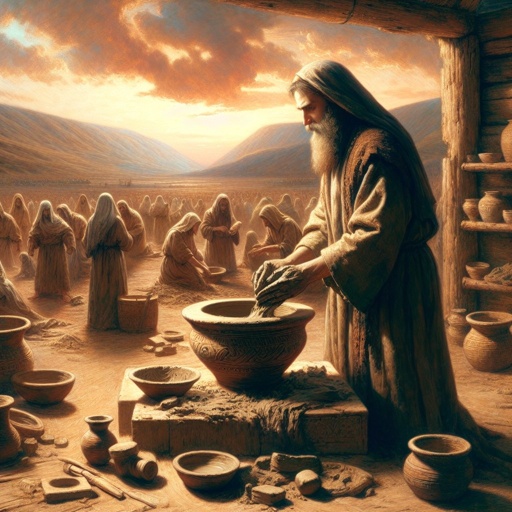
John 9:14 - "And it was the sabbath day when Jesus made the clay, and opened his eyes."

numbers 21:8-9 & John 3:14

Matthew 9:14 - "¶ Then came to him the disciples of John, saying, Why do we and the Pharisees fast oft, but thy disciples fast not?"
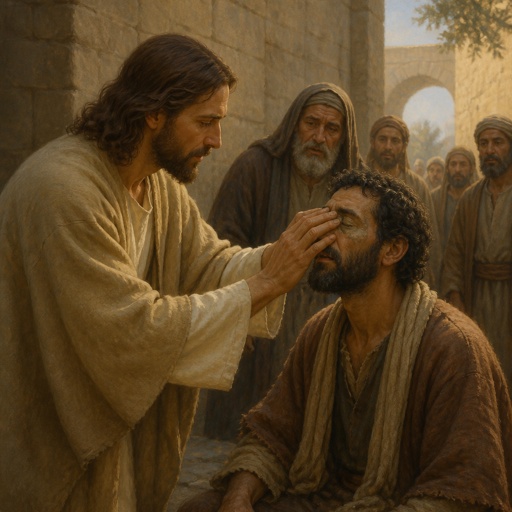
"And it was the sabbath day when Jesus made the clay, and opened his eyes." - John 9:14

John 14

John 14:30

John 3:14

John 14:16

John 14:6
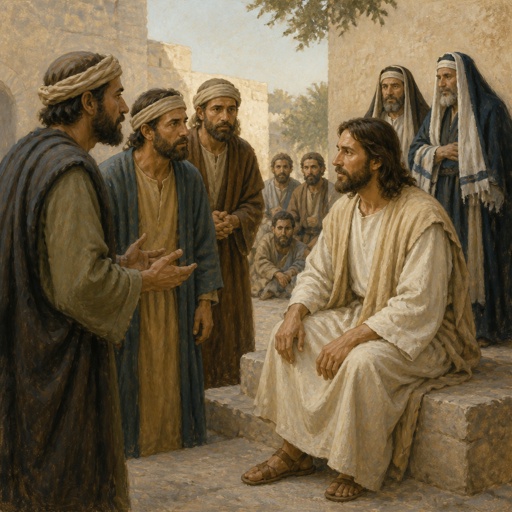
"¶ Then came to him the disciples of John, saying, Why do we and the Pharisees fast oft, but thy disciples fast not?" - Matthew 9:14

John 14:28

John 20:14

John 14:14 - "If ye shall ask any thing in my name, I will do it."

john 21:9
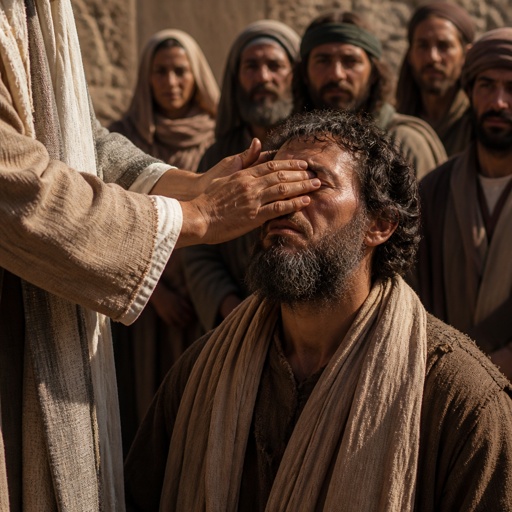
John 9:10

John 10:9

John 10:9

John 10:9

John 14:15-21

John 14:23-29

John 14:23-29

John 14:23-29

1 John 2:14

1 John 2:14

John 14:1-2
John 14:16-17

John 6:8-9

John 9:1-3