What does John 17:17 mean?
“Sanctify them through thy truth: thy word is truth.” — John 17:17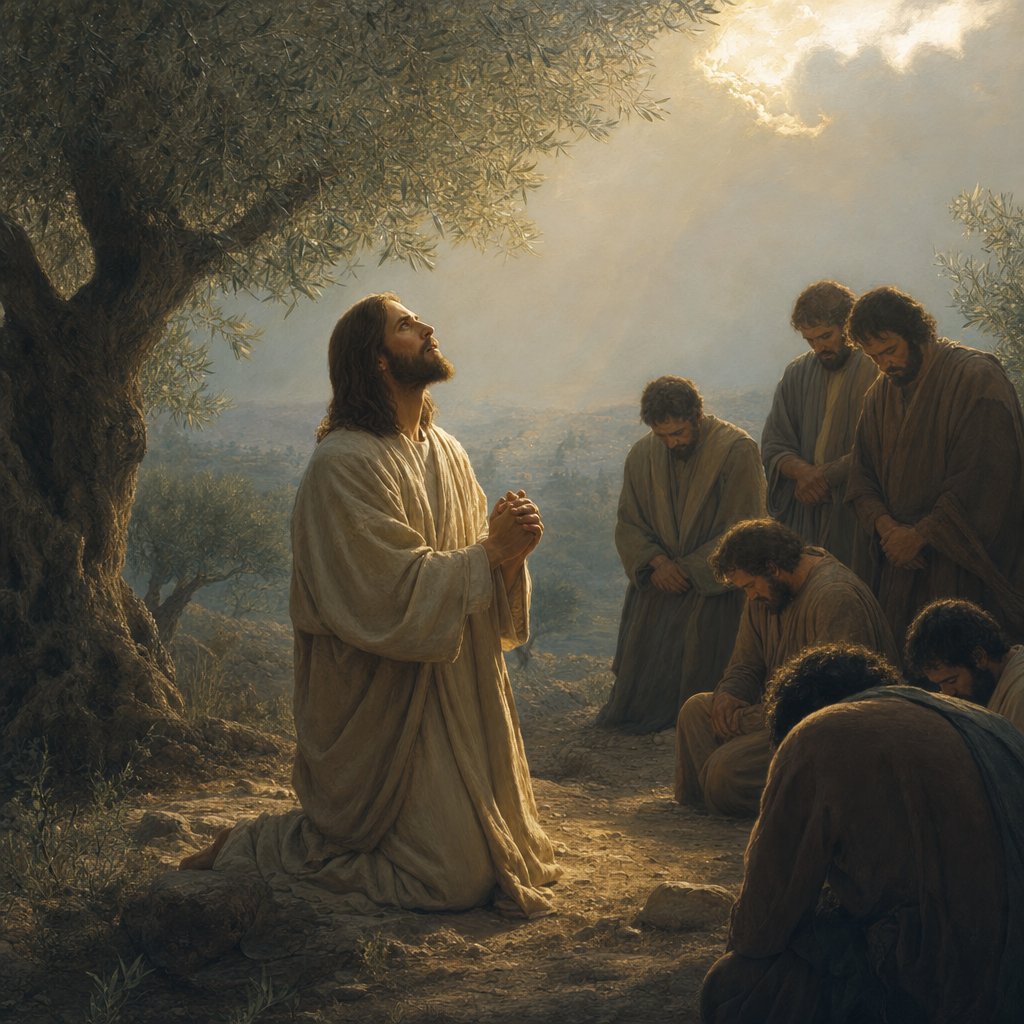
John 17:17 in the King James Version reads, “Sanctify them through thy truth: thy word is truth.” These words are spoken by Jesus in prayer to the Father on the night of His betrayal, within what is often called His high-priestly prayer (John 17). The setting matters because Jesus is not teaching a crowd or debating opponents; He is interceding. The verse therefore carries the weight of a final, deliberate petition for those who will remain in the world after His departure. It is not merely a maxim about Scripture; it is a request that God actively do something to His people by means of something: “through thy truth.”
The central idea is sanctification. In biblical usage, to “sanctify” is to set apart unto God, to consecrate, to make holy in the sense of being claimed for God’s purpose and fitted for His service. In John 17, Jesus has already spoken of His disciples as those whom the Father gave Him “out of the world” (John 17:6), yet He immediately says they are still “in the world” (John 17:11). That tension is crucial. The disciples are not being removed from ordinary life, conflict, and opposition; rather, they are being marked off within it. Sanctification here is not escape from the world but separation in loyalty, identity, and mission while remaining physically present among the world’s pressures and temptations. The prayer assumes danger and distortion around them, which is why Jesus also prays that the Father would “keep them from the evil” (John 17:15). John 17:17 explains the means by which this keeping and setting apart is carried forward: God’s truth.
“Through thy truth” presents truth not primarily as an abstract idea but as an instrument God uses to shape people. Truth is pictured as the channel, the atmosphere, and the tool by which sanctification happens. The disciples will not be made fit for their calling by mere willpower or by isolation; they will be consecrated by being brought under, and formed by, what God says is real. In this prayerful context, “truth” is not whatever seems sincere, nor a private spiritual feeling, but the Father’s own truth—God’s self-consistent, faithful reality, expressed and communicated.
Then Jesus defines the truth in an unambiguous sentence: “thy word is truth.” In KJV language, “word” carries a rich resonance. It means the utterance of God, what God has spoken, what God has revealed. In the immediate context of John 17, Jesus has already said, “I have given unto them the words which thou gavest me” (John 17:8), and “I have given them thy word” (John 17:14). So when He says, “thy word is truth,” He is not pointing vaguely to a principle; He is pointing to the divine speech entrusted to the disciples—God’s revealed message that has come through Jesus and will be carried forward by them. It is also consistent with the wider biblical sense that God’s word is reliable because God Himself is faithful. God’s word is not merely true; it is truth—an ultimate standard rather than one competing opinion.
The verse also sits inside a larger set of themes that run through John 17: belonging, mission, and protection. Jesus is about to send His disciples into continued witness: “As thou hast sent me into the world, even so have I also sent them into the world” (John 17:18). John 17:17 is therefore missional. Sanctification is not a private improvement project; it is preparation for being sent. The disciples are set apart so that they may speak and live as representatives of the Father and the Son in a hostile environment. Truth is what equips them to do this without being reshaped by the world’s lies or fear. In John’s Gospel, the conflict between light and darkness, truth and falsehood, is not simply intellectual; it is moral and spiritual allegiance. To be sanctified “through thy truth” is to be steadily brought into alignment with God’s light so that one’s life and testimony are not compromised.
There is symbolism, too, in the idea of being made holy “through” truth. Sanctification in Scripture often involves cleansing imagery, and while John 17:17 does not use the word “clean,” the notion of a purifying, separating action is present. Truth functions like a purifier: it exposes what is false, corrects what is crooked, and distinguishes what belongs to God from what does not. In the world of John’s Gospel, where misunderstanding and deception recur, truth is not only information but revelation that unmasks. The word of God, received and believed, becomes the means by which God prunes away error and consecrates hearts.
Another layer of significance is that this verse stands close to Jesus’ own self-consecration. Just a few verses later Jesus says, “And for their sakes I sanctify myself, that they also might be sanctified through the truth” (John 17:19). That connection shows that the disciples’ sanctification is bound up with Jesus’ sacrificial obedience. He is setting Himself apart to accomplish the Father’s will, and the fruit of that obedience is a people who are likewise set apart. In other words, John 17:17 is not detached from the cross; it is part of the same movement of dedication and redemption. The truth that sanctifies is not mere doctrine in the air; it is the Father’s word embodied and fulfilled in the Son’s mission.
The verse also carries an implicit contrast: if God’s word is truth, then whatever opposes it is falsehood, and falsehood cannot sanctify. This matters because the disciples are about to face religious pressure, social exclusion, and spiritual temptation. Their stability will not come from majority opinion or institutional power but from being grounded in what God has spoken. John 17:17 thus becomes a kind of spiritual safeguard: a request that God would anchor their identity, ethics, and hope in His own revelation so they can remain faithful.
Taken together, John 17:17 is Jesus’ petition that the Father would actively consecrate His people for holy living and faithful witness by immersing them in, and shaping them through, divine reality as God has spoken it. It teaches that holiness is not manufactured by human effort alone and not preserved by retreat, but is wrought by God through His truth. And it affirms, in the clearest possible terms, that the ground of that truth is the Father’s word: not merely truthful speech, but truth itself, the final measure by which everything else is judged.
Get our apps


Artwork for John 17:17

John 17:17 - "Sanctify them through thy truth: thy word is truth."

John 17:17 “Sanctify them by the truth; your word is truth.”

John 17:17 “Sanctify them by the truth; your word is truth.”

John 17:17 “Sanctify them by the truth; your word is truth.”
"Sanctify them through thy truth: thy word is truth." - John 17:17

"Sanctify them through thy truth: thy word is truth." - John 17:17

"Sanctify them through thy truth: thy word is truth." - John 17:17

John 17:17 “Sanctify them by the truth; your word is truth.”

John 17:17 “Sanctify them by the truth; your word is truth.”

John 17:17 “Sanctify them by the truth; your word is truth.”

John 17:17 “Sanctify them by the truth; your word is truth.”

John 7:17-18

John 7:17-18

John 7:17-18

John 7:17-18

John 21:17

John 1:17

John 1:17

John 1:17

John 14:16-17

John 17:16 - "They are not of the world, even as I am not of the world."

1 John 5:17 - "All unrighteousness is sin: and there is a sin not unto death."

John 13:17 - "If ye know these things, happy are ye if ye do them."

John 1:17 - "For the law was given by Moses, but grace and truth came by Jesus Christ."

John 8:17 - "It is also written in your law, that the testimony of two men is true."

John 15:17 - "These things I command you, that ye love one another."

Matthew 17:13 - "Then the disciples understood that he spake unto them of John the Baptist."

John 5:17 - "¶ But Jesus answered them, My Father worketh hitherto, and I work."

John 17:10 - "And all mine are thine, and thine are mine; and I am glorified in them."

John 17:19 - "And for their sakes I sanctify myself, that they also might be sanctified through the truth."