What does John 17:3 mean?
“And this is life eternal, that they might know thee the only true God, and Jesus Christ, whom thou hast sent.” — John 17:3
John 17:3 in the King James Version reads, “And this is life eternal, that they might know thee the only true God, and Jesus Christ, whom thou hast sent.”
These words are spoken by the Lord Jesus in what is often called his prayer to the Father, immediately before his betrayal and crucifixion. The setting matters because Christ is not giving an abstract definition of religion, nor merely offering comfort to his disciples; he is speaking as the Sent One who is about to finish the work given him to do. In this solemn hour, “life eternal” is not presented as a distant reward only after death, but as something bound up with a present reality: knowing God as he truly is, and knowing Jesus Christ in the identity and mission the Father has given him. The verse therefore functions like a doorway into the whole chapter’s burden: Christ prays that the Father would glorify the Son, that the Son might glorify the Father, and that the Father’s people might be kept, sanctified, and made one. John 17:3 sits near the beginning of this prayer to show what all that keeping, sanctifying, and uniting is ultimately for: participation in eternal life through true knowledge of God in the Son.
The central theme is that eternal life is defined relationally and spiritually: “that they might know thee.” In the language of Scripture, to “know” God is not merely to possess information about him, but to be brought into a true, living recognition of him, to acknowledge him, to trust him, to worship him, and to belong to him. It is the difference between knowing facts and knowing a person. In John’s Gospel especially, this knowing is tied to revelation: God is not climbed toward by human ability; he is made known. The verse does not say that eternal life is earned by knowledge as a human achievement, but that eternal life consists in a God-given knowledge, because the Father is known truly only as the Son reveals him. This is why the verse joins together “the only true God” and “Jesus Christ, whom thou hast sent.” Eternal life is not defined as knowing God apart from Christ, nor as knowing Christ apart from the Father, but as knowing the Father in the truth of who he is, and knowing Jesus Christ as the One commissioned and given by the Father.
When Jesus calls the Father “the only true God,” he is speaking within Israel’s confession that there is one God, over against idols and false gods. The phrase “only true” does not merely mean that God is sincere, but that he alone is God in the full and real sense, the living and faithful God as opposed to all rivals that pretend to deity. In the immediate context of John’s Gospel, this also carries a sharp spiritual contrast: the world is full of claims, loyalties, and religions, but eternal life is tied to knowing God as the only true God, not a god of one’s own making. The symbolism here is the old biblical conflict between truth and falsehood, light and darkness, the living God and lifeless idols. To know the only true God is to be delivered from illusion, to have the heart turned from substitutes to the One who truly is.
Yet Jesus does not stop with “the only true God”; he adds, “and Jesus Christ, whom thou hast sent.” This joining is significant. Jesus speaks of himself as “Jesus Christ,” not merely as Jesus of Nazareth, but as the Christ, the anointed One promised in the Scriptures, and as the One “sent” by the Father. The theme of sending runs through John: the Father sends the Son; the Son speaks the Father’s words, does the Father’s works, and reveals the Father’s name. In John 17, “sent” is more than travel from one place to another; it is mission, authority, and representation. To say that the Son is sent is to say that God has taken the initiative to make himself known and to save. Eternal life, then, is not human ascent to God but divine descent in mercy, God reaching toward man through the One whom he sent.
The verse also frames eternal life as something inseparable from truth. The Father is “true,” and Christ is the Sent One who embodies and communicates that truth. In the flow of the chapter, this connects naturally to what Jesus soon asks: “Sanctify them through thy truth: thy word is truth.” Eternal life is not merely duration; it is a quality of life grounded in the truth of God, a life that is made holy by the truth, kept by God, and oriented toward God’s glory. That is why the knowledge described is not neutral. To know God truly is to be reshaped by that knowing, because the true God is holy, and those who are given eternal life are drawn into holiness, love, and unity.
There is also a strong covenantal and priestly tone. John 17 reads like an intercession, with Jesus standing as the mediator for those the Father has given him. In that light, John 17:3 can be heard as the heart of the mediator’s purpose: he brings people into eternal life by bringing them into the knowledge of God through himself. The symbolism of mediation is built into the phrase “whom thou hast sent.” Christ stands between God and man, not as a barrier, but as the appointed way of access. To know the Father as the only true God is inseparable from receiving the Son as the One sent. The verse therefore carries the significance of exclusivity, not in the sense of narrowness for its own sake, but in the sense that the only true God has provided a true and sufficient revelation of himself in the One he sent.
Finally, the verse’s significance is heightened by its placement on the eve of the cross. Jesus is about to be lifted up, and in John’s Gospel that lifting up is both suffering and glory. When he defines eternal life as knowing the Father and the Son, he is pointing forward to what his death and resurrection will accomplish: the removal of sin and the opening of a way for sinners to come to God. Eternal life is not a mere idea; it is a purchased and granted reality, and its content is communion with God in truth through Jesus Christ. John 17:3 therefore serves as a concise summary of the Gospel itself: God is the only true God, Jesus Christ is the One he sent, and eternal life is found not in any rival claim, but in the living knowledge of God revealed and given through the Son.
Get our apps


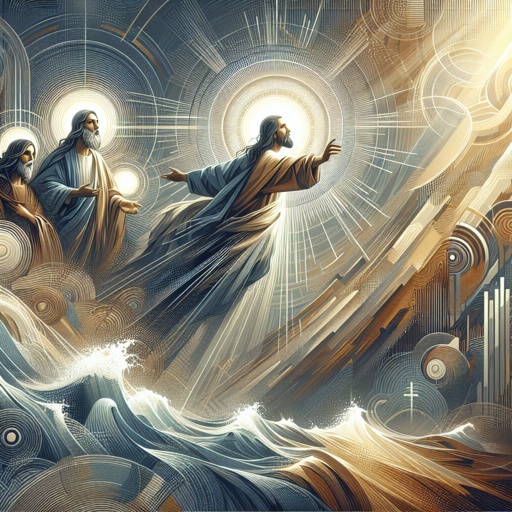
Artwork for John 17:3

John 17:3 - "And this is life eternal, that they might know thee the only true God, and Jesus Christ, whom thou hast sent."

"And this is life eternal, that they might know thee the only true God, and Jesus Christ, whom thou hast sent." - John 17:3

John 3:17 - "For God sent not his Son into the world to condemn the world; but that the world through him might be saved."

Mark 3:17 - "And James the son of Zebedee, and John the brother of James; and he surnamed them Boanerges, which is, The sons of thunder:"

"For God sent not his Son into the world to condemn the world; but that the world through him might be saved." - John 3:17

1 John 3:17 - "But whoso hath this world's good, and seeth his brother have need, and shutteth up his bowels of compassion from him, how dwelleth the love of God in him?"

John 7:17-18

John 7:17-18

John 7:17-18

John 7:17-18

"For God sent not his Son into the world to condemn the world; but that the world through him might be saved." - John 3:17

John 17:17 - "Sanctify them through thy truth: thy word is truth."

"And James the son of Zebedee, and John the brother of James; and he surnamed them Boanerges, which is, The sons of thunder:" - Mark 3:17

John 1:17

John 21:17

John 1:17

John 1:17

John 3:3

John 3:24 - "For John was not yet cast into prison."

1 John 3:17-18 - "But if anyone has the world's goods and sees his brother in need, yet closes his heart against him, how does God's love abide in him? Little children, let us not love in word or talk but in deed and in truth."
John 14:16-17

John 3:3-8

John 17:16 - "They are not of the world, even as I am not of the world."

John 3

1 John 3:1-3

1 John 5:17 - "All unrighteousness is sin: and there is a sin not unto death."

John 3:16

John 3:16

John 3:16

john 3:16