What does John 18:30 mean?
“They answered and said unto him, If he were not a malefactor, we would not have delivered him up unto thee.” — John 18:30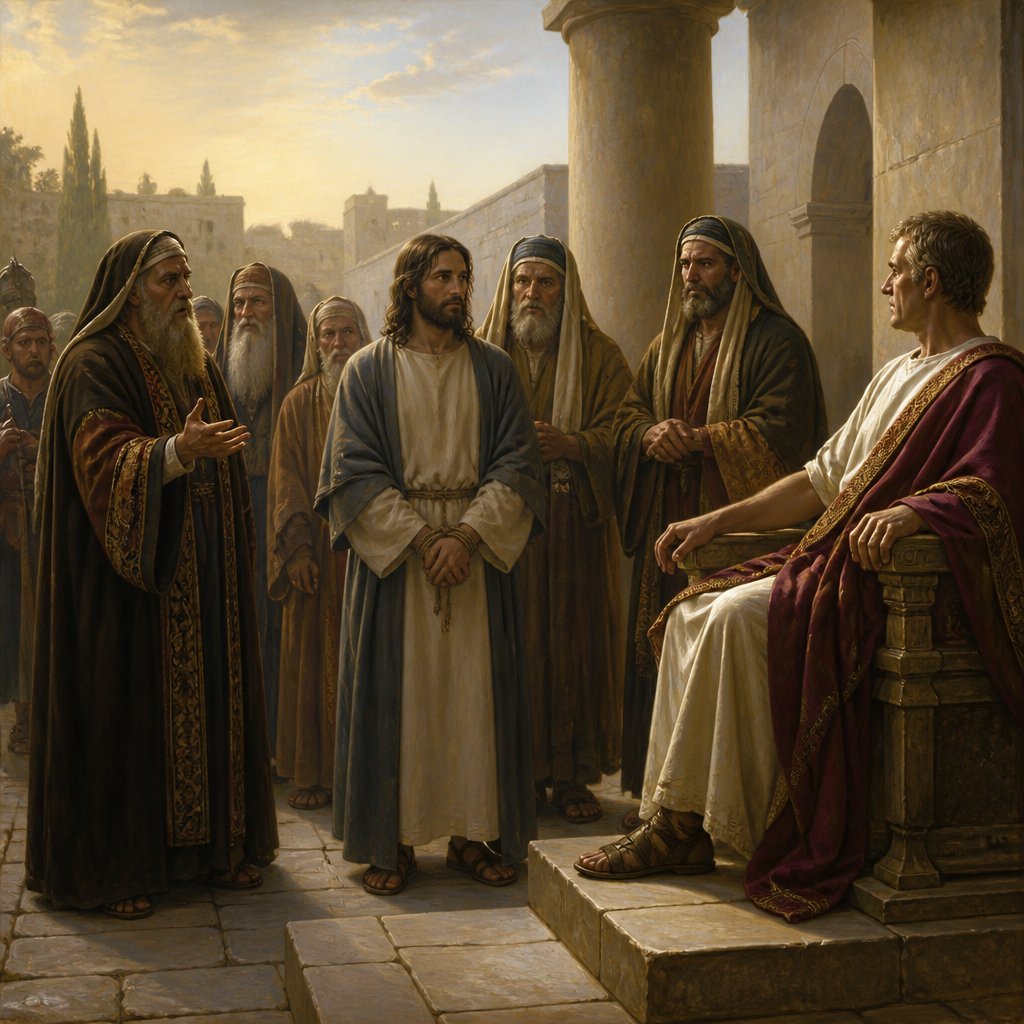
In John 18:30, the King James Version (KJV) reads: "They answered and said unto him, If he were not a malefactor, we would not have delivered him up unto thee."
This verse is part of the narrative of the trial of Jesus before Pilate, the Roman governor of Judea. In this passage, the religious leaders bring Jesus to Pilate in order to have him condemned and killed. The religious leaders are presenting a case against Jesus to Pilate, and their words in this verse show their determination to see Jesus punished, regardless of whether he is guilty or innocent.
The overarching theme of this passage and the broader context of the entire narrative is the injustice and hypocrisy of the religious leaders and the political powers in their treatment of Jesus. Throughout the Gospels, Jesus is consistently depicted as a figure of righteousness, compassion, and love, and yet he is being unjustly accused and condemned by those in power.
The religious leaders, in their eagerness to eliminate Jesus as a threat to their authority, are willing to bend the rules of justice and morality in order to accomplish their goal. This verse reveals the moral bankruptcy of those who have set themselves against Jesus and highlights the conflict between the divine truth that Jesus embodies and the corrupt human institutions that seek to crush him.
The phrase "If he were not a malefactor, we would not have delivered him up unto thee" reflects the leaders' attempt to present Jesus as a criminal, deserving of punishment. The word "malefactor" refers to someone who has committed a crime or a wrong, and the religious leaders are asserting that Jesus is guilty of such crimes. However, the irony is that they have no legitimate evidence to support their accusations, and Jesus' innocence is evident throughout the Gospel accounts.
The deeper symbolic meaning of this verse lies in its portrayal of the timeless struggle between good and evil, truth and deceit, and the persecution of the righteous by the unrighteous. Jesus, as the embodiment of divine truth and righteousness, stands in stark contrast to the corruption and hypocrisy of those who seek his downfall. The unjust treatment of Jesus by the religious leaders and the Roman authorities serves as a powerful symbol of the persecution and suffering endured by all who stand for truth and righteousness in the face of opposition.
Furthermore, the actions of the religious leaders in delivering Jesus to Pilate serve as a poignant reminder of the human tendency to reject and mistreat the divine presence when it is uncomfortable or inconvenient. Instead of recognizing and embracing the truth that Jesus represents, the religious leaders seek to eliminate him, revealing their own spiritual blindness and moral bankruptcy.
In conclusion, the verse John 18:30 from the King James Version of the Bible offers a powerful commentary on the themes of injustice, hypocrisy, and the persecution of the righteous. Through the portrayal of the religious leaders' determination to see Jesus punished, the verse underscores the eternal struggle between divine truth and human corruption. This passage serves as a poignant reminder of the importance of standing for righteousness and truth, even in the face of opposition and persecution.
Get our apps


Artwork for John 18:30

John 18:30 - "They answered and said unto him, If he were not a malefactor, we would not have delivered him up unto thee."
"They answered and said unto him, If he were not a malefactor, we would not have delivered him up unto thee." - John 18:30

John 14:30

John 10:30

John 10:30

John 3:30

Genesis 18-30

John 20:30-31

John 10:30 - "I and my Father are one."

John 4:30 - "Then they went out of the city, and came unto him."

John 3:30 - "He must increase, but I must decrease."

1 Samuel 30:18

John 8:30 - "As he spake these words, many believed on him."

Mark 11:30 - "The baptism of John, was it from heaven, or of men? answer me."

John 7:17-18

John 7:17-18

John 13:30 - "He then having received the sop went immediately out: and it was night."

John 7:17-18

John 7:17-18

John 18:25

john 18:36

"I and my Father are one." - John 10:30

John 12:30 - "Jesus answered and said, This voice came not because of me, but for your sakes."

John 11:30 - "Now Jesus was not yet come into the town, but was in that place where Martha met him."

"I and my Father are one." - John 10:30

Proverbs 30:18-19 – "There are three things that are too amazing for me, four that I do not understand."

John 14:30 - "Hereafter I will not talk much with you: for the prince of this world cometh, and hath nothing in me."

1 John 5:18

1 John 4:18

1 John 4:18