What does John 18:34 mean?
“Jesus answered him, Sayest thou this thing of thyself, or did others tell it thee of me?” — John 18:34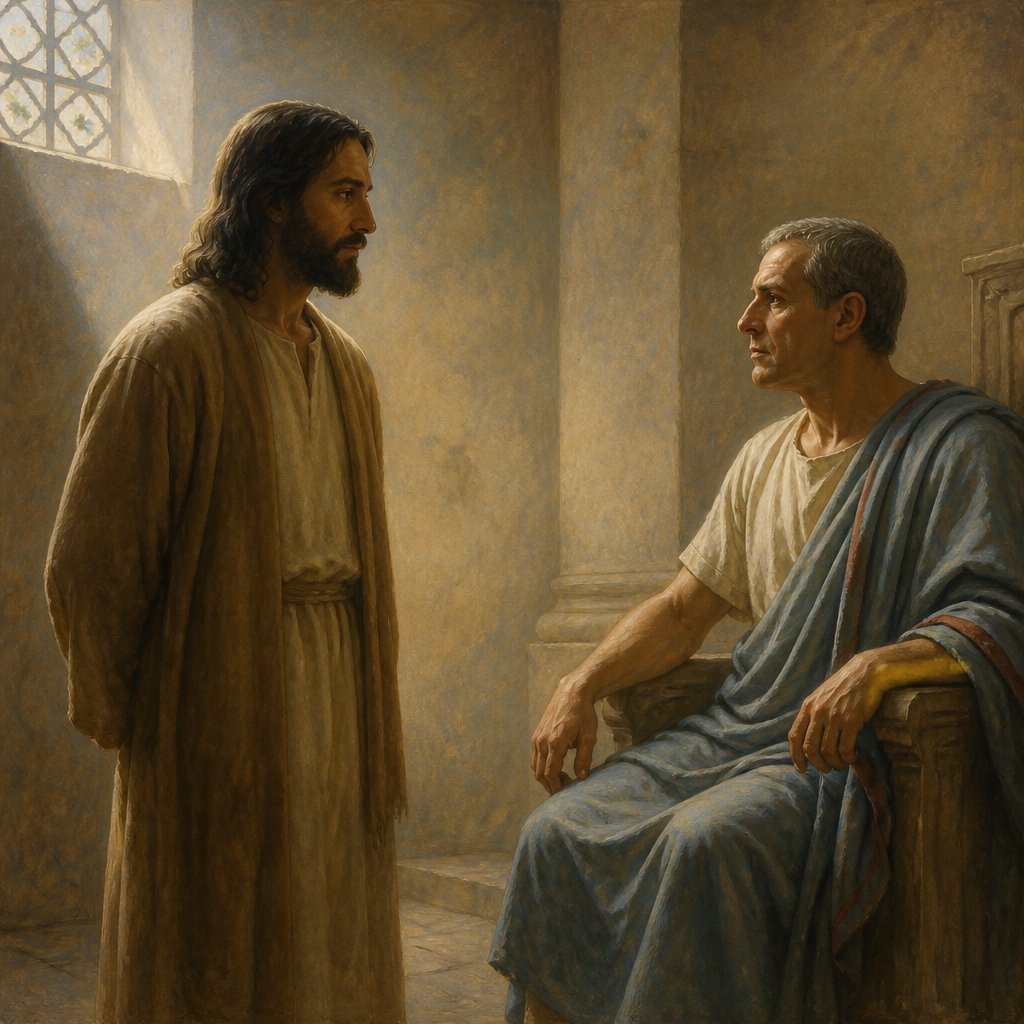
In John 18:34, the King James Version of the Bible states, "Jesus answered him, Sayest thou this thing of thyself, or did others tell it thee of me?"
This verse takes place during Jesus' trial before Pontius Pilate. Pilate had asked Jesus if he was the king of the Jews, to which Jesus replied in verse 36, "My kingdom is not of this world." Pilate then asked him if he was a king, to which Jesus responded with the question in verse 34.
The context of this verse is vital to understanding its significance. Jesus had been arrested and brought before the Roman governor, Pontius Pilate, on charges of sedition and claiming to be a king. The Jewish leaders had brought Jesus to Pilate because they did not have the authority to execute him under Roman law. They accused Jesus of challenging the authority of the Roman Empire by claiming to be a king, a charge that could have resulted in a death sentence.
In response to Pilate's questioning, Jesus asks, "Sayest thou this thing of thyself, or did others tell it thee of me?" This question reveals Jesus' understanding of the situation and his awareness of the political and religious forces at play. It also demonstrates Jesus' willingness to engage in dialogue and challenge the assumptions of those in power.
The verse also speaks to the nature of truth and the importance of discernment. Jesus is asking Pilate if he is speaking from his own understanding or if he is parroting the accusations of others. This forces Pilate to reflect on his own role in the situation and consider the source of his knowledge about Jesus.
Symbolically, this verse can be seen as a representation of the clash between earthly power and divine authority. Pilate, as the representative of Roman authority, holds the power to determine Jesus' fate. Yet Jesus, as the Son of God, stands before him as a living embodiment of truth and righteousness. The question posed by Jesus to Pilate challenges the very nature of authority and truth, forcing Pilate to confront the reality of who Jesus is and what he represents.
The themes present in this verse include truth, authority, and the clash between earthly and divine realities. Jesus' question to Pilate challenges the notion of power and authority, emphasizing the importance of discerning the truth and understanding the motivations behind the accusations brought against him.
In a broader sense, this verse also serves as a reminder of the role of discernment and critical thinking in our own lives. It encourages us to question the sources of information and to seek truth with an open mind and a discerning heart.
In conclusion, John 18:34 presents a powerful and thought-provoking moment in the narrative of Jesus' trial before Pilate. The question posed by Jesus challenges the assumptions and motivations of those in power, while also highlighting the importance of discerning the truth. This verse serves as a reminder of the clash between earthly and divine authority, and the ongoing relevance of Jesus' message in challenging the status quo and seeking truth and righteousness.
Get our apps


Artwork for John 18:34

John 18:34 - "Jesus answered him, Sayest thou this thing of thyself, or did others tell it thee of me?"
"Jesus answered him, Sayest thou this thing of thyself, or did others tell it thee of me?" - John 18:34
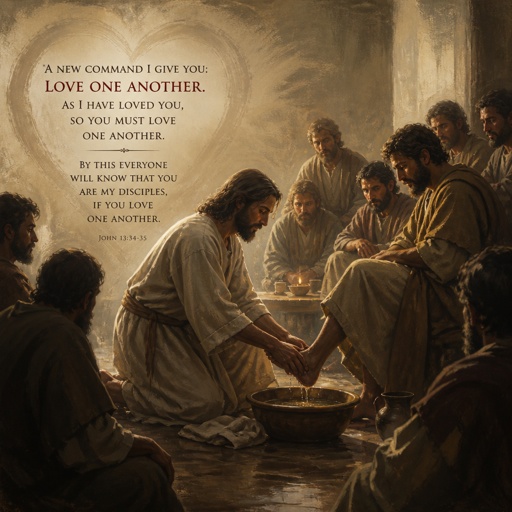
John 13: 34-35

Psalm 34:18

Psalms 34:18

Psalms 34:18

Matthew 18:23-34

Matthew 18:23-34

Matthew 18:23-34

Matthew 18:23-34

John 1:34 - "And I saw, and bare record that this is the Son of God."

John 6:34 - "Then said they unto him, Lord, evermore give us this bread."
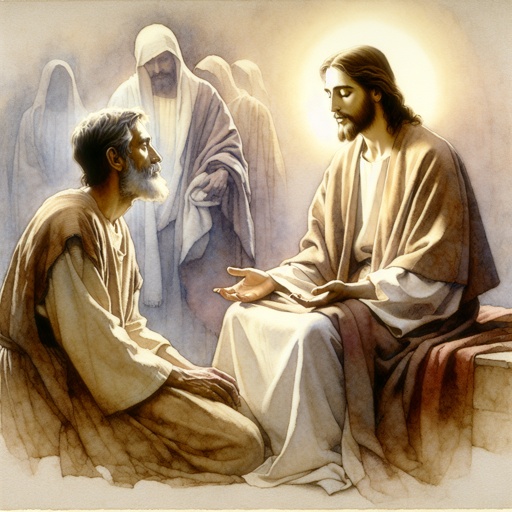
Jesus replied, ‘Do you ask this of your own accord, or have others spoken to you about me’ (Jn 18:34)

Genesis 34:18 - "And their words pleased Hamor, and Shechem Hamor's son."

John 13:34 Love Hope Strength Bless

John 13:34 Love Hope Strength Bless

John 13:34 Love Hope Strength Bless

John 13:34 Love Hope Strength Bless

Psalms 34:18 - "The LORD is nigh unto them that are of a broken heart; and saveth such as be of a contrite spirit."

John 7:17-18

John 7:17-18

John 10:34 - "Jesus answered them, Is it not written in your law, I said, Ye are gods?"

Job 34:18 - "Is it fit to say to a king, Thou art wicked? and to princes, Ye are ungodly?"

John 19:34 - "But one of the soldiers with a spear pierced his side, and forthwith came there out blood and water."

John 5:34 - "But I receive not testimony from man: but these things I say, that ye might be saved."

John 7:17-18

John 7:17-18

John 18:25

john 18:36

John 4:34 - "Jesus saith unto them, My meat is to do the will of him that sent me, and to finish his work."