What does John 18:4 mean?
“Jesus therefore, knowing all things that should come upon him, went forth, and said unto them, Whom seek ye?” — John 18:4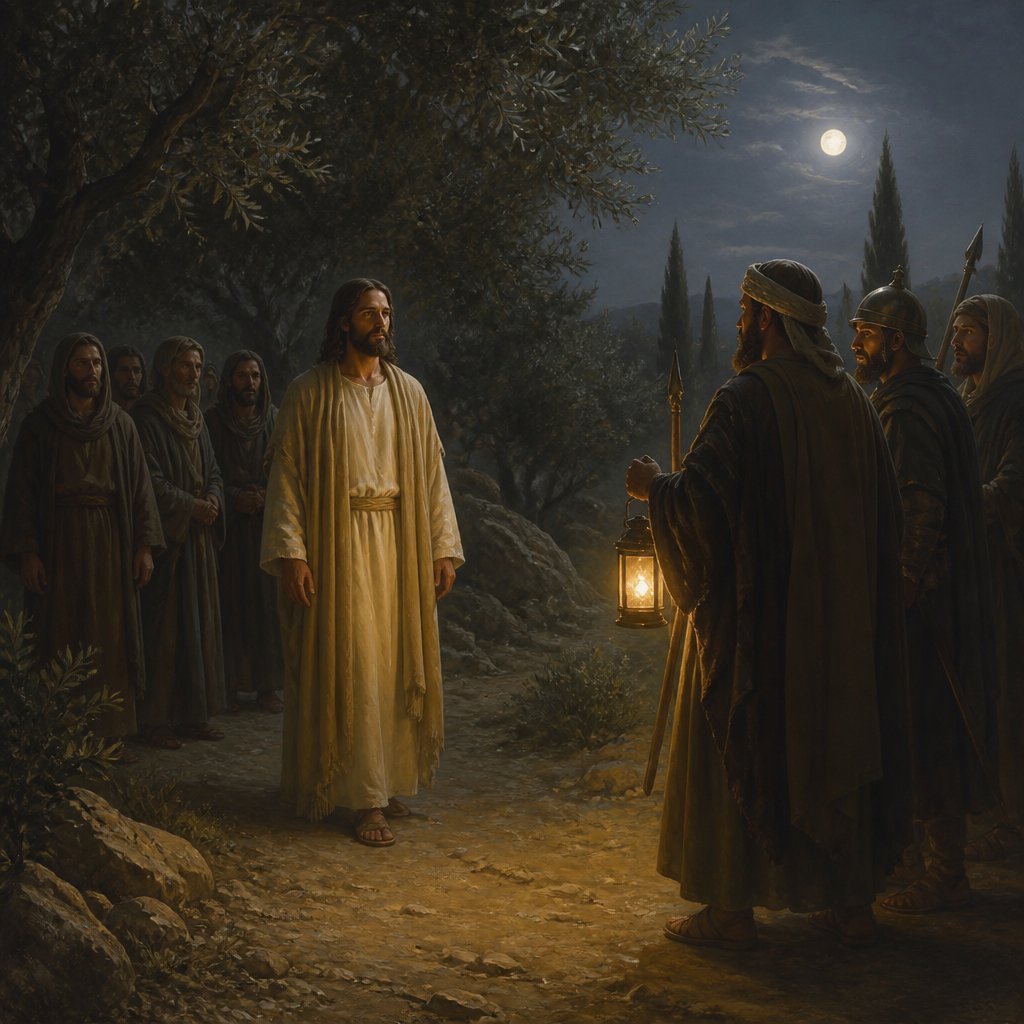
John 18:4 in the King James Version (KJV) of the Bible reads: "Jesus therefore, knowing all things that should come upon him, went forth, and said unto them, Whom seek ye?" This verse is a part of the narrative in the Gospel of John, which is one of the four Gospels in the New Testament of the Christian Bible. The Gospel of John is believed to have been written by the Apostle John and is unique from the other Gospels in its theological and symbolic language.
In this particular verse, Jesus is portrayed as having full knowledge and understanding of everything that was about to happen to him. He is completely aware of the events that are unfolding and willingly goes forth to face them. This verse is part of the passage in which Judas arrives in the Garden of Gethsemane with a detachment of soldiers and officers to arrest Jesus. Jesus' response to their arrival demonstrates his acceptance of his fate and his willingness to fulfill the purpose for which he came to earth.
One of the key themes of this verse is Jesus' divine foreknowledge and his submission to the will of God. Throughout the Gospel of John, Jesus is depicted as having a deep understanding of his identity and mission. He knows that he is the Son of God and that it is necessary for him to undergo suffering and death in order to fulfill God's plan for the salvation of humanity. Jesus' willingness to surrender himself to the authorities is an expression of his obedience to God's will and his love for humanity.
Another important theme in this verse is the idea of Jesus as the "Suffering Servant," a concept that is rooted in the Old Testament prophetic writings, particularly in the book of Isaiah. The Suffering Servant is a figure who willingly endures suffering and humiliation for the sake of others. In the New Testament, this concept is applied to Jesus, who is seen as the ultimate Suffering Servant who suffers and dies in order to bring salvation to humanity. This verse in John 18 highlights Jesus' voluntary submission to his captors, which is an essential aspect of his role as the Suffering Servant.
The context of this verse is also significant in understanding its meaning. The events of Jesus' arrest in the Garden of Gethsemane mark the beginning of his trial, crucifixion, and resurrection. This pivotal moment in the narrative of Jesus' life is crucial to the Christian faith, as it underscores the sacrificial nature of Jesus' death and the redemptive power of his resurrection. Jesus' question to the soldiers and officers – "Whom seek ye?" – also serves as a demonstration of his authority and control over the situation, despite being the one who is being sought after.
In terms of symbolism, this verse can be seen as representing Jesus' complete self-awareness and divine nature. His knowledge of the events that are about to unfold and his willingness to face them demonstrate his unwavering commitment to his mission. The Garden of Gethsemane itself holds symbolic significance as the place where Jesus prayed and agonized before his arrest, signifying his human struggle and obedience to God's will.
In conclusion, John 18:4 in the King James Version of the Bible provides an insight into the depth of Jesus' understanding of his impending betrayal, arrest, and crucifixion. It emphasizes his unwavering commitment to fulfilling God's will and his role as the Suffering Servant who willingly endures suffering for the sake of humanity. This verse is a poignant reminder of Jesus' sacrificial love and his ultimate victory over sin and death through his resurrection.
Get our apps


Artwork for John 18:4

John 18:4 - "Jesus therefore, knowing all things that should come upon him, went forth, and said unto them, Whom seek ye?"
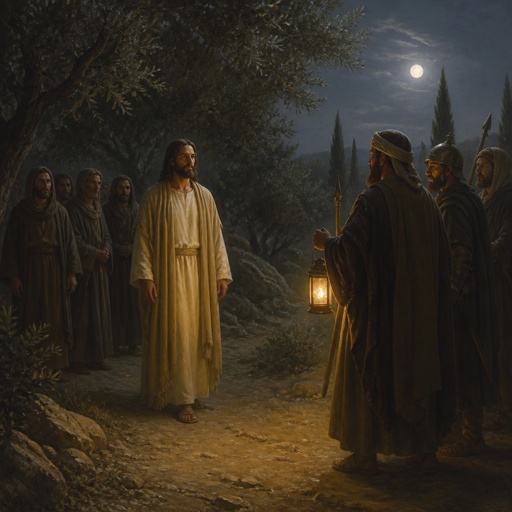
"Jesus therefore, knowing all things that should come upon him, went forth, and said unto them, Whom seek ye?" - John 18:4

1 John 4:18

1 John 4:18

John 4:18 - "For thou hast had five husbands; and he whom thou now hast is not thy husband: in that saidst thou truly."

1 John 4:18 - "There is no fear in love; but perfect love casteth out fear: because fear hath torment. He that feareth is not made perfect in love."

"There is no fear in love; but perfect love casteth out fear: because fear hath torment. He that feareth is not made perfect in love." - 1 John 4:18

1 John 4:18-19 - "There is no fear in love; but perfect love casteth out fear: because fear hath torment. He that feareth is not made perfect in love. We love him, because he first loved us."

John 7:17-18

John 7:17-18

John 7:17-18

John 7:17-18

John 18:25

john 18:36

1 John 5:18
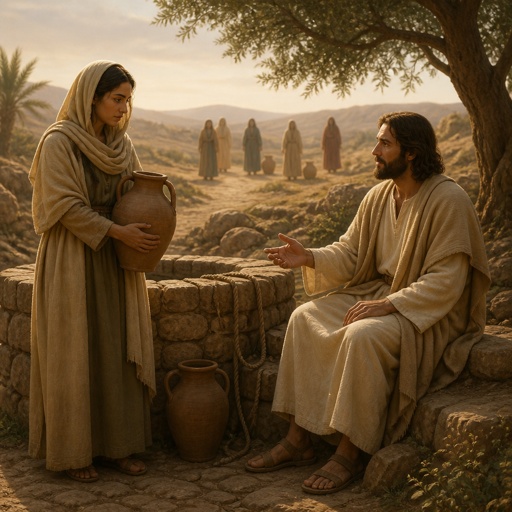
"For thou hast had five husbands; and he whom thou now hast is not thy husband: in that saidst thou truly." - John 4:18

John 4:4 - "And he must needs go through Samaria."

John 18:27 - "Peter then denied again: and immediately the cock crew."

John 6:18 - "And the sea arose by reason of a great wind that blew."

Mark 2:18 - "And the disciples of John and of the Pharisees used to fast: and they come and say unto him, Why do the disciples of John and of the Pharisees fast, but thy disciples fast not?"

Luke 7:18 - "And the disciples of John shewed him of all these things."

John 18:18 - "And the servants and officers stood there, who had made a fire of coals; for it was cold: and they warmed themselves: and Peter stood with them, and warmed himself."

John 4:16

John 3:4

John 4:16

John 4:16

John 4:16

John 4:16

John 18:12 - "Then the band and the captain and officers of the Jews took Jesus, and bound him,"

John 14:18 - "I will not leave you comfortless: I will come to you."