What does John 19:11 mean?
“Jesus answered, Thou couldest have no power at all against me, except it were given thee from above: therefore he that delivered me unto thee hath the greater sin.” — John 19:11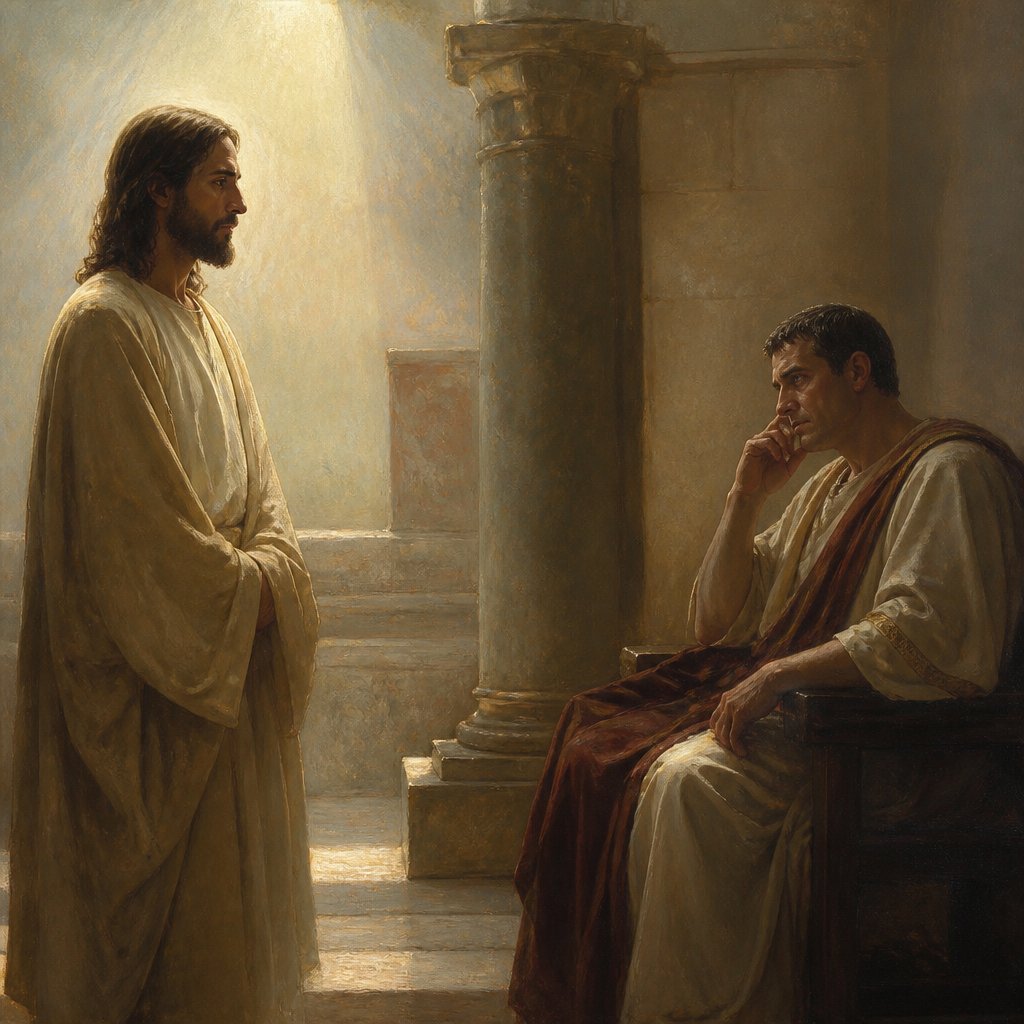
"Jesus answered, Thou couldest have no power at all against me, except it were given thee from above: therefore he that delivered me unto thee hath the greater sin." - John 19:11 (KJV)
This verse is part of the account of the trial and crucifixion of Jesus Christ, the central figure of Christianity. These events are central to the Christian faith and have been interpreted and analyzed in countless ways over the centuries. Here, Jesus is speaking to Pilate, the Roman governor who ultimately sentenced him to be crucified.
The first part of the verse, "Thou couldest have no power at all against me, except it were given thee from above" speaks to the idea that all authority ultimately comes from God. Jesus is reminding Pilate that he only has the power to judge and condemn him because it has been given to him by God. This challenges the notion that Pilate has absolute power and highlights the sovereignty of God over all earthly authorities.
This theme of God's sovereignty and ultimate control over all things is a central idea in the Bible. It speaks to the belief that nothing happens outside of God's will and that even the actions of those who oppose God ultimately serve his purposes. This can be a comforting thought for Christians, as it suggests that even in the midst of suffering and persecution, God is still in control and working out his plans for good.
The second part of the verse, "therefore he that delivered me unto thee hath the greater sin" addresses the responsibility of those who handed Jesus over to be crucified. Jesus is acknowledging that Pilate's actions are a result of the authority given to him from above, but he also holds accountable those who betrayed him and brought him to Pilate in the first place. This echoes the theme of personal responsibility and the consequences of our actions. Even though God is ultimately in control, individuals are still held accountable for their choices and actions.
This idea of personal responsibility and accountability is another central theme in the Bible. Throughout the scriptures, individuals are called to make choices and are held responsible for the consequences of those choices. This verse serves as a reminder that while God's sovereignty is absolute, individuals still have agency and are responsible for their actions.
In terms of context, this verse comes at a pivotal moment in the story of Jesus' trial and crucifixion. Jesus has been brought before Pilate, who is under pressure from the Jewish religious leaders to condemn him to death. Pilate questions Jesus and seems to be wrestling with the decision, but ultimately gives in to the demands of the crowd and sentences Jesus to be crucified. In this moment, Jesus is asserting his divine authority and challenging the power structures of the time.
Symbolically, this verse represents the tension between earthly authority and divine authority. Pilate represents the power of the Roman empire, while Jesus represents the ultimate authority of God. This clash of powers highlights the central conflict of the Christian faith – the battle between the kingdom of God and the kingdoms of the world.
Overall, John 19:11 is a powerful and thought-provoking verse that addresses themes of God's sovereignty, personal responsibility, and the clash between earthly and divine authority. It serves as a reminder of the ultimate control of God over all things, while also emphasizing the importance of individual choices and actions. In the context of the crucifixion narrative, it is a pivotal moment that sets the stage for the climactic events of Jesus' death and resurrection.
Get our apps


Artwork for John 19:11

John 19:11 - "Jesus answered, Thou couldest have no power at all against me, except it were given thee from above: therefore he that delivered me unto thee hath the greater sin."
"Jesus answered, Thou couldest have no power at all against me, except it were given thee from above: therefore he that delivered me unto thee hath the greater sin." - John 19:11

John 11:19 - "And many of the Jews came to Martha and Mary, to comfort them concerning their brother."
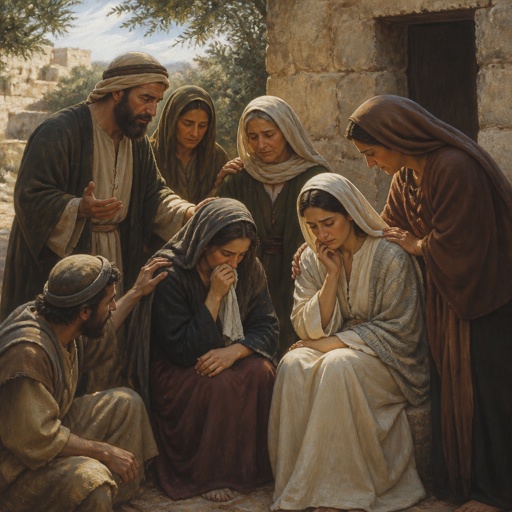
"And many of the Jews came to Martha and Mary, to comfort them concerning their brother." - John 11:19

John 19:38

John 19:1

John 19:19 - "¶ And Pilate wrote a title, and put it on the cross. And the writing was, JESUS OF NAZARETH THE KING OF THE JEWS."

John 17.6-19

John 19:1-3

John 19:25-27

John 1:19 - "¶ And this is the record of John, when the Jews sent priests and Levites from Jerusalem to ask him, Who art thou?"

John 19:25-27

John 19:26-27

John 21:15-19

John (11:35) Jesus wept.
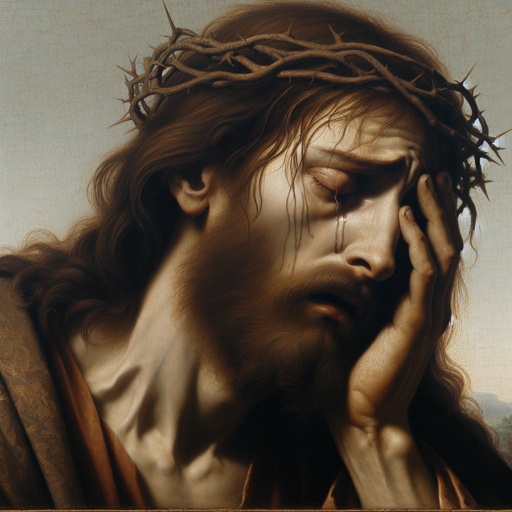
John (11:35) Jesus wept.

John (11:35) Jesus wept.

John 11:35

John 15.1-11

John 11:35

Ezekiel 28:11-19

Ezekiel 28:11-19

John (11:35) Jesus wept.

John (11:35) Jesus wept.

John (11:35) Jesus wept.

John 10:19 - "¶ There was a division therefore again among the Jews for these sayings."

Ezekiel 28:11-19

Ezekiel 28:11-19

Ezekiel 28:11-19

Ezekiel 28:11-19