What does John 19:13 mean?
“When Pilate therefore heard that saying, he brought Jesus forth, and sat down in the judgment seat in a place that is called the Pavement, but in the Hebrew, Gabbatha.” — John 19:13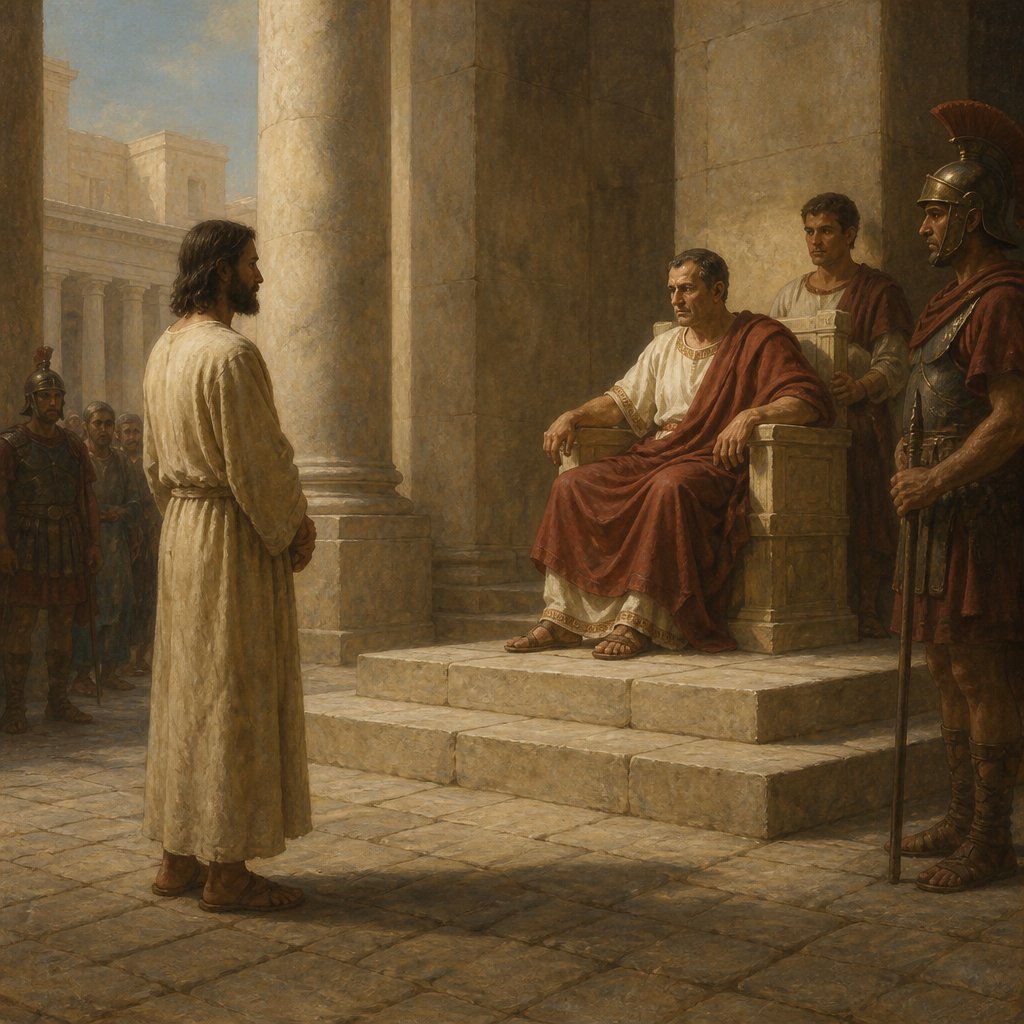
John 19:13 (KJV) states, "When Pilate therefore heard that saying, he brought Jesus forth, and sat down in the judgment seat in a place that is called the Pavement, but in the Hebrew, Gabbatha."
This verse is a crucial moment in the trial and crucifixion of Jesus Christ, as it depicts the final decision of Pontius Pilate, the Roman governor of Judea, to hand Jesus over to be crucified. This event is a significant turning point in the narrative of the crucifixion, as it marks the beginning of Jesus' journey to the cross.
The context of this verse is set within a larger narrative of Jesus' trial before Pilate. In the preceding verses, Jesus is brought before Pilate by the Jewish religious leaders, who seek his execution on charges of blasphemy and sedition. Pilate questions Jesus and finds no basis for the charges laid against him, declaring him innocent. However, the Jewish leaders persist in their demand for Jesus' death, and Pilate, seeking to appease the crowd, eventually gives in to their demands.
The setting of the verse takes place in a location called "the Pavement" or "Gabbatha," which is a specific area where Pilate sits in the judgment seat. This setting serves as the official place where Pilate makes his pronouncement and carries out the legal proceedings against Jesus. The choice of this setting is significant, as it represents the jurisdiction and authority of the Roman government, highlighting the role of Pilate as the ultimate decision-maker in the case of Jesus.
The symbolism of Pilate's judgment seat and the location of Gabbatha carries deeper meaning within the narrative. The judgment seat represents the seat of authority and power, symbolizing Pilate's role as the ultimate arbiter of justice in the Roman legal system. The choice of Gabbatha as the specific location also holds symbolic significance, as the name itself means "elevated" or "high," suggesting the lofty position of Pilate as the one who holds the fate of Jesus in his hands.
Furthermore, the verse underscores the political and religious dynamics at play during Jesus' trial. Pilate, as the Roman governor, is caught in a delicate balancing act between maintaining order and appeasing the Jewish religious leaders. His decision to hand Jesus over to be crucified is not only a reflection of his own moral compromise but also a manifestation of the political pressures he faces in maintaining Roman control over a volatile region.
Thematically, John 19:13 encapsulates the overarching themes of power, authority, and justice within the larger narrative of Jesus' crucifixion. The verse serves as a stark reminder of the abuse of power and the injustices perpetrated by those in positions of authority. It also highlights the collision of religious and political forces, shedding light on the complex interplay between the Roman occupation and the religious institutions of the time.
In conclusion, John 19:13 (KJV) presents a pivotal moment in the narrative of Jesus' trial and crucifixion, capturing the tension and drama surrounding Pilate's ultimate decision to hand Jesus over to be crucified. The verse's rich symbolism, historical context, and thematic depth contribute to its enduring significance within the larger biblical narrative, offering profound insights into the complexities of power, authority, and justice.
Get our apps


Artwork for John 19:13

John 19:13 - "¶ When Pilate therefore heard that saying, he brought Jesus forth, and sat down in the judgment seat in a place that is called the Pavement, but in the Hebrew, Gabbatha."
"¶ When Pilate therefore heard that saying, he brought Jesus forth, and sat down in the judgment seat in a place that is called the Pavement, but in the Hebrew, Gabbatha." - John 19:13

John 19:1-3

John 13:19 - "Now I tell you before it come, that, when it is come to pass, ye may believe that I am he."

John 19:38

John 19:1

John 13

John 19:19 - "¶ And Pilate wrote a title, and put it on the cross. And the writing was, JESUS OF NAZARETH THE KING OF THE JEWS."

John 17.6-19
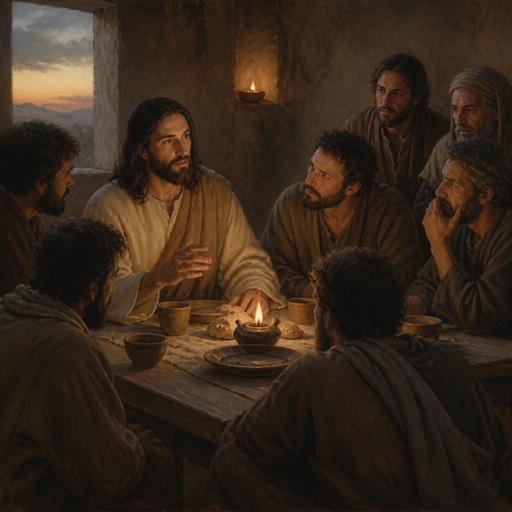
"Now I tell you before it come, that, when it is come to pass, ye may believe that I am he." - John 13:19

John 19:25-27

John 1:19 - "¶ And this is the record of John, when the Jews sent priests and Levites from Jerusalem to ask him, Who art thou?"

John 19:25-27

John 19:26-27

John 21:15-19

Luke 13:18-19

Luke 13:18-19

John 10:19 - "¶ There was a division therefore again among the Jews for these sayings."

John 13:13 - "Ye call me Master and Lord: and ye say well; for so I am."
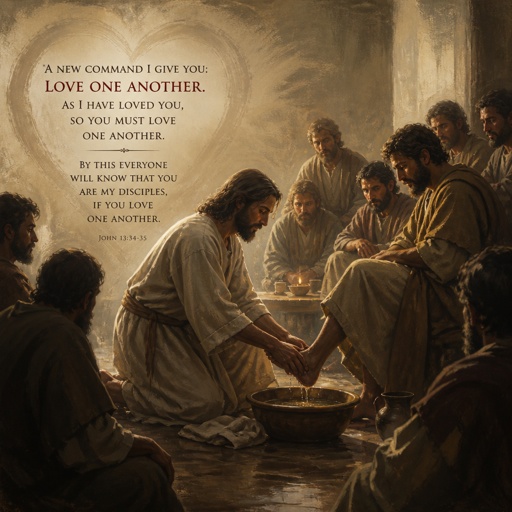
John 13: 34-35

Genesis 19-13

John 13:4-9

JOHN 6:11-13

John 20:11-13

Matthew 19:13

John 19:1 - "Then Pilate therefore took Jesus, and scourged him."

1 John 4:13

John 13:31-35

John 19:25-27 with emphasis on Mary

John 19:12-13 - "From then on, Pilate tried to release him, but the Jews cried out, "If you let this man go, you are no friend of Caesar. Anyone who claims to be a king opposes Caesar." When Pilate heard this, he brought Jesus out and sat down on the judge's seat at a place known as the Stone Pavement (which in Aramaic is Gabbatha)."