What does John 19:3 mean?
“And said, Hail, King of the Jews! and they smote him with their hands.” — John 19:3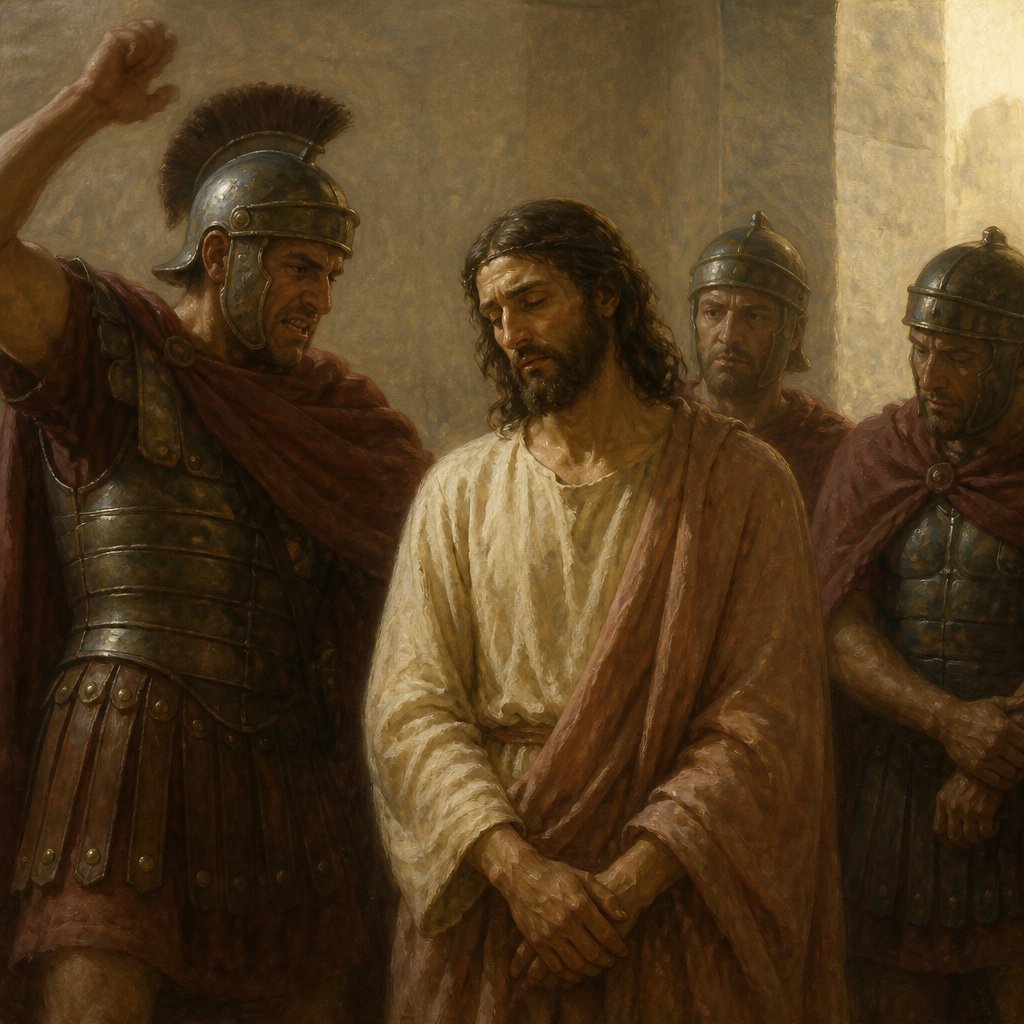
John 19:3 (KJV) reads, "And said, Hail, King of the Jews! and they smote him with their hands." This verse is part of the larger narrative of Jesus' crucifixion, and it carries deep theological, historical, and symbolic significance in the Christian faith.
The context of this verse takes place during the final hours of Jesus' life, as he is brought before Pontius Pilate, the Roman governor of Judea, for trial. The Jewish leaders, seeking to have Jesus executed, accuse him of claiming to be the King of the Jews, which they view as a threat to Roman authority. Pilate questions Jesus, who affirm that indeed he is a King, but clarifies that his kingdom is not of this world. Despite finding no fault in Jesus, Pilate ultimately gives in to the demands of the crowd and orders Jesus to be crucified.
The theme of kingship is prominent in this verse, as Jesus is mocked and abused by the Roman soldiers who sarcastically hail him as the King of the Jews. The irony of this scene lies in the fact that Jesus is the true King, the Son of God, who has come to establish a spiritual kingdom not of this world. The soldiers' mockery and violence towards Jesus serve to highlight the contrast between worldly kingship and the divine kingship of Christ.
The symbolism in this verse is profound and multi-layered. Firstly, the crown of thorns placed on Jesus' head by the soldiers is a powerful symbol of the suffering and humiliation he endured for the sake of humanity. In contrast to the opulence and splendor usually associated with kingship, Jesus' crown is made of thorns, reflecting the rejection and scorn he faced during his earthly ministry. This symbol also points to the fulfillment of Old Testament prophecies, such as Isaiah 53:3 which speaks of the Messiah being "despised and rejected by men, a man of sorrows and acquainted with grief."
Furthermore, the physical and verbal abuse inflicted on Jesus in this verse represents the broader theme of Christ's sacrificial atonement for the sins of humanity. As the King of the Jews, Jesus willingly took upon himself the punishment and shame that rightfully belonged to us, demonstrating the depth of his love and the extent of his redemptive work on the cross.
The historical and cultural context of this verse is significant in understanding the dynamics at play during Jesus' crucifixion. The Roman soldiers, as representatives of a powerful and oppressive empire, exercised their authority over Jesus in a brutal and degrading manner. The mockery and violence towards Jesus by the soldiers reveal the cruel and unjust treatment inflicted upon those who were perceived as threats to the Roman rule.
In conclusion, John 19:3 (KJV) captures a pivotal moment in the passion of Christ, conveying the irony of Jesus' true kingship being misunderstood and scorned by those who sought to destroy him. The verse also offers a profound insight into the nature of Christ's sacrifice and the depth of his love for humanity, as well as the broader historical and cultural context in which these events took place. This verse serves as a poignant reminder of the humility and suffering of Christ, as well as the ultimate victory he achieved through his death and resurrection.
Get our apps


Artwork for John 19:3

John 19:3 - "And said, Hail, King of the Jews! and they smote him with their hands."
"And said, Hail, King of the Jews! and they smote him with their hands." - John 19:3

John 19:1-3

1 John 3:19 - "And hereby we know that we are of the truth, and shall assure our hearts before him."

John 3:19 - "And this is the condemnation, that light is come into the world, and men loved darkness rather than light, because their deeds were evil."

1 John 3:18-19 - "My little children, let us not love in word, neither in tongue; but in deed and in truth. And hereby we know that we are of the truth, and shall assure our hearts before him."

1 John 3:19-20 - "By this we know that we are of the truth, and shall assure our hearts before Him. For if our heart condemns us, God is greater than our heart, and knows all things."

"And hereby we know that we are of the truth, and shall assure our hearts before him." - 1 John 3:19

John 19:38

John 19:1

John 19:19 - "¶ And Pilate wrote a title, and put it on the cross. And the writing was, JESUS OF NAZARETH THE KING OF THE JEWS."

John 17.6-19

John 3:19-20 - "And this is the condemnation, that light is come into the world, and men loved darkness rather than light, because their deeds were evil. For every one that doeth evil hateth the light, neither cometh to the light, lest his deeds should be reproved."

John 19:25-27
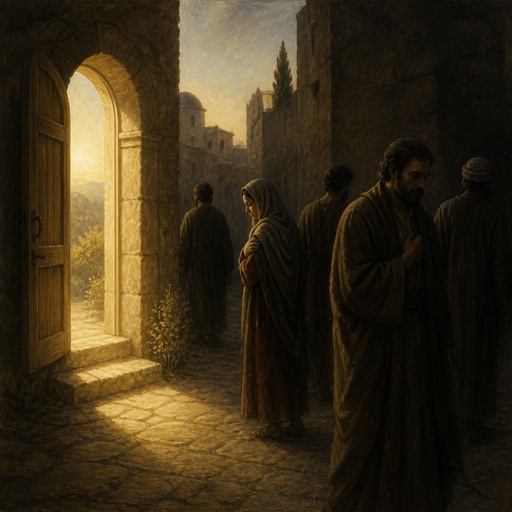
"And this is the condemnation, that light is come into the world, and men loved darkness rather than light, because their deeds were evil." - John 3:19

John 3:3

John 3:24 - "For John was not yet cast into prison."

John 1:19 - "¶ And this is the record of John, when the Jews sent priests and Levites from Jerusalem to ask him, Who art thou?"

John 19:25-27

John 19:26-27

John 21:15-19

John 3:3-8

John 10:19 - "¶ There was a division therefore again among the Jews for these sayings."

John 3

John 19:1 - "Then Pilate therefore took Jesus, and scourged him."
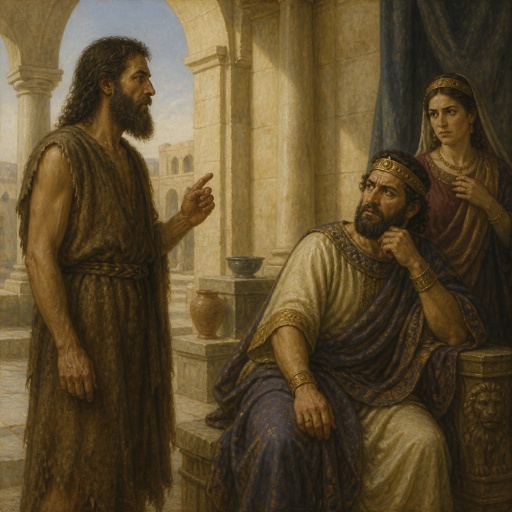
"But Herod the tetrarch, being reproved by him for Herodias his brother Philip's wife, and for all the evils which Herod had done," - Luke 3:19

1 John 3:1-3

John 19:25-27 with emphasis on Mary

John 3:16
John 3:16