What does John 21:12 mean?
"Jesus saith unto them, Come and dine. And none of the disciples durst ask him, Who art thou? knowing that it was the Lord." - John 21:12
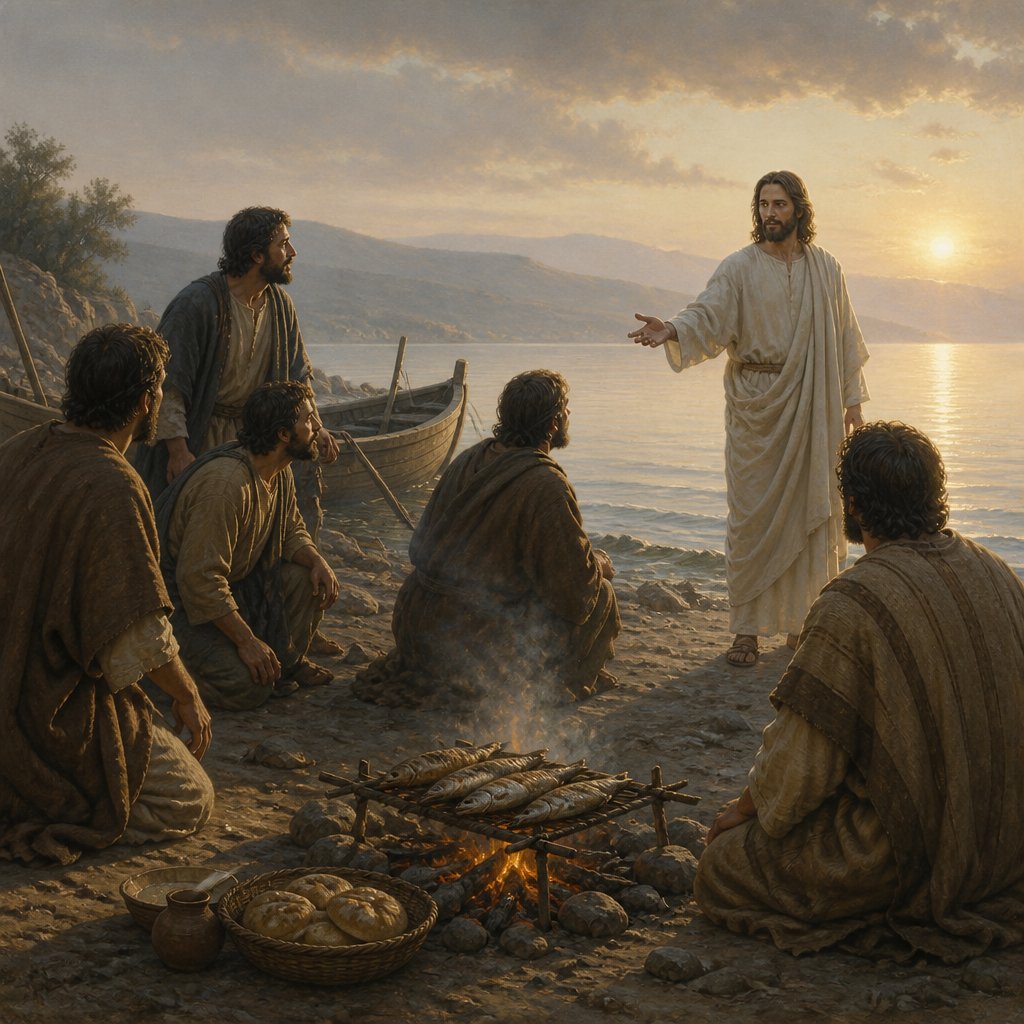
The Bible verse John 21:12 in the King James Version (KJV) reads: "Jesus saith unto them, Come and dine. And none of the disciples durst ask him, Who art thou? knowing that it was the Lord."
This verse comes from the Gospel of John, the last book of the New Testament in the Bible. The Gospel of John is unique among the four gospels in that it includes several post-resurrection appearances of Jesus to his disciples. This particular verse takes place after Jesus has been crucified, buried, and resurrected. In this passage, Jesus appears to his disciples by the Sea of Tiberias and instructs them to cast their nets on the right side of the boat, resulting in a miraculous catch of fish. After this, Jesus invites them to share in a meal with him, and it is at this meal that the disciples recognize Jesus as the risen Lord.
The deeper meaning behind this verse lies in the themes of recognition, provision, and fellowship. Jesus' invitation to "Come and dine" is not only a physical invitation to eat, but a metaphorical invitation to commune with him. This signifies a deeper spiritual nourishment and fellowship with Christ. It is important to note that Jesus' invitation to dine with his disciples occurs after the miraculous catch of fish, symbolizing his provision for their physical needs. This serves as a reminder of Jesus' ability to provide for all of our needs, both physical and spiritual.
The disciples' recognition of Jesus as the risen Lord is also significant. Despite seeing him perform many miracles and receiving his teachings during his ministry, the disciples did not immediately recognize Jesus after his resurrection. It is only through the act of sharing a meal with him that they come to realize his true identity. This serves as a reminder that it is often in the act of communing with Christ and partaking in his provision that we come to truly recognize and understand who he is.
Furthermore, the disciples' response to Jesus' invitation is also noteworthy. The verse states that "none of the disciples durst ask him, Who art thou? knowing that it was the Lord". This reflects the disciples' unwavering faith and understanding of Jesus' identity. It also serves as a reminder of the importance of faith and trust in recognizing and following Jesus.
The context of this passage is also important to consider. The disciples had previously experienced doubt and uncertainty following Jesus' crucifixion, as well as confusion and disbelief upon hearing reports of his resurrection. This encounter with Jesus by the sea serves as a reaffirmation of their faith and a confirmation of Jesus' resurrection. It also serves as a commissioning for the disciples to continue the work of spreading the gospel and building the early Christian church.
In summary, John 21:12 in the King James Version of the Bible holds deep spiritual significance. It serves as a reminder of Jesus' provision for our needs, the importance of recognizing him as the risen Lord, and the significance of fellowship and communion with Christ. It also reflects the disciples' unwavering faith and trust in Jesus, as well as their commissioning to continue his work. This verse continues to serve as a source of encouragement and inspiration for Christians to this day.
Have questions about John 21:12?
Dive deeper into this scripture with Bible Chat — an AI-powered tool for exploring God's Word through conversation. Ask questions, get context, and grow in your understanding of the Bible.
Get Our Apps


John 21:12 Artwork

John 21:12 - "Jesus saith unto them, Come and dine. And none of the disciples durst ask him, Who art thou? knowing that it was the Lord."
"Jesus saith unto them, Come and dine. And none of the disciples durst ask him, Who art thou? knowing that it was the Lord." - John 21:12

Matthew 2:1-2

Genesis 2:1-2

Genesis 2:1-2

John 12:21 - "The same came therefore to Philip, which was of Bethsaida of Galilee, and desired him, saying, Sir, we would see Jesus."

John 20:21

john 21:9

John 21:6

John 21:21 - "Peter seeing him saith to Jesus, Lord, and what shall this man do?"

John 21:17

John 21:6

John 21:25

John 21:6

John 21:6

John 14:15-21
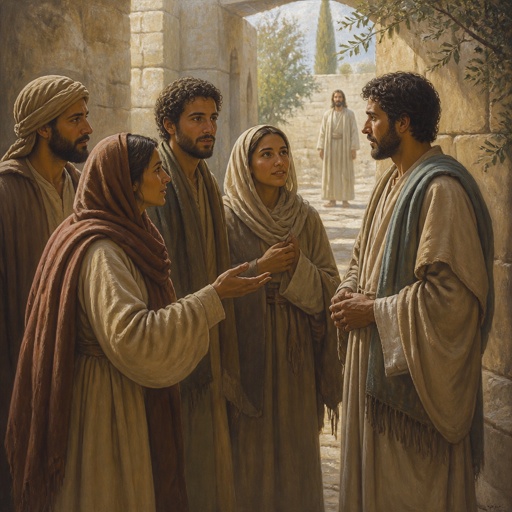
"The same came therefore to Philip, which was of Bethsaida of Galilee, and desired him, saying, Sir, we would see Jesus." - John 12:21

John 21:15-19

John 2:21 - "But he spake of the temple of his body."
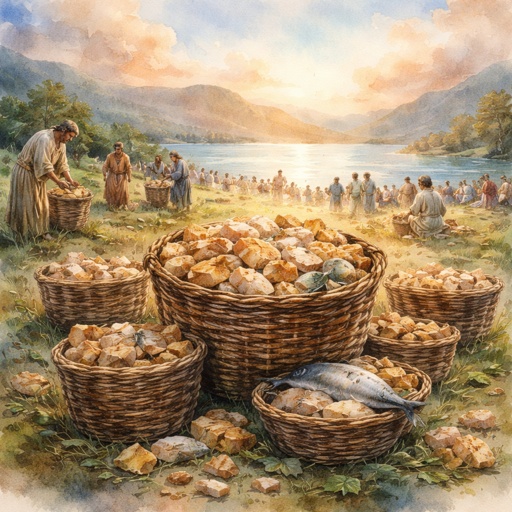
John 6:12

John 8:12

John 12:25

John 8:12

John 8:12

John 8:12
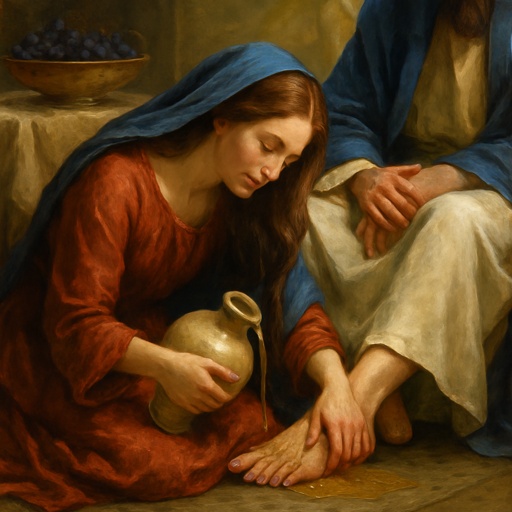
John 12:3

John 8:12

Proverbs 2:1-2 - "My son, if you accept my words and store up my commands within you, turning your ear to wisdom and applying your heart to understanding."

Revelation 21:12

Genesis 21-12