What does John 2:20 mean?
“Then said the Jews, Forty and six years was this temple in building, and wilt thou rear it up in three days?” — John 2:20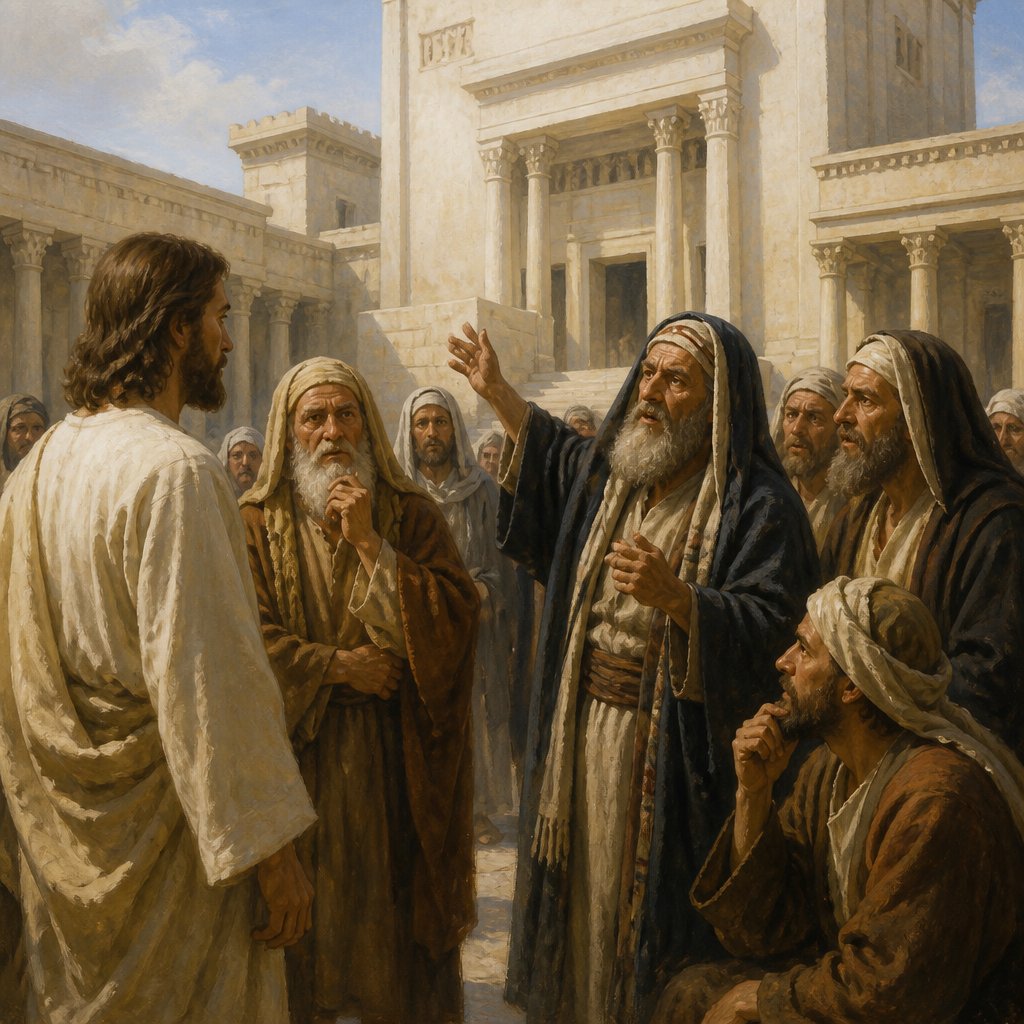
The verse John 2:20 in the King James Version of the Bible reads, "Then said the Jews, Forty and six years was this temple in building, and wilt thou rear it up in three days?"
This verse is part of a larger passage in the Gospel of John, which tells the story of Jesus cleansing the temple. In this particular verse, the Jews are challenging Jesus' authority and asking for a sign to prove his claim to have the power to rebuild the temple in three days.
The context of this passage is important to understanding its deeper meaning. The temple in question is the Jewish temple in Jerusalem, which was a central part of Jewish religious and cultural life. It was seen as the dwelling place of God on earth and was the site of various religious rituals and sacrifices.
By claiming that he could rebuild the temple in three days, Jesus was making a profound statement about his own authority and significance. The Jews, who were the religious leaders and guardians of the temple, were understandably upset by this claim and sought to discredit Jesus.
One theme that is present in this passage is the conflict between Jesus and the religious authorities of his time. The Jews represent the established religious order, while Jesus comes in as a challenger to that authority. This theme of conflict is a recurring one throughout the Gospels, as Jesus comes into conflict with the religious leaders of his time due to his radical teachings and claims to authority.
Another theme that can be drawn from this passage is the idea of the temple as a symbol of God's presence. The temple was believed to be the place where God dwelled among his people, and its destruction or desecration was seen as a profound tragedy. By claiming that he could rebuild the temple in three days, Jesus was making a bold statement about his own role as the new dwelling place of God. This foreshadows the later Christian belief that Jesus himself is the ultimate temple, the dwelling place of God among humanity.
The symbolism in this verse is also significant. The temple itself is a symbol of God's presence and the central focus of Jewish religious life. By claiming that he could rebuild the temple in three days, Jesus is using the temple as a metaphor for his own body. This foreshadows his death and resurrection, where his body becomes the ultimate dwelling place of God and the source of new life for humanity.
Overall, John 2:20 is a rich and complex verse that contains layers of meaning and symbolism. It offers insight into the nature of Jesus' authority and his role as the ultimate sacrifice and dwelling place of God. It also highlights the conflict between Jesus and the religious authorities of his time, and the radical nature of his teachings and claims. This verse serves as a powerful reminder of the depth and complexity of the Gospel narratives and the profound truths they convey.
Get our apps


Artwork for John 2:20

1 John 2:20 - "But ye have an unction from the Holy One, and ye know all things."

John 2:20 - "Then said the Jews, Forty and six years was this temple in building, and wilt thou rear it up in three days?"
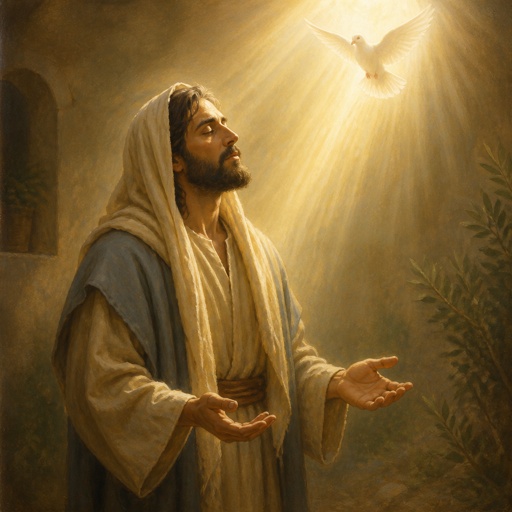
"But ye have an unction from the Holy One, and ye know all things." - 1 John 2:20
"Then said the Jews, Forty and six years was this temple in building, and wilt thou rear it up in three days?" - John 2:20

John 20:21

John 20:27

John 20:14

John 20:27

John 20:11-12

John 20:11-13

John 20:30-31

John 20:2 - "Then she runneth, and cometh to Simon Peter, and to the other disciple, whom Jesus loved, and saith unto them, They have taken away the Lord out of the sepulchre, and we know not where they have laid him."
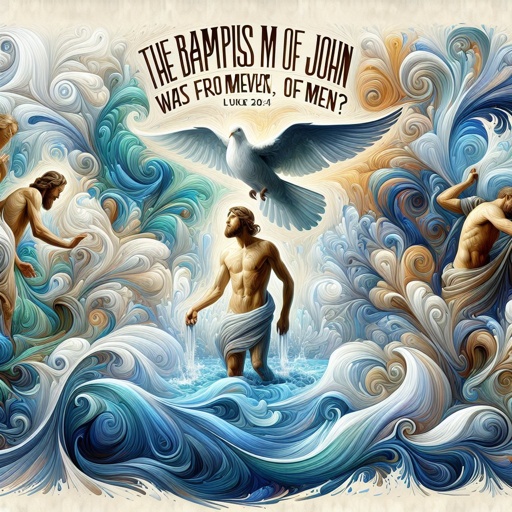
Luke 20:4 - "The baptism of John, was it from heaven, or of men?"

John 6:20 - "But he saith unto them, It is I; be not afraid."
John 1:20 - "And he confessed, and denied not; but confessed, I am not the Christ."

John 20:10 - "Then the disciples went away again unto their own home."

John 20:20 - "And when he had so said, he shewed unto them his hands and his side. Then were the disciples glad, when they saw the Lord."

John 20:3 - "Peter therefore went forth, and that other disciple, and came to the sepulchre."

John 20:9 - "For as yet they knew not the scripture, that he must rise again from the dead."

John 12:20 - "¶ And there were certain Greeks among them that came up to worship at the feast:"

Luke 3:20 - "Added yet this above all, that he shut up John in prison."

John 20:24 - "¶ But Thomas, one of the twelve, called Didymus, was not with them when Jesus came."

John 20:28 - "And Thomas answered and said unto him, My Lord and my God."

Luke 20:6 - "But and if we say, Of men; all the people will stone us: for they be persuaded that John was a prophet."

John 20:5 - "And he stooping down, and looking in, saw the linen clothes lying; yet went he not in."

John 20:7 - "And the napkin, that was about his head, not lying with the linen clothes, but wrapped together in a place by itself."

John 10:20 - "And many of them said, He hath a devil, and is mad; why hear ye him?"

John 20:8 - "Then went in also that other disciple, which came first to the sepulchre, and he saw, and believed."

John 20:6 - "Then cometh Simon Peter following him, and went into the sepulchre, and seeth the linen clothes lie,"
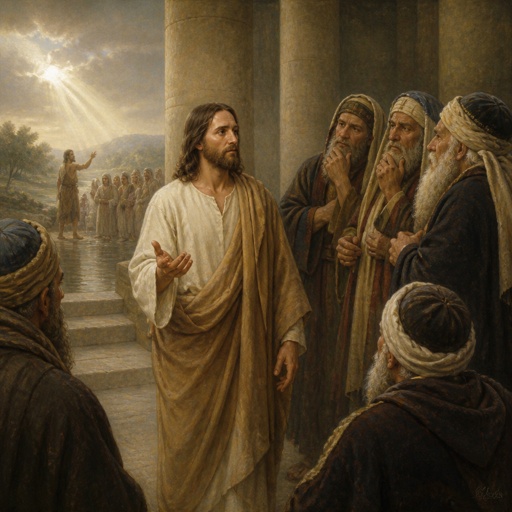
"The baptism of John, was it from heaven, or of men?" - Luke 20:4