What does John 3:36 mean?
“He that believeth on the Son hath everlasting life: and he that believeth not the Son shall not see life; but the wrath of God abideth on him.” — John 3:36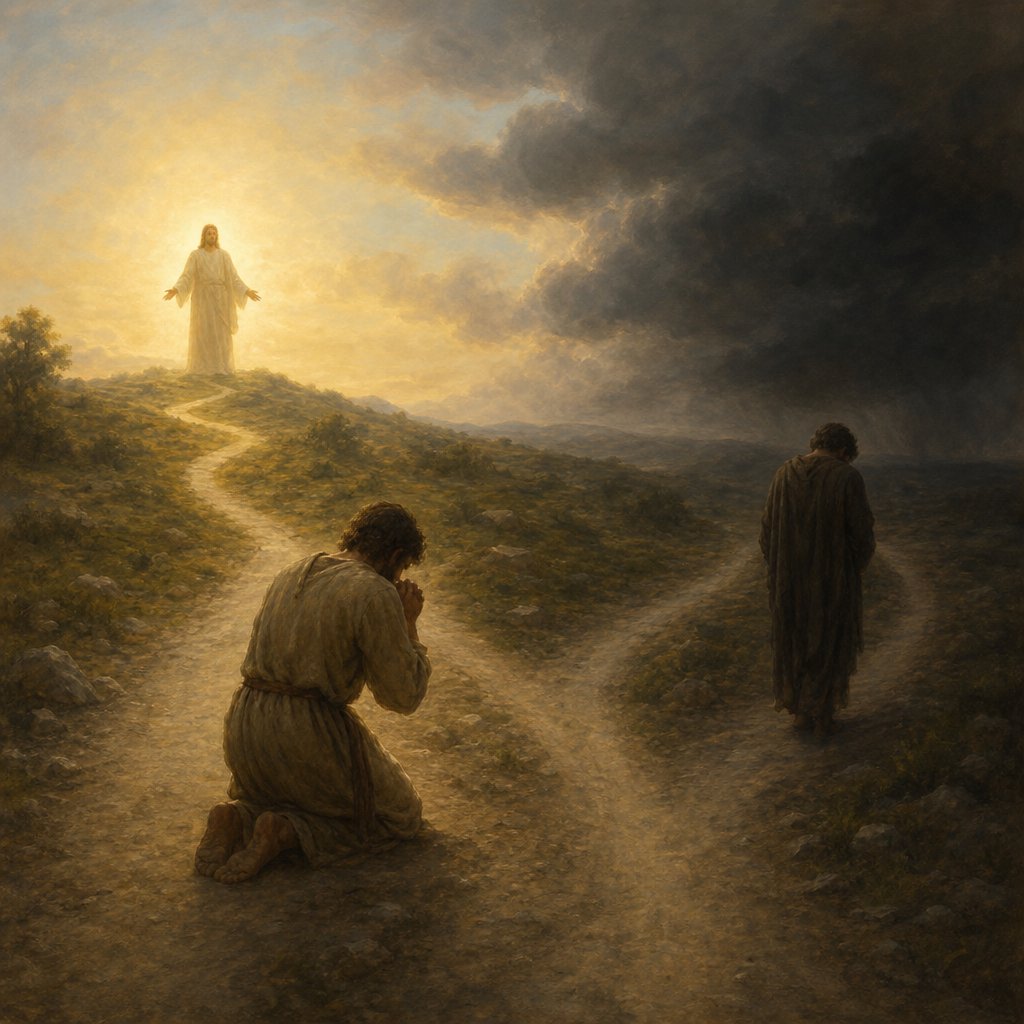
John 3:36 in the King James Version reads, “He that believeth on the Son hath everlasting life: and he that believeth not the Son shall not see life; but the wrath of God abideth on him.” In a single sentence it gathers up the whole thrust of John 3: it declares who Jesus is, what is at stake in responding to him, and why the response must be more than curiosity or admiration. The verse is not merely a closing moral; it is a verdict. It speaks in the present tense—“hath,” “shall not see,” “abideth”—as if to say that one’s posture toward the Son is not only a future issue but a present condition with present spiritual consequences.
In context, John 3 has already set the stage with Jesus’ conversation with Nicodemus, a ruler of the Jews who comes by night. Nicodemus represents the best of religious respectability and careful learning, yet he is told that entry into the kingdom of God requires being “born again,” born “of water and of the Spirit.” The chapter insists that human pedigree, religious attainment, and external observance cannot generate life; life must be given from above. Immediately after that, the famous declaration is made that “God so loved the world, that he gave his only begotten Son,” and that the decisive issue is believing: “He that believeth on him is not condemned: but he that believeth not is condemned already.” John 3:36 stands in line with that argument, functioning as a summary statement that seals the contrast. It comes in the flow of John the Baptist’s testimony about Jesus—John must decrease, Christ must increase—so the verse also carries the weight of a witness pointing away from himself and toward the Son as the exclusive source of life.
The verse is built on a stark twofold division. First, “He that believeth on the Son hath everlasting life.” “Believeth” in John is not a bare acknowledgment of facts, as though one merely admits that Jesus exists or was a teacher. The wording “believeth on the Son” suggests trust, reliance, a coming to him as the one in whom life is found. The title “the Son” matters. It echoes the chapter’s language of “only begotten Son,” which emphasizes uniqueness: not one son among many, but the Son given by the Father. In John’s Gospel, “Son” signals a relationship with God that is not adopted or symbolic but essential, and therefore the Son is competent to reveal God and to give what only God can give: life that does not end. When the verse says the believer “hath” everlasting life, it is not postponing life to the moment of death. It portrays eternal life as a present possession. In Johannine thought, eternal life is not merely endless duration; it is a quality of life—knowing God through the Son—beginning now and continuing beyond death.
The second half matches the first with equal clarity: “and he that believeth not the Son shall not see life.” The language “shall not see life” is a vivid way of describing exclusion from life’s true reality. To “see” in Scripture often carries the sense of experiencing, beholding, entering into; thus the unbelieving will not even come into the realm of life as God defines it. Then the verse adds the sobering reason: “but the wrath of God abideth on him.” “Wrath” here is not pictured as an impulsive flare of temper but as God’s settled, righteous opposition to sin and unbelief. The verb “abideth” is especially significant in John. To abide is to remain, to continue, to dwell. Throughout the Gospel, abiding is the language of relationship and permanence—disciples are called to “abide” in Christ, and Christ’s words are to “abide” in them. Here, however, the abiding is reversed in tone: instead of abiding in life, one remains under wrath. The symbolism is relational and covenantal: a person is under one of two abiding realities—life in the Son or wrath without the Son—and neutrality is not offered as a third option.
This is why the verse is both gospel promise and gospel warning. It is promise because it declares with certainty that faith in the Son brings everlasting life, not as a wage earned but as a gift possessed. It is warning because it presents unbelief not as a harmless lack of interest but as a refusal of the Son, and therefore a remaining under judgment. The verse is also deeply Christ-centered. It does not say, “He that is moral hath everlasting life,” or “He that is religious,” or “He that is learned.” It makes the Son the hinge of destiny. In the chapter’s broader imagery, the Son is the one “lifted up” as Moses lifted up the serpent in the wilderness, so that those who look in faith may live. John 3:36 expresses the same reality without the metaphor: believing on the Son is the way life is received; rejecting him leaves one where sin already places all humanity, under wrath.
The significance of John 3:36, then, lies in its insistence that eternal life is not an abstract concept and salvation is not an impersonal system. The issue is personal and immediate: one’s relation to “the Son.” The verse presses the reader to see faith not as a minor religious preference but as the decisive response to God’s own gift. It also frames judgment not merely as a future courtroom scene but as a present abiding state that continues unless and until one comes to the Son. In the logic of John 3, the light has come into the world; the Son has been given; and this sentence declares the ultimate consequence of receiving or refusing him.
Get our apps


Artwork for John 3:36

John 3:36 - "He that believeth on the Son hath everlasting life: and he that believeth not the Son shall not see life; but the wrath of God abideth on him."
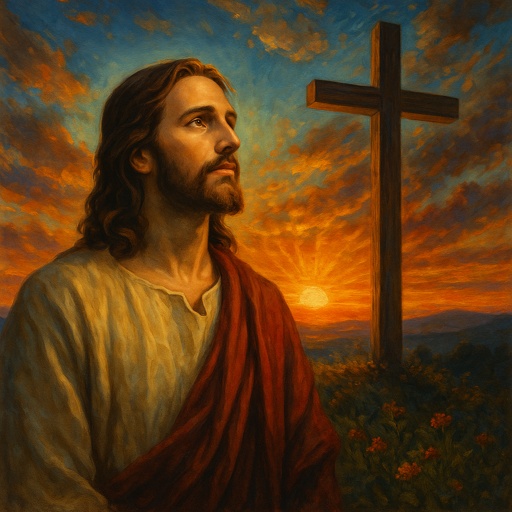
"He that believeth on the Son hath everlasting life: and he that believeth not the Son shall not see life; but the wrath of God abideth on him." - John 3:36
"He that believeth on the Son hath everlasting life: and he that believeth not the Son shall not see life; but the wrath of God abideth on him." - John 3:36

john 18:36

1 John 3:6 - "Whosoever abideth in him sinneth not: whosoever sinneth hath not seen him, neither known him."

John 3:6 - "That which is born of the flesh is flesh; and that which is born of the Spirit is spirit."

John 11:36 - "Then said the Jews, Behold how he loved him!"

"Whosoever abideth in him sinneth not: whosoever sinneth hath not seen him, neither known him." - 1 John 3:6

John 1:36 - "And looking upon Jesus as he walked, he saith, Behold the Lamb of God!"

John 9:36 - "He answered and said, Who is he, Lord, that I might believe on him?"

John 19:36 - "For these things were done, that the scripture should be fulfilled, A bone of him shall not be broken."

John 6:36 - "But I said unto you, That ye also have seen me, and believe not."

John 8:36 - "If the Son therefore shall make you free, ye shall be free indeed."

Genesis 36:3 - "And Bashemath Ishmael's daughter, sister of Nebajoth."

John 5:36 - "¶ But I have greater witness than that of John: for the works which the Father hath given me to finish, the same works that I do, bear witness of me, that the Father hath sent me."

Psalms 36 verse 3-6

Lamentations 3:36 - "To subvert a man in his cause, the Lord approveth not."
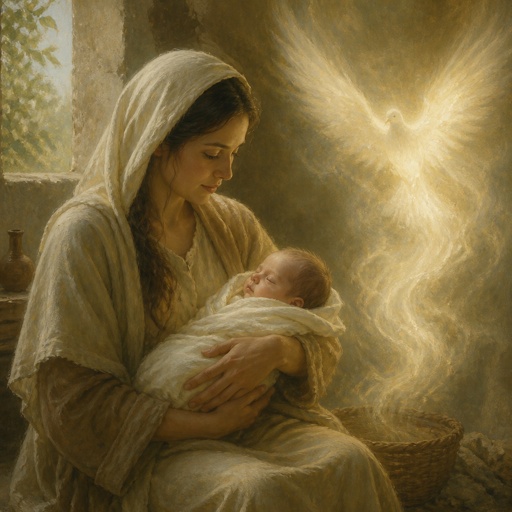
"That which is born of the flesh is flesh; and that which is born of the Spirit is spirit." - John 3:6

"Then said the Jews, Behold how he loved him!" - John 11:36

John 3:3

John 3:24 - "For John was not yet cast into prison."

John 4:36 - "And he that reapeth receiveth wages, and gathereth fruit unto life eternal: that both he that soweth and he that reapeth may rejoice together."

John 10:36 - "Say ye of him, whom the Father hath sanctified, and sent into the world, Thou blasphemest; because I said, I am the Son of God?"

Job 36:3 - "I will fetch my knowledge from afar, and will ascribe righteousness to my Maker."

John 3:3-8

John 7:36 - "What manner of saying is this that he said, Ye shall seek me, and shall not find me: and where I am, thither ye cannot come?"

John 12:36 - "While ye have light, believe in the light, that ye may be the children of light. These things spake Jesus, and departed, and did hide himself from them."

Jesus said to James and John, ‘What is it you want me to do for you?’ (Mk 10:36)


John 3