What does John 4:17 mean?
"The woman answered and said, I have no husband. Jesus said unto her, Thou hast well said, I have no husband:" - John 4:17
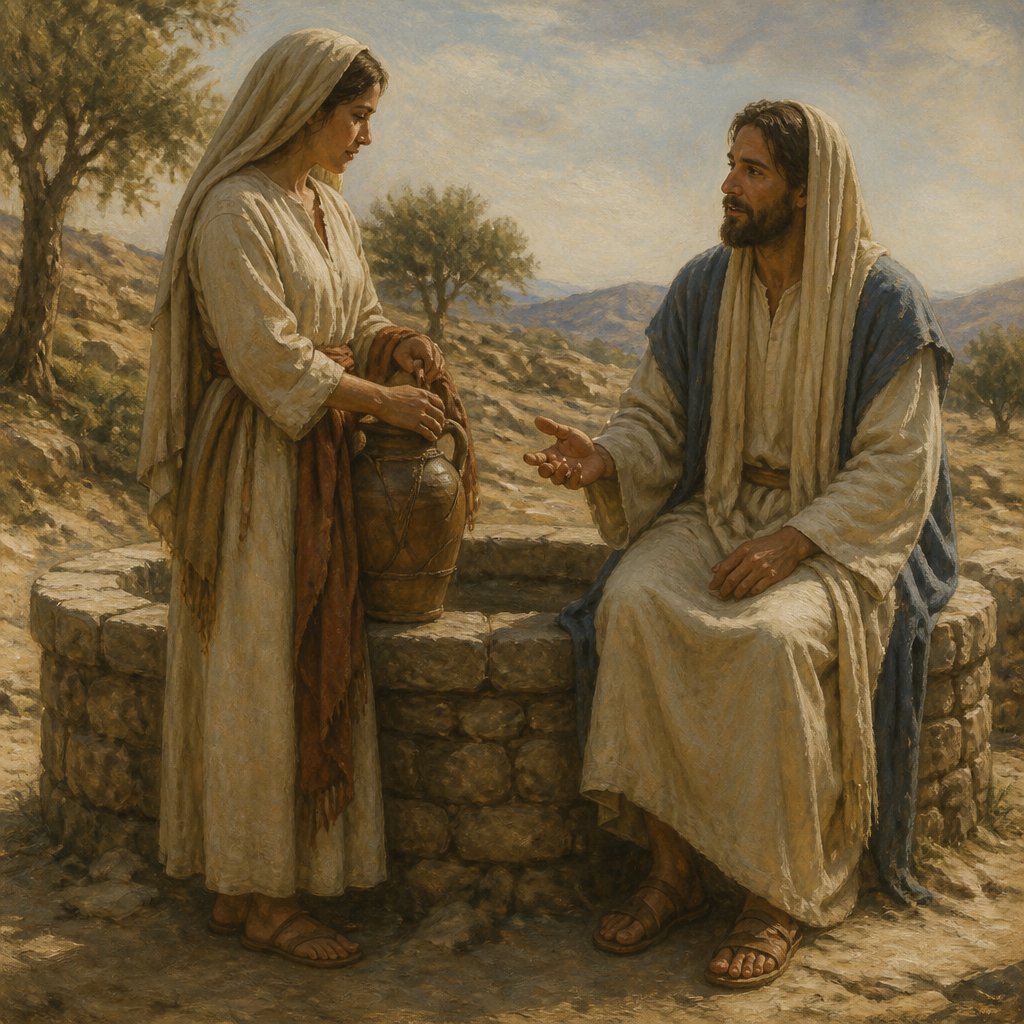
The Bible verse John 4:17 from the King James Version (KJV) states, "The woman answered and said, I have no husband. Jesus said unto her, Thou hast well said, I have no husband." This verse is a part of the larger story of Jesus' encounter with the Samaritan woman at the well, which begins in John 4:7. The story is a powerful and transformative encounter between Jesus and a woman who represents a marginalized and outcast group in society.
The context of this verse is important to understanding its significance. Jesus, a Jewish man, is traveling through Samaria and stops at a well. It is around noon, and a Samaritan woman comes to draw water. In Jewish culture, Jewish men were not supposed to talk to Samaritan women and vice versa. Additionally, the Samaritans were considered outcasts by the Jews, and there was deep-seated animosity between the two groups. Despite cultural taboos, Jesus engages the woman in conversation, asking her for a drink of water. This interaction breaks social norms and sets the stage for a profound spiritual dialogue.
In verse 16, Jesus asks the woman to call her husband, and she responds, "I have no husband." Jesus then acknowledges her honesty, saying, "Thou hast well said, I have no husband." This exchange reveals Jesus' knowledge of the woman's past and her current situation. The woman's response and Jesus' acknowledgment of it are the catalyst for a deeper spiritual conversation about her life and her need for living water, which Jesus offers as a metaphor for eternal life.
There are several important themes and symbols in this verse. One of the central themes is the idea of honesty and truthfulness. The woman initially tries to deflect Jesus' inquiry about her husband, but Jesus sees through her evasion and acknowledges the truth of her situation. This interaction highlights the importance of being truthful and transparent, especially in our relationship with God. Jesus' response also shows his compassion and understanding, as he does not condemn the woman for her past but instead engages her in a meaningful and transformative conversation.
Another important theme is the idea of spiritual fulfillment. The conversation between Jesus and the woman at the well ultimately leads to a discussion about the living water that Jesus offers. This living water represents spiritual nourishment and eternal life, and Jesus presents himself as the source of this fulfillment. The woman's acknowledgement of her need for this living water reflects a broader human need for spiritual fulfillment and the satisfaction that can only come from a relationship with God.
The symbolism in this verse is also significant. The well itself is a symbol of physical nourishment and sustenance, but it also becomes a metaphor for spiritual nourishment and the fulfillment of our deepest needs. Jesus' offer of living water symbolizes his role as the provider of spiritual sustenance and eternal life. Additionally, the woman's personal history with relationships and her acknowledgement of her past mistakes symbolize the universal human experience of brokenness and the need for restoration and redemption.
Overall, John 4:17 is a pivotal moment in the larger story of Jesus' encounter with the Samaritan woman at the well. It highlights important themes of honesty, spiritual fulfillment, and redemption, and it showcases Jesus' compassion and understanding. The verse reminds us of the transformative power of encountering Jesus and the fulfillment that comes from a relationship with him. It serves as a powerful reminder of the universality of human need for spiritual nourishment and the offer of redemption and eternal life through Jesus.
Have questions about John 4:17?
Dive deeper into this scripture with Bible Chat — an AI-powered tool for exploring God's Word through conversation. Ask questions, get context, and grow in your understanding of the Bible.
Get Our Apps


John 4:17 Artwork

John 4:17 - "The woman answered and said, I have no husband. Jesus said unto her, Thou hast well said, I have no husband:"

1 John 4:17 - "Herein is our love made perfect, that we may have boldness in the day of judgment: because as he is, so are we in this world."
"The woman answered and said, I have no husband. Jesus said unto her, Thou hast well said, I have no husband:" - John 4:17

"Herein is our love made perfect, that we may have boldness in the day of judgment: because as he is, so are we in this world." - 1 John 4:17

John 17:4 - "I have glorified thee on the earth: I have finished the work which thou gavest me to do."

John 7:17-18

John 7:17-18

John 7:17-18

John 7:17-18

John 17:17 - "Sanctify them through thy truth: thy word is truth."

John 1:17

John 21:17

John 1:17

John 1:17

"I have glorified thee on the earth: I have finished the work which thou gavest me to do." - John 17:4

John 14:16-17

John 17:16 - "They are not of the world, even as I am not of the world."

John 4:4 - "And he must needs go through Samaria."

1 John 5:17 - "All unrighteousness is sin: and there is a sin not unto death."

John 4:16

John 3:4

John 4:16

John 4:16

John 4:16

John 4:16

John 15:17 - "These things I command you, that ye love one another."

Matthew 17:13 - "Then the disciples understood that he spake unto them of John the Baptist."
"Sanctify them through thy truth: thy word is truth." - John 17:17

John 13:17 - "If ye know these things, happy are ye if ye do them."

John 1:17 - "For the law was given by Moses, but grace and truth came by Jesus Christ."