What does John 4:53 mean?
“So the father knew that it was at the same hour, in the which Jesus said unto him, Thy son liveth: and himself believed, and his whole house.” — John 4:53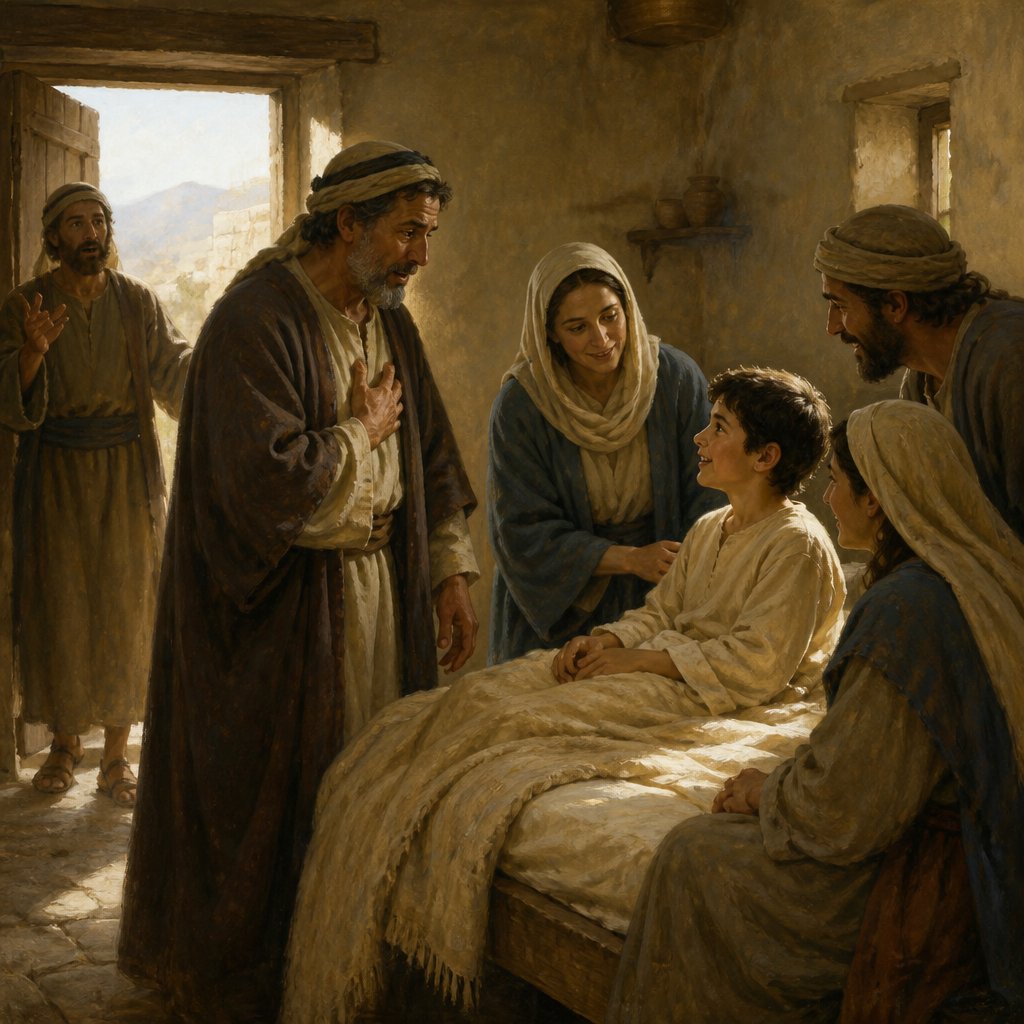
The verse John 4:53 in the King James Version of the Bible is part of the larger narrative of Jesus' healing of the royal official's son. In this passage, it says:
"So the father knew that it was at the same hour, in the which Jesus said unto him, Thy son liveth: and himself believed, and his whole house."
This particular verse is a significant moment in the story, as it marks the point at which the official fully believes in Jesus and his ability to heal. The story overall is a powerful demonstration of Jesus' compassion and miraculous power, but when we delve deeper into this specific verse, we can uncover further layers of meaning and significance.
The context of this verse is essential in understanding its full impact. In the larger story, a royal official comes to Jesus and pleads with him to come and heal his critically ill son. Jesus, perceiving that the man still lacks faith, responds by telling him, "Go, thy son liveth." The official trusts Jesus' word and returns home to find that his son has indeed been healed at that exact moment. This leads to the official and his entire household coming to believe in Jesus.
One of the central themes of this passage is the transformative power of faith. The official initially approached Jesus out of desperation, seeking a miraculous cure for his son. However, it is through the official's growing faith in Jesus that the true miracle occurs. His belief in Jesus' words and his subsequent witnessing of the healing of his son culminates in a profound conversion experience. This mirrors the larger message of the Gospel, which emphasizes the importance of having faith in Jesus and the transformative effect it can have on one's life.
Furthermore, this verse also underscores the authority of Jesus. By healing the official's son from a distance with merely a word, Jesus demonstrates his divine power and ability to transcend physical limitations. This serves to reinforce Jesus' identity as the Son of God and the source of all healing and restoration.
The symbolism in this verse is also rich. The healing of the official's son serves as a metaphor for spiritual healing and renewal. The son's physical illness represents the brokenness and desperation of humanity, and Jesus' healing represents the restoration and salvation that comes through faith in Him. Additionally, the official and his household coming to believe in Jesus symbolizes the spread of the Gospel and the salvation that is made available to all who believe.
In conclusion, John 4:53 is a pivotal moment in the story of Jesus' healing of the official's son, carrying profound implications for the themes of faith, Jesus' authority, and spiritual healing. It serves as a powerful reminder of the transformative power of faith in Jesus and the miraculous nature of His works. As believers reflect on this verse, they are encouraged to deepen their own faith in Jesus and to trust in His ability to bring about healing and redemption in their lives.
Get our apps


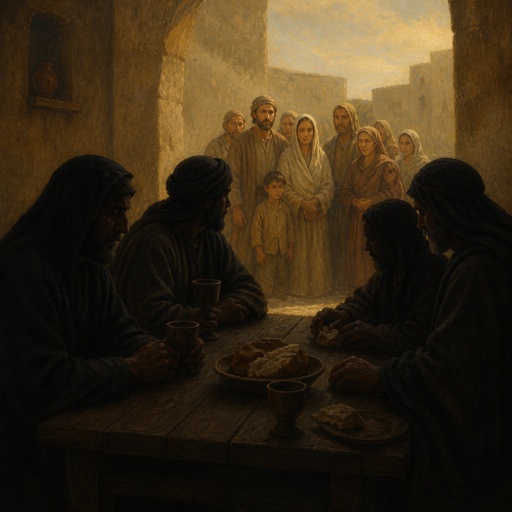
Artwork for John 4:53

John 4:53 - "So the father knew that it was at the same hour, in the which Jesus said unto him, Thy son liveth: and himself believed, and his whole house."
"So the father knew that it was at the same hour, in the which Jesus said unto him, Thy son liveth: and himself believed, and his whole house." - John 4:53

John 7:53 - "And every man went unto his own house."

John 11:53 - "Then from that day forth they took counsel together for to put him to death."
John 8:53 - "Art thou greater than our father Abraham, which is dead? and the prophets are dead: whom makest thou thyself?"

"And every man went unto his own house." - John 7:53

"Then from that day forth they took counsel together for to put him to death." - John 11:53

Psalms 53:4 - "Have the workers of iniquity no knowledge? who eat up my people as they eat bread: they have not called upon God."

Isaiah 53:4 - "¶ Surely he hath borne our griefs, and carried our sorrows: yet we did esteem him stricken, smitten of God, and afflicted."
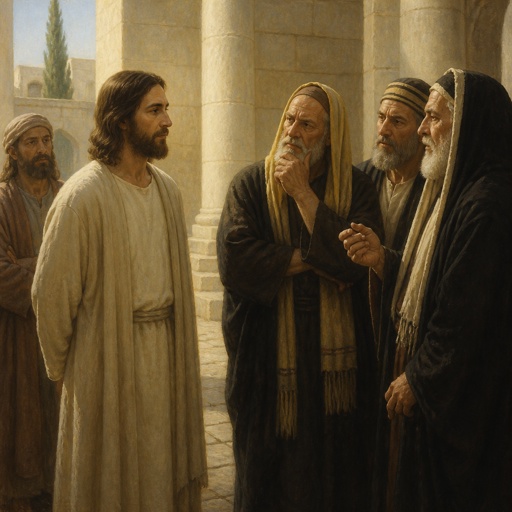
"Art thou greater than our father Abraham, which is dead? and the prophets are dead: whom makest thou thyself?" - John 8:53

John 4:4 - "And he must needs go through Samaria."
"Have the workers of iniquity no knowledge? who eat up my people as they eat bread: they have not called upon God." - Psalms 53:4

John 4:16

John 3:4

John 4:16

John 4:16

John 4:16

John 4:16

John 4:16

John 4:16

John 4:16

John 3:4

John 4:16

John 4:16

John 4:16

John 4:16

John 4:16

John 4:16

John 3:4

John 4:16