What does John 5:19 mean?
“Then answered Jesus and said unto them, Verily, verily, I say unto you, The Son can do nothing of himself, but what he seeth the Father do: for what things soever he doeth, these also doeth the Son likewise.” — John 5:19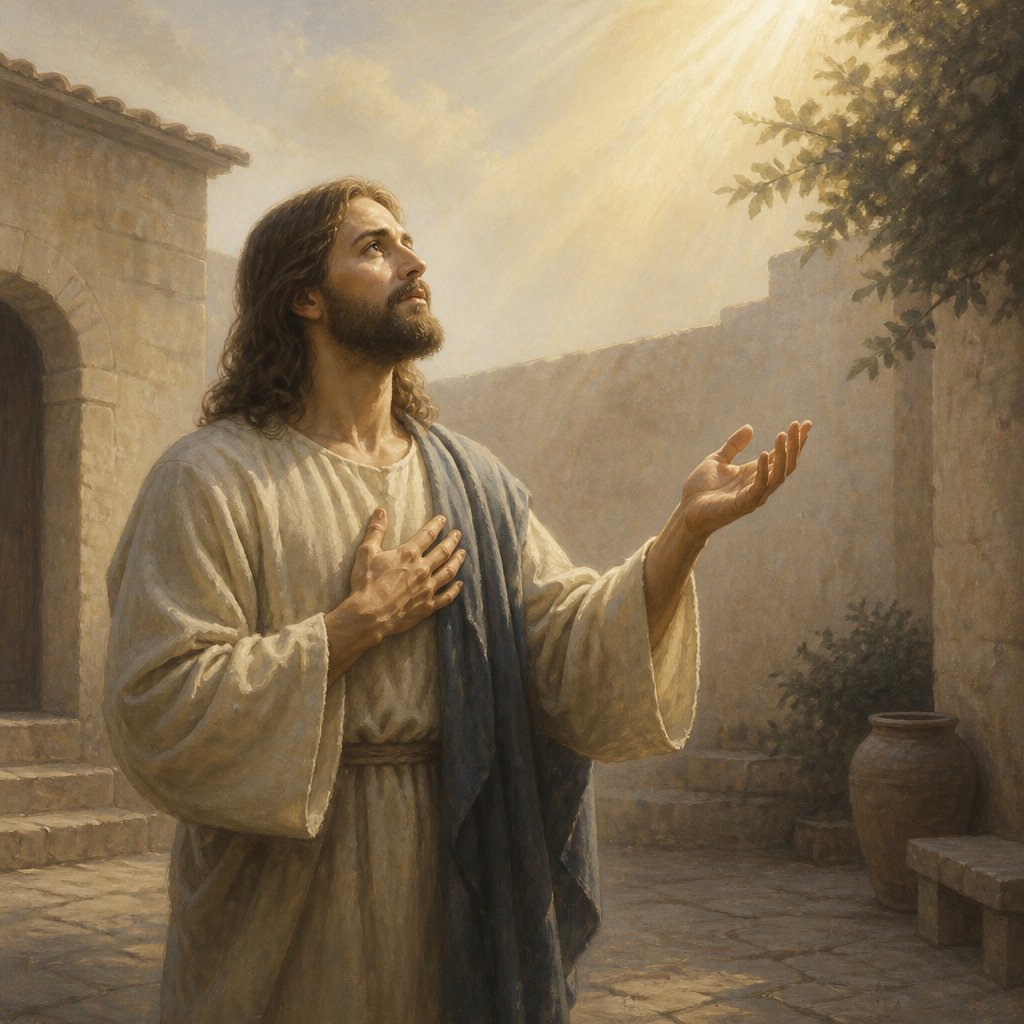
John 5:19 in the King James Version of the Bible reads, "Then answered Jesus and said unto them, Verily, verily, I say unto you, The Son can do nothing of himself, but what he seeth the Father do: for what things soever he doeth, these also doeth the Son likewise." This verse is a powerful statement that speaks to the nature of Jesus Christ, his relationship with God the Father, and the unity of their will and purpose.
At this point in the Gospel of John, Jesus is engaged in a dialogue with the religious leaders of the time. They are challenging him for performing miracles on the Sabbath, and Jesus responds by explaining his authority and relationship with the Father. In this particular verse, Jesus addresses the central theme of his dependence on the Father and his complete submission to the Father's will.
The first part of the verse, "The Son can do nothing of himself," emphasizes Jesus' humble acknowledgment of his dependence on the Father. This statement directly contradicts the idea of Jesus as merely a human prophet or teacher. Instead, it asserts his divinity and his oneness with the Father. Jesus is not acting independently but is completely aligned with the will of the Father.
This phrase is followed by "but what he seeth the Father do," which further emphasizes the close relationship between Jesus and the Father. Jesus is attuned to the actions and desires of the Father, and he only acts in accordance with the Father's will. This imagery of seeing what the Father does suggests an intimate knowledge and understanding of the Father's nature and purpose.
The verse concludes with the affirmation that "what things soever he doeth, these also doeth the Son likewise." This statement underscores the unity of purpose and action between the Father and the Son. Jesus' actions are in perfect harmony with the Father's, indicating their complete agreement and shared mission. This unity of will and purpose is a fundamental aspect of the Christian understanding of the Trinity – that the Father, Son, and Holy Spirit are distinct persons yet perfectly united in essence and purpose.
The context of this verse is important in understanding its significance. Jesus is responding to the Jewish leaders' accusations and is asserting his authority as the Son of God. By emphasizing his complete dependence on the Father and his unity with the Father's will, Jesus is establishing his divine nature and his unique relationship with God. This statement also challenges the religious leaders' understanding of the Sabbath and their interpretation of the law, as Jesus claims the authority to act in accordance with the Father's will.
Symbolically, this verse represents the perfect unity and submission within the Godhead. It also serves as a model for believers in understanding the nature of discipleship and following Christ. Just as Jesus is dependent on the Father and acts in alignment with the Father's will, Christians are called to submit to God's will and align their actions with the teachings and example of Jesus.
In conclusion, John 5:19 is a profound statement by Jesus about his relationship with the Father and the unity of their will and purpose. It affirms Jesus' divine nature and authority while also providing a model for believers in understanding the nature of discipleship and unity with God. This verse serves as a foundational text for understanding the Trinitarian nature of God and the unique role of Jesus in carrying out the will of the Father.
Get our apps


Artwork for John 5:19

1 John 5:19 - "And we know that we are of God, and the whole world lieth in wickedness."

"And we know that we are of God, and the whole world lieth in wickedness." - 1 John 5:19
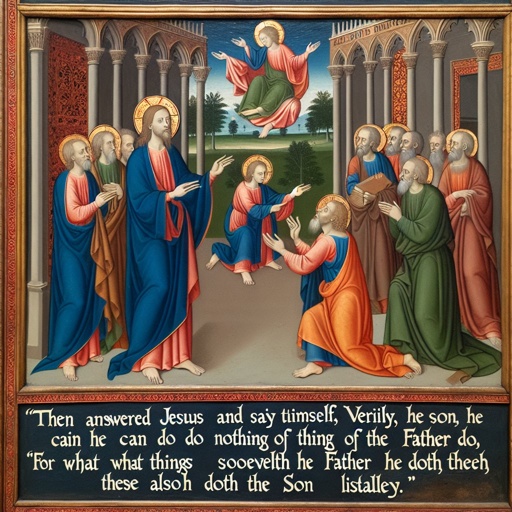
John 5:19 - "Then answered Jesus and said unto them, Verily, verily, I say unto you, The Son can do nothing of himself, but what he seeth the Father do: for what things soever he doeth, these also doeth the Son likewise."
"Then answered Jesus and said unto them, Verily, verily, I say unto you, The Son can do nothing of himself, but what he seeth the Father do: for what things soever he doeth, these also doeth the Son likewise." - John 5:19

John 19:5 - "Then came Jesus forth, wearing the crown of thorns, and the purple robe. And Pilate saith unto them, Behold the man!"

John 19:38

John 19:1

John 19:19 - "¶ And Pilate wrote a title, and put it on the cross. And the writing was, JESUS OF NAZARETH THE KING OF THE JEWS."
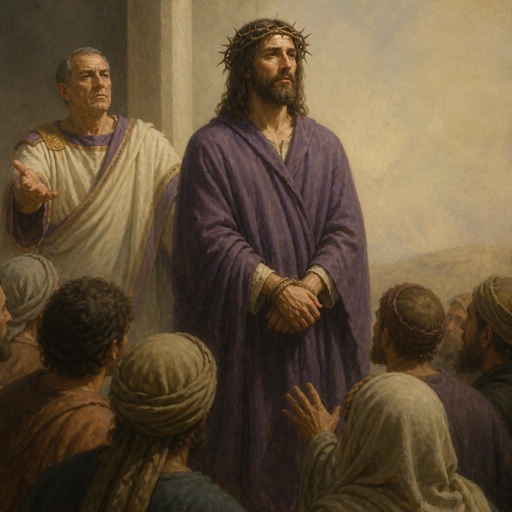
"Then came Jesus forth, wearing the crown of thorns, and the purple robe. And Pilate saith unto them, Behold the man!" - John 19:5

John 17.6-19

John 19:1-3

John 19:25-27

John 1:19 - "¶ And this is the record of John, when the Jews sent priests and Levites from Jerusalem to ask him, Who art thou?"

John 19:25-27

John 19:26-27

John 21:15-19

John 10:19 - "¶ There was a division therefore again among the Jews for these sayings."

John 15:5

John 15:5

John 5:2

John 5:33 - "Ye sent unto John, and he bare witness unto the truth."

John 5:5 - "And a certain man was there, which had an infirmity thirty and eight years."

John 19:1 - "Then Pilate therefore took Jesus, and scourged him."

John 5:28

John 5:28

John 5:28

1 John 5:5 - "Who is he that overcometh the world, but he that believeth that Jesus is the Son of God?"

John 19:25-27 with emphasis on Mary

John 19:3 - "And said, Hail, King of the Jews! and they smote him with their hands."

Romans 5:19