What does John 5:30 mean?
“I can of mine own self do nothing: as I hear, I judge: and my judgment is just; because I seek not mine own will, but the will of the Father which hath sent me.” — John 5:30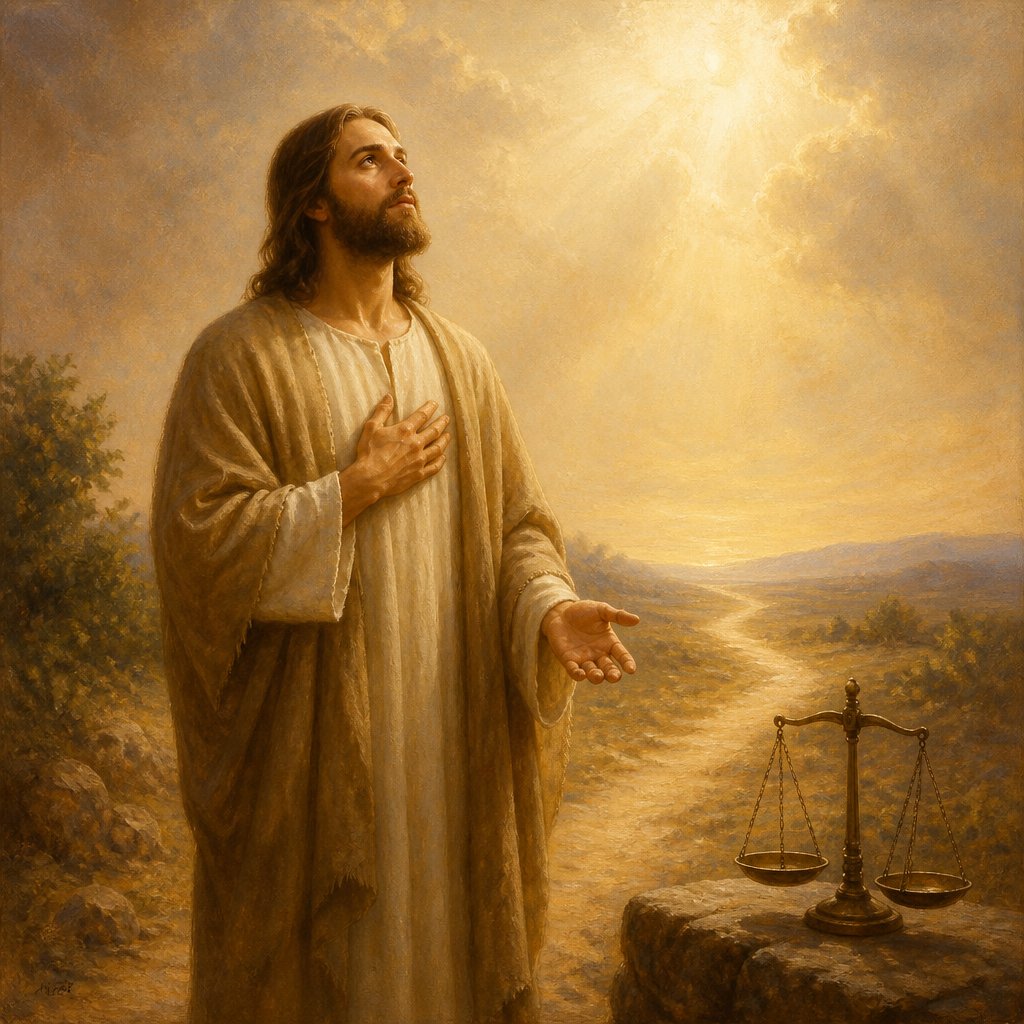
John 5:30 in the King James Version (KJV) of the Bible states, "I can of mine own self do nothing: as I hear, I judge: and my judgment is just; because I seek not mine own will, but the will of the Father which hath sent me."
This verse is spoken by Jesus as part of his discourse with the Jews, in which he asserts his authority and his complete reliance on God the Father. The verse provides insight into Jesus' humility, obedience, and submission to the will of God, as well as his role as the ultimate judge.
The theme of obedience and submission to the will of God is central to this verse. Jesus emphasizes that as the Son of God, he does not act independently of the Father, but rather in complete harmony with the divine will. This highlights the perfect unity and mutual submission within the Trinity, as well as the example of obedience that Jesus sets for his followers. It serves as a reminder for believers to also seek and submit to the will of God in their own lives.
Furthermore, the verse emphasizes the justness of Jesus' judgments. Because he aligns his will with that of the Father, his judgments are perfect and righteous. This speaks to the character of God as just and fair, and serves as a source of comfort and assurance for believers. It also highlights the importance of seeking God's will in all matters, as it leads to just and righteous outcomes.
The context of this verse is important for understanding its significance. In the preceding verses, Jesus confronts the Jews who are seeking to kill him for healing a man on the Sabbath. He asserts his divine authority and relationship with the Father, which leads to a deeper understanding of his role as the Son of God and the source of eternal life. The verse also foreshadows Jesus' ultimate act of submission to the will of the Father, as he obediently goes to the cross to fulfill the redemptive plan of God.
Symbolically, this verse represents the sacrificial nature of Jesus' mission. His declaration that he can do nothing of his own self reflects his humility and willingness to surrender his own desires for the greater purpose of fulfilling the will of God. This act of submission ultimately leads to the salvation of humanity, as Jesus offers himself as a sacrifice for the forgiveness of sins. Additionally, the verse symbolizes the perfect unity and harmony within the Trinity, as each member operates in perfect alignment with the others.
In conclusion, John 5:30 in the KJV of the Bible is a profound statement of Jesus' obedience to the will of the Father and the justness of his judgments. It emphasizes the themes of humility, submission, and the perfect unity within the Trinity, while also serving as a model for believers to seek and submit to the will of God. The verse holds deep theological significance and provides insight into the character of Jesus and the divine plan of redemption.
Get our apps


Artwork for John 5:30
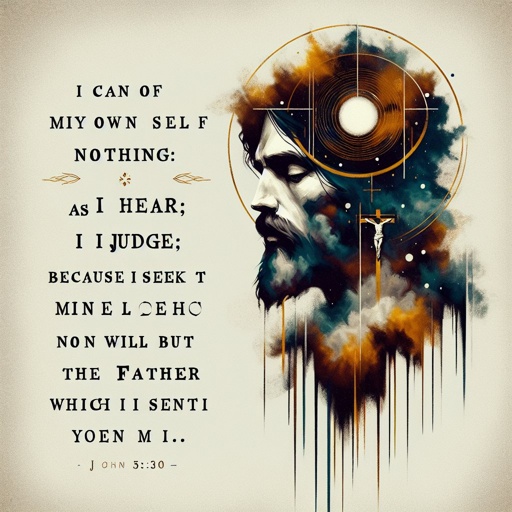
John 5:30 - "I can of mine own self do nothing: as I hear, I judge: and my judgment is just; because I seek not mine own will, but the will of the Father which hath sent me."
"I can of mine own self do nothing: as I hear, I judge: and my judgment is just; because I seek not mine own will, but the will of the Father which hath sent me." - John 5:30

John 14:30

John 10:30

John 10:30

John 3:30

John 20:30-31

John 10:30 - "I and my Father are one."

John 4:30 - "Then they went out of the city, and came unto him."

John 3:30 - "He must increase, but I must decrease."

John 8:30 - "As he spake these words, many believed on him."

Mark 11:30 - "The baptism of John, was it from heaven, or of men? answer me."

John 13:30 - "He then having received the sop went immediately out: and it was night."

Matthew 5:30

Matthew 5:30

"I and my Father are one." - John 10:30

John 12:30 - "Jesus answered and said, This voice came not because of me, but for your sakes."

John 11:30 - "Now Jesus was not yet come into the town, but was in that place where Martha met him."

"I and my Father are one." - John 10:30

Jeremiah 5:30 - "¶ A wonderful and horrible thing is committed in the land;"

John 14:30 - "Hereafter I will not talk much with you: for the prince of this world cometh, and hath nothing in me."

Daniel 5:30 - "¶ In that night was Belshazzar the king of the Chaldeans slain."

Genesis 30:5 - "And Bilhah conceived, and bare Jacob a son."

John 20:30 - "¶ And many other signs truly did Jesus in the presence of his disciples, which are not written in this book:"

John 7:30 - "Then they sought to take him: but no man laid hands on him, because his hour was not yet come."

John 15:5

John 5:2

John 15:5

John 5:33 - "Ye sent unto John, and he bare witness unto the truth."

"Then they went out of the city, and came unto him." - John 4:30