What does John 6:19 mean?
“So when they had rowed about five and twenty or thirty furlongs, they see Jesus walking on the sea, and drawing nigh unto the ship: and they were afraid.” — John 6:19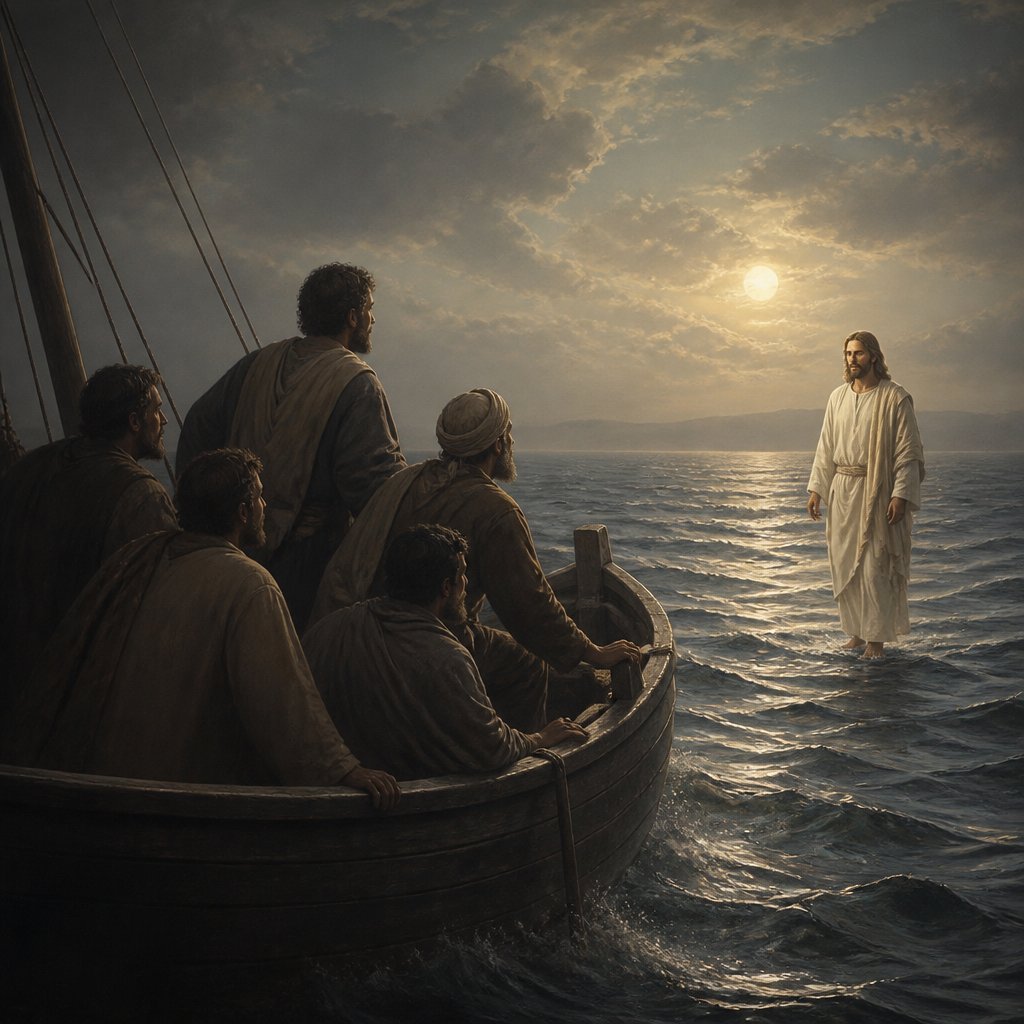
John 6:19 in the King James Version reads, “So when they had rowed about five and twenty or thirty furlongs, they see Jesus walking on the sea, and drawing nigh unto the ship: and they were afraid.”
In its plain sense, the verse places the disciples in the middle of an exhausting, vulnerable passage. A furlong is roughly an eighth of a mile, so “five and twenty or thirty furlongs” describes them as several miles out on the water, far enough from shore that retreat is not simple and help is not near. The detail matters because it shows that their distress is not momentary or imagined; it is deepened by distance, darkness, and weariness. John’s Gospel has already emphasized that the Sea of Galilee can be treacherous, and the surrounding narrative makes clear that a strong wind had risen. The disciples are doing what they can—rowing—yet their strength and skill are not enough to bring them quickly to safety. Into that scene, they “see Jesus walking on the sea,” not merely near the sea, nor alongside it, but upon it, and “drawing nigh unto the ship,” meaning he is not a distant vision but an approaching presence. Their immediate reaction is fear.
The context heightens the significance. This verse follows the feeding of the five thousand, a miracle that displayed Christ as the giver of bread in the wilderness and prepared the way for his teaching about the true bread from heaven later in the chapter. After the multitude was filled, the crowd desired to take Jesus by force and make him a king. Jesus withdrew, and the disciples went down unto the sea and entered a ship. The scene in John 6:19 therefore stands between the people’s attempt to shape Jesus into the kind of king they wanted and Jesus’ own revelation of who he truly is. The disciples are separated from the crowd, from the land, and seemingly from Jesus, and yet Jesus comes to them in a way that no merely earthly king could. The verse functions as a living sign that his authority is not founded on popular acclaim, nor limited by ordinary boundaries, but exercised from a divine freedom that reaches his people where they are.
A central theme in John 6:19 is the contrast between human effort and divine sufficiency. The disciples have been rowing a long time, but the decisive change does not occur because they row harder; it occurs because Jesus draws near. In John’s Gospel, signs are not simply marvels but revelations. Here the sign reveals that Christ is not impeded by the same forces that threaten the disciples. The sea, a place of instability and danger, does not govern him; he governs it. Their boat, small and exposed, becomes the place where his nearness matters. In that way, the verse quietly turns the ship into an image of the disciples’ condition in the world: pressed by forces beyond their control, laboring faithfully, yet ultimately kept not by their strength but by his presence.
The symbolism of the sea is especially weighty. In Scripture, the waters can represent chaos, fear, and the limits of human control. John does not need to call the sea “stormy” in this particular verse for the readers to feel what it means; the very mention of the distance rowed and the disciples’ fear communicates the peril. Jesus “walking on the sea” is therefore more than a display of power; it is a picture of dominion over what overwhelms humanity. The image echoes the broader biblical testimony that the LORD rules the waves and makes a path where none exists. John’s account presents Jesus doing what belongs to God’s own authority, thereby pressing the reader toward the Gospel’s central confession: that the Word made flesh is truly divine, not merely a teacher who speaks about God, but one who acts with God’s prerogative.
The disciples’ fear is also significant, and it is not portrayed as irrational. They are in the dark, far from shore, in a threatening situation, and then they see something that contradicts ordinary experience: a man walking on the sea and approaching them. Their fear exposes a human tendency that John often highlights: when divine reality breaks into our categories, the first response is often trembling rather than comfort. The verse captures the unsettling holiness of Christ’s approach. The One who comes to save is also the One who is beyond us. John does not present Jesus’ nearness as sentimental; he presents it as awe-inducing. This fear becomes the doorway to recognition, because what they see forces them to confront who Jesus must be if he can do this.
John 6:19 is also crafted to prepare for what follows immediately: Jesus’ words of self-identification and the safe arrival. Though you asked specifically for verse 19, its meaning ripens in the next breath of the narrative because John often joins sign and saying. The disciples see him, he draws near, they are afraid, and then he speaks in a way that turns fear into faith and brings them through. In that light, verse 19 functions like the moment just before revelation: the disciples are at the edge of their understanding, and the only thing that can carry them further is Christ’s self-disclosure.
Finally, the verse speaks to the pastoral heart of the chapter. John 6 will confront false expectations about Jesus, especially desires for a Messiah who satisfies immediate appetites and confirms human plans. John 6:19 shows Jesus coming not as a figure to be seized and used, but as the Lord who comes on his own terms, in his own time, with divine authority, to those who cannot rescue themselves. The disciples are not saved by mastering the sea; they are met by the Savior who is not mastered by the sea. His “drawing nigh unto the ship” becomes the quiet center of hope: in the place where fear is most reasonable, Christ is most near, and his nearness reveals both who he is and what his presence means for those who follow him.
Get our apps


Artwork for John 6:19
"So when they had rowed about five and twenty or thirty furlongs, they see Jesus walking on the sea, and drawing nigh unto the ship: and they were afraid." - John 6:19

John 6:19 - "So when they had rowed about five and twenty or thirty furlongs, they see Jesus walking on the sea, and drawing nigh unto the ship: and they were afraid."
"So when they had rowed about five and twenty or thirty furlongs, they see Jesus walking on the sea, and drawing nigh unto the ship: and they were afraid." - John 6:19

John 19:6 - "When the chief priests therefore and officers saw him, they cried out, saying, Crucify him, crucify him. Pilate saith unto them, Take ye him, and crucify him: for I find no fault in him."

John 19:38

John 19:1

John 19:19 - "¶ And Pilate wrote a title, and put it on the cross. And the writing was, JESUS OF NAZARETH THE KING OF THE JEWS."

John 17.6-19

John 19:1-3

John 19:25-27

John 1:6 - "¶ There was a man sent from God, whose name was John."

John 6:63

John 6:63

John 1:19 - "¶ And this is the record of John, when the Jews sent priests and Levites from Jerusalem to ask him, Who art thou?"

John 19:25-27

John 19:26-27

John 21:15-19

John 6:63

John 6:63

John 10:19 - "¶ There was a division therefore again among the Jews for these sayings."
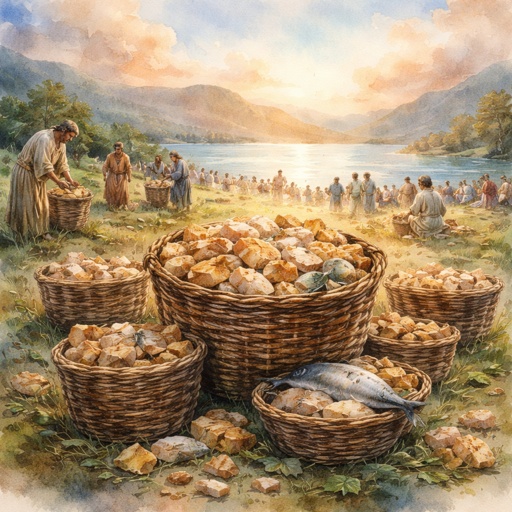
John 6:12

John 6:40

John 21:6

John 14:6

John 19:1 - "Then Pilate therefore took Jesus, and scourged him."

John 6:16

John 21:6

John 6:37

John 21:6

John 21:6